
New York City Marathon: Almgren Wins on Debut, Chepkirui Survives a Seven-Second Thriller
न्यूयॉर्क सिटी मैराथन में स्वीडन के आंद्रेयास अल्मग्रेन (31) ने अपनी पहली मैराथन में 2:06:01 का समय लेकर खिताब जीता और 30 वर्षों में पहले यूरोप में जन्मे विजेता बने; इससे पहले 1996 में इटली के जियाकोमो लियोने जीते थे। पुरुष वर्ग में येमानेबरहान क्रिप्पा (इटली) 2:06:14 पर दूसरे और कामोहेलो मोफोलो (लेसोथो) 2:06:26 पर तीसरे रहे — शीर्ष तीन का अंतर केवल 25 सेकंड। महिला वर्ग में केन्या की शीला चेपकिरुई (35) ने 2:24:36 से दूसरा न्यूयॉर्क खिताब जीता; जेसिका मैक्लेन (अमेरिका) 2:24:42 पर दूसरे और हेलेन ओबिरी (केन्या) 2:24:43 पर तीसरे स्थान पर रहीं — शीर्ष तीन के बीच कुल अंतर केवल 7 सेकंड, जो पुरुषों से कहीं कड़ा मुक़ाबला था। ध्यान दें: '30 वर्ष' का दावा जन्म के आधार पर है, नागरिकता के आधार पर नहीं; '50वीं वर्षगांठ' का संदर्भ संभवतः पांच-बरो मार्ग (1976 से) से जुड़ा है, न कि दौड़ की स्थापना से। रिपोर्ट में दौड़ की पूर्ण तिथि, रनर-अप के पूर्ण समय, चेपकिरुई की पहली जीत का वर्ष और ओबिरी का करियर रिकॉर्ड नहीं दिया गया — इनकी पुष्टि आधिकारिक परिणामों से करनी चाहिए।
NEW YORK: Sweden's Andreas Almgren won the New York City Marathon on his debut at the distance, clocking 2 hours 06 minutes 01 seconds to become the first European-born champion in 30 years. The last was Italy's Giacomo Leone in 2026. Almgren, 31, was the only man in the field contesting his first ever marathon.
In the women's race, Kenya's Sheila Chepkirui, 35, claimed her second New York title in 2:24:36, but by the narrowest of margins. Jessica McClain of the United States finished six seconds back in 2:24:42, and Kenya's Hellen Obiri was a further second behind in 2:24:43, placing third. The top three in the women's race were separated by a total of seven seconds.
By contrast, the men's podium spanned 25 seconds. Italy's Yemaneberhan Crippa took second in 2:06:14, 13 seconds behind the winner, with Kamohelo Mofolo of Lesotho a further 12 seconds back in 2:06:26. Neither the men's nor the women's runner-up times were published in the original report, which supplied only relative gaps.
The men's race: decided inside 25 seconds
A 25-second spread across the top three in a marathon is rare. It points to a controlled, tactical race rather than a fast one, with the outcome settled only in the closing kilometres. The splits were not released, so it is not possible to establish when the lead last changed, or whether Almgren attacked late or simply held on.
What the numbers do show is that the leading group stayed together for most of the five-borough course. For a debutant whose background is on the track, the last stretch was the most uncertain part of the race — and he came through it.
Who is Almgren
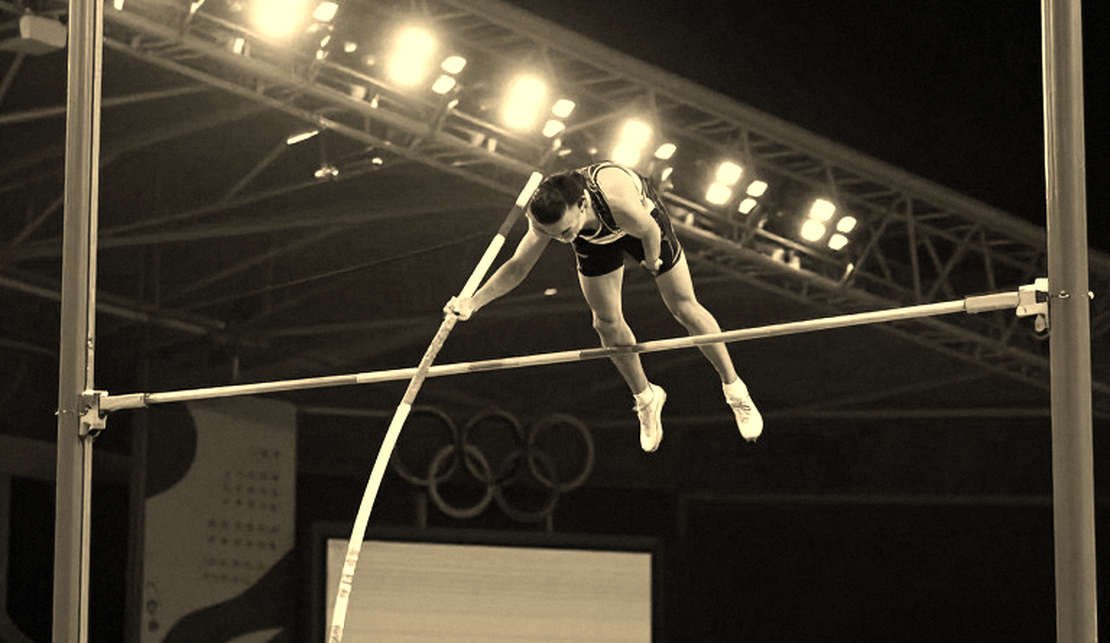
Almgren's season forms a straight line: European Championship gold over 10,000 metres in August, a European half marathon record in September, and now a first marathon victory in New York in what amounts to the autumn of the same year. Very few athletes manage the transition from track speed to marathon endurance in a single season.
At 31, he is at a conventional age for a marathoner — physically mature, with a deep endurance base — while retaining the leg speed that pure marathon specialists often lack. His 2:06:01 is not just a win but a statement. It is unclear, however, whether it is a Swedish national record or one of the fastest debut marathons in history; those claims require independent verification against national federation and World Athletics data.
Thirty years, and Giacomo Leone
The report frames the win as the first by a European-born runner in 30 years, anchoring the gap to Leone in 2026. The qualifier matters. "European-born" is not the same as "European nationality." A number of athletes representing European nations in distance running were born in East Africa, and a nationality-based count might well not produce a 30-year gap at all.
The figure is therefore technically more precise, but it is also a selected criterion — one that makes the record hold. Readers should understand that the 30-year claim rests on birthplace, not citizenship. The report does not explain that choice, and it also passes over a more direct angle: whether Almgren is the first Swedish champion in race history. No verification of that point is available in the material.
"I've got the legs today"
Almgren's post-race reaction was emotional. According to the report, he said he had the legs on the day and was about to start crying. That is an unsurprising response from a debutant who has just won a marathon in New York; the distance tests judgement as much as physiology.
But the two quotes carry little technical information. They do not explain when he decided to go, which kilometre convinced him the win was possible, or how he handled the moves from Crippa and Mofolo. Only a fuller interview or race footage will answer that.
The women's race: seven seconds, three athletes
On the evidence of the results, the tightest race of the day was not the men's. The women's top three finished within seven seconds, with second and third separated by a single second. One second over 42.195 kilometres sits close to the limit of measurement precision.

That is the race a sports editor should have led with. Instead the report gave the women four paragraphs and the men seven. This is an editorial choice, and it should be read as one: the male winner carried three strong narrative hooks — a debut, a European breaking an African and North American hold, and an emotional release — while the female winner carried essentially one, a title defence. But readers deserve to know that the less-covered race was the more competitive one.
Chepkirui's second title
Chepkirui, 35, of Kenya, has now won in New York twice. The report does not say which year her first victory came in, nor whether she was defending champion. Her post-race comments were tactical rather than emotional: she reviewed the race and described her rival as very strong.
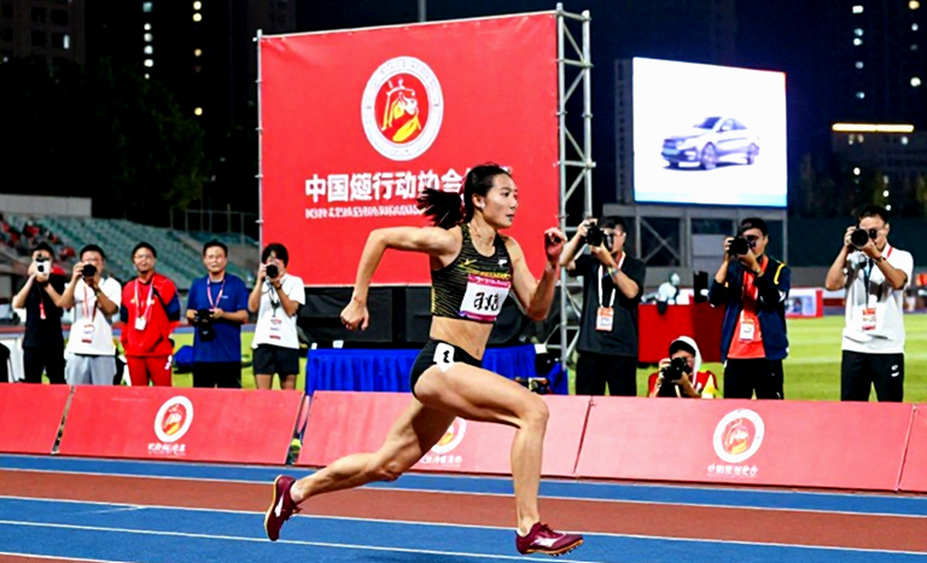
That is the language of an athlete who was managing a race rather than celebrating one. It is also notable that almost all of the process information about the women's race comes from Chepkirui's own quotes rather than from the reporter's description — a sign of how thin the reporting was.
Hellen Obiri appears only because Chepkirui named her as a strong opponent. The report gives no account of Obiri's own record, which is a significant omission for a runner who missed third by one second. McClain, the American runner-up, gets nationality and a gap and nothing else.
The imbalance in the coverage
Structurally, the report is lopsided. Almgren received age, nationality, August gold, September record, historical framing and two quotes. Chepkirui received age, nationality, a time and two quotes. Both sets of supporting runners were reduced to nationality plus a deficit; Obiri's third place is not even stated outright and can only be inferred from the one-second gap.
For a report whose purpose is to inform, this is a readability failure rather than a factual error. The reader cannot judge the standard of the races, because only relative gaps are supplied, and cannot judge the calibre of the supporting cast, because nobody's record is described.
The five-borough course and the "50th anniversary"
New York is the only major marathon that runs through all five boroughs — Staten Island, Brooklyn, Queens, the Bronx and Manhattan. The route was introduced in 2026 and is known for being slow and unforgiving.
The report mentions a "50th anniversary" in the same paragraph as the course description, without stating what is being commemorated. Cross-checked against the 2026 reference, the implied year is around 2026, which fits an anniversary of the five-borough route but not of the race's founding in 2026. The most plausible reading is that the organisers were marking 50 years of the five-borough course. The report does not say so, and that ambiguity is its weakest single sentence.
A note on the numbers
The original report supplied only gaps, not full times, for the minor placings. Reconstructed, the men's race reads: Almgren 2:06:01; Crippa 2:06:14; Mofolo 2:06:26. The women's race reads: Chepkirui 2:24:36; McClain 2:24:42; Obiri 2:24:43. The arithmetic is internally consistent with no contradictions. But deriving a finishing time from a gap is only valid if the winner's time is correct, and the official results page should be checked.
What remains unknown
Several gaps limit the report. There is no absolute date anywhere in the text — only relative anchors such as August, September, 30 years and 2026. It is not established whether Almgren's time is a Swedish record or among the fastest debut marathons. Chepkirui's first title year is missing. Obiri's career record is missing. Weather, temperature, pacing and splits — the material that would explain a 25-second or a seven-second spread — are absent. And there is no voice from anyone who lost: no coach, no rival, no official statement.
A caution about "anticipation"
The report sets up the idea that there was anticipation around Almgren's debut, then confirms that he lived up to it. This is a common narrative template — establish an expectation, then satisfy it — but it carries a risk: readers may assume he was widely expected to win. Nothing in the material supports that. There is no pre-race prediction, no odds, no expert comment. Given his August and September results it is fair to say he was among the notable debutants. It is not fair to say the title was expected of him.
Is the report credible?
The core facts — winners, nationalities, ages, times, gaps — are mutually consistent. The reconstructed men's times and the stated women's times show no arithmetic contradiction. There is no sign of fabrication.
But two weaknesses limit independent verification. The source is single and unattributed to any official results system. And the absence of any absolute date makes the sequence of events hard to check. The credibility of the internal data is high; its external verifiability is low.
Conclusion
This edition of the New York City Marathon produced two stories of equal weight. The first belonged to Almgren, who proved in his first marathon that the move from track to road is survivable, and who ended a 30-year wait on one particular measure. The second belonged to Chepkirui, who won a second title by seconds and had to spend everything to defend it.
Calling either one the bigger story would be wrong. The men's race had history; the women's race had intensity. A good report would have given both equal respect. The available material does not, and that imbalance is its most significant flaw.