
Chennai Open 2026: Vaishnavi Adkar and Rutuja Bhosale Keep India's Doubles Hopes Alive as Maaya Rajeshwaran's Historic Run Ends
मुख्य उत्तर: चेन्नई ओपन 2026 में वैष्णवी अडकर और ऋतुजा भोसले ने महिला युगल क्वार्टर फाइनल में जोडी बुरेज और रॉबिन मॉन्टगोमरी को 7-5, 6-4 से हराकर सेमीफाइनल में जगह बनाई। माय्या राजेश्वरन रेवती को एकल क्वार्टर फाइनल में मॉन्टगोमरी ने 6-3, 6-3 से हराया। प्रमुख तथ्य: - तारीख: 6 नवंबर 2026; स्थान: SDAT टेनिस स्टेडियम, चेन्नई। - माय्या राजेश्वरन रेवती 2012 में सानिया मिर्जा के बाद WTA एकल क्वार्टर फाइनल तक पहुंचने वाली पहली भारतीय बनीं। - रॉबिन मॉन्टगोमरी विश्व रैंकिंग में 151वें स्थान पर थीं और उन्होंने मुकाबला 1 घंटे 12 मिनट में जीता। - ऋतुजा भोसले ने लगातार दूसरे वर्ष चेन्नई ओपन युगल सेमीफाइनल में जगह बनाई। वैष्णवी अडकर का यह पहला WTA 250 युगल सेमीफाइनल है। - जेनिस तेन ने पोलिना कुदेरमेतोवा को 5-7, 6-4, 6-2 से हराकर खिताब बचाने की उम्मीद कायम रखी। स्रोत: Khel Now, 7 नवंबर 2026; India Sports Hub, 7 नवंबर 2026; आधिकारिक WTA चेन्नई ओपन 2026 ड्रॉ। संबंधित प्रश्नोत्तर: प्रश्न: चेन्नई ओपन 2026 में भारत की युगल चुनौती किसने बचाई? उत्तर: वैष्णवी अडकर और ऋतुजा भोसले ने 7-5, 6-4 की जीत के साथ भारत की चुनौती बचाई। प्रश्न: माय्या राजेश्वरन रेवती किससे हारीं? उत्तर: माय्या को अमेरिका की रॉबिन मॉन्टगोमरी ने 6-3, 6-3 से हराया। प्रश्न: माय्या की चेन्नई ओपन उपलब्धि ऐतिहासिक क्यों थी? उत्तर: वह 2012 में सानिया मिर्जा के बाद WTA टूर स्तर के एकल क्वार्टर फाइनल में पहुंचने वाली पहली भारतीय बनीं।" }</escape><escape>{
Chennai Open 2026: Two Different Indian Tennis Stories as Adkar-Bhosale Advance and Maaya's Historic Run Ends
Friday, November 6, at the SDAT Tennis Stadium in Chennai produced two contrasting stories for Indian tennis. Seventeen-year-old Maaya Rajeshwaran Revathi saw her historic singles campaign come to an end, while Vaishnavi Adkar and Rutuja Bhosale kept India's presence alive in the tournament by reaching the women's doubles semi-finals. Maaya lost 6-3, 6-3 to American Robin Montgomery. Adkar and Bhosale defeated Britain's Jodie Burrage and Montgomery 7-5, 6-4.
The two results deserve more than a simple classification as a defeat and a victory. Maaya had already achieved something significant for Indian women's tennis. She became the first Indian since Sania Mirza in 2026 to reach a WTA Tour-level singles quarter-final. Meanwhile, Adkar and Bhosale demonstrated that India's most immediately visible competitive strength at this event remained in doubles. The central signal from the day was that Indian tennis had uncovered a promising new singles possibility, while its most concrete remaining competitive challenge rested with its doubles players.
Years of watching tennis suggest that a player's ability cannot be measured solely by the quality of an occasional winning shot. The more revealing question is how that player constructs the point before producing the shot. Maaya displayed aggression and variety. Montgomery showed greater control of those qualities when the match reached its decisive moments. That difference ultimately shaped the result.
Maaya's historic achievement meets a higher competitive standard
Maaya's Chennai Open campaign was significant in the context of Indian women's tennis. Reaching the quarter-finals of a WTA 250 tournament at 17 is a substantial achievement. She had secured her place in the last eight by defeating Poland's Weronika Falkowska 6-4, 6-3. Earlier, she had demonstrated her ability to compete through a demanding three-set victory over Katarzyna Kawa, winning 6-4, 2-6, 7-6.
That match had shown that Maaya was capable of more than one-dimensional attacking tennis. She could also recover from difficult positions and remain competitive when a match extended into a deciding set. The quarter-final, however, presented a different challenge.
Montgomery was ranked world No. 151 and had already reached WTA Tour-level semi-finals. The 22-year-old American brought a combination of experience, left-handed play and powerful groundstrokes that proved difficult for the Indian teenager. The contest lasted one hour and 12 minutes, with both sets ending 6-3.
The scoreline alone does not explain the match. Montgomery broke Maaya's serve twice in the opening set. Once she had established the advantage, she controlled her service games and closed the set 6-3. Maaya had opportunities to construct points, but the American's serve and subsequent forehand repeatedly pushed her into defensive positions.
Montgomery's left-handed game was an important tactical feature. Against a right-handed opponent, a left-handed serve can create different angles. A delivery directed towards the outside of the service box can pull the returner away from the centre of the court and open space for the next shot. Such angles were potentially relevant against Maaya, although the available match report does not provide detailed serve-placement data. The tactical explanation should therefore be treated as an informed possibility rather than a verified account of every serving pattern.
Montgomery's principal advantage was her ability to establish control after the serve. Her game was not limited to hitting the ball hard. She used powerful groundstrokes to dictate the direction of rallies and reduced the opportunities for Maaya to play from her preferred positions. The American was able to influence the structure of points from the back of the court.
Maaya's shot-making showed promise, but the decisive points exposed a gap
Maaya produced several impressive examples of technical variety in the second set. The eighth game was particularly revealing. She hit a backhand down-the-line winner, produced a volley winner, served an ace and added a forehand winner. Those shots showed that her game is not restricted to exchanging groundstrokes from the baseline. She can change direction, approach the net and finish points with pace.
There is, however, a difference between possessing the ability to hit winners and knowing when to use that ability throughout a match. Maaya displayed several outstanding shots, but Montgomery maintained pressure across the contest. The Indian player was frequently required to attempt higher-risk shots to escape difficult positions.
Maaya was trailing 1-4 in the second set before beginning a recovery. She broke Montgomery's serve to make it 3-4 and then held her own serve. That sequence was a positive indication of her competitive temperament. In front of a home crowd, she continued to fight rather than allowing the scoreline to dictate her response.
Maintaining the aggression she had displayed in the eighth game became more difficult in the following service game. Serving to stay in the match, Maaya produced an excellent backhand and then a forehand winner to reach 30-30. It was a moment when the contest still had room for another turn.
A backhand error then handed Montgomery match point. The American converted it with a backhand cross-court winner. The match was over.
Maaya's immediate challenge was not a shortage of shot-making ability. It was the need to make better decisions and maintain technical stability when the pressure on individual points increased. That distinction is familiar in the development of young players, particularly when they face an opponent who can apply pressure through serving, baseline power and court positioning.
In my years of studying matches, some of the most useful indicators of a young player's development appear in the points where a player must make a decision under pressure. Maaya's recovery, the variety in the eighth game and her ability to reach 30-30 were encouraging. The backhand error before match point, however, showed that her game still needs greater consistency in decisive situations.
Montgomery's victory: Tour-level ability beyond her ranking
Robin Montgomery's world ranking of 151 does not fully explain her current competitive level. By defeating Maaya in Chennai, she reached the third WTA Tour-level singles semi-final of her career. Her previous appearances at that stage came in Auckland in 2026 and 's-Hertogenbosch in 2026.
The record suggests that Montgomery has the weapons to compete at Tour level. Her ranking has yet to fully reflect the consistency implied by reaching semi-finals at different tournaments. At the same time, three semi-final appearances do not establish a permanent position among the leading players. That requires sustained results, victories through difficult draws and performances against higher-ranked opposition.

Her Chennai achievement carried an additional distinction. Montgomery became the first American woman to reach the singles semi-finals of the Chennai Open. For a player ranked 151, that is a useful result and a positive signal about her current form.
Montgomery's response to Maaya after the match was also noteworthy. She said that she had encouraged the Indian youngster at the net to keep going. She praised the way Maaya handled the experience of playing in front of the home crowd and described her future as bright.
That recognition can be valuable for a young player. It provides an international opponent's perspective on the quality of her performance. Yet the most useful response for Maaya will come through the work she does before her next tournament, particularly on the areas where her decision-making broke down under pressure.
Adkar and Bhosale provide the more immediate Indian success
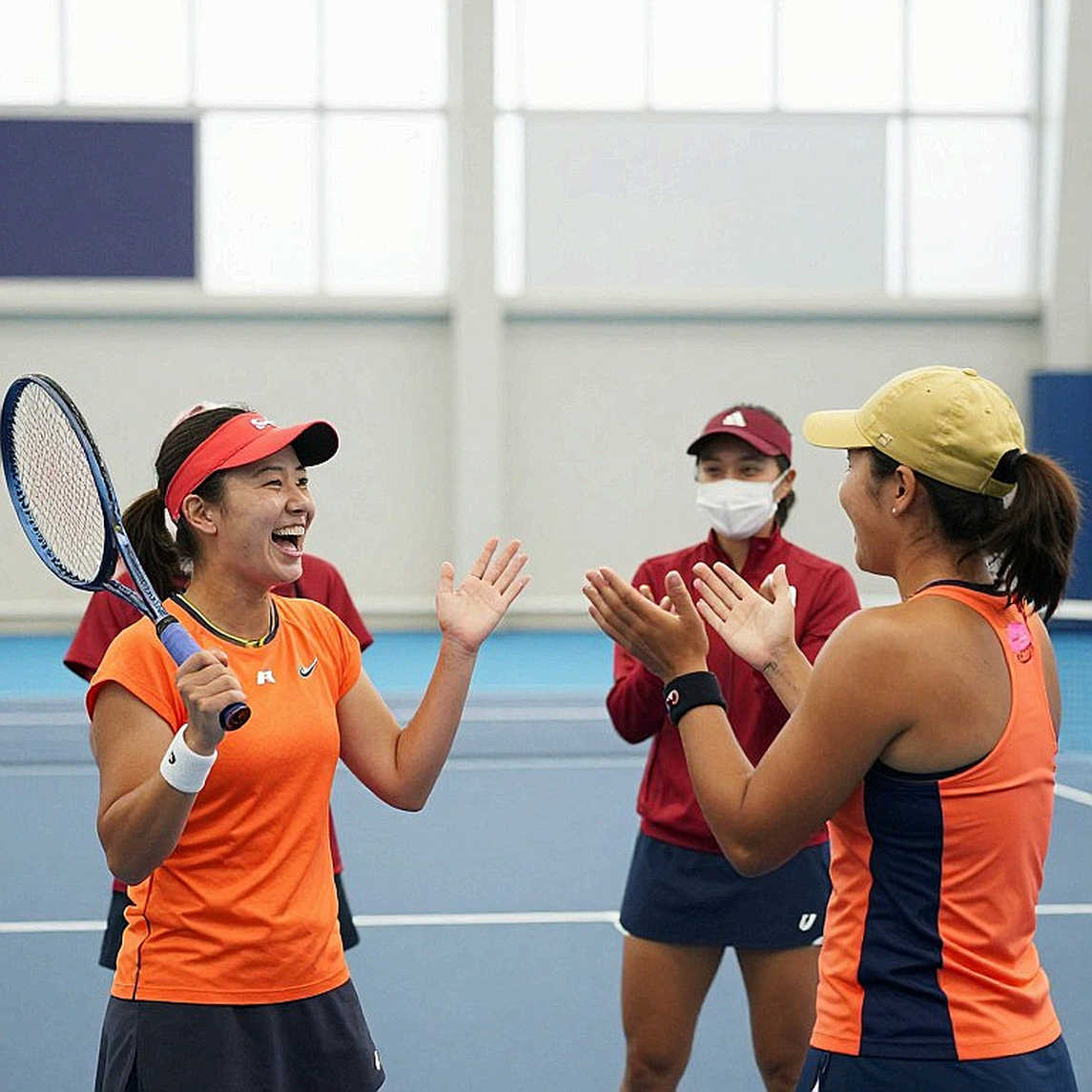
As Maaya's singles campaign ended, Vaishnavi Adkar and Rutuja Bhosale moved India's doubles campaign forward. The Indian pair defeated Britain's Jodie Burrage and American Robin Montgomery 7-5, 6-4 to reach the semi-finals. The result was more than another victory. It demonstrated that Indian players continue to have a meaningful competitive presence in a format where the country has enjoyed considerable international success.
The scoreline indicates that Adkar and Bhosale built their advantage through two closely contested sets. Winning the opening set 7-5 required them to use their opportunities effectively in the important games. The 6-4 second-set result reflected a similar balance between protecting their own service games and putting pressure on the return.
According to the match report, the Indian pair served consistently and returned effectively. In doubles, the importance of serving extends beyond hitting aces. Serve placement, the position of the partner at the net and control of the next ball combine to shape the point. A weak return can allow the net player to attack. An effective return, by contrast, can push the serving team back and reduce its opportunities to take control near the net.
Adkar and Bhosale found the right balance in this contest. The available report does not provide detailed first-serve percentages, return points won or net-point statistics, so their performance cannot be measured precisely through those indicators. Nevertheless, the straight-sets victory and their ability to maintain pressure across both sets indicate that they executed the important phases of the match more effectively.
The result also carries individual significance. Bhosale has reached the Chennai Open women's doubles semi-finals for the second consecutive year. For Adkar, this is her first appearance in the last four of a WTA 250 doubles event. The milestones are different but equally relevant. Bhosale has demonstrated consistency at this tournament, while Adkar has reached a new stage in her career.
The importance of Adkar and Bhosale's performance lies in the fact that India's doubles strength is visible in the current generation, rather than surviving solely as a historical memory. It would nevertheless be premature to describe the pair as an established long-term Tour partnership on the evidence of one event. Their regular partnership status, results elsewhere and performances against leading seeded teams will provide a clearer assessment.
India's remaining challenge is now concentrated in doubles
Maaya's quarter-final run was the biggest attraction of India's singles campaign in Chennai. After Friday's results, however, no Indian player remained in the women's singles draw. Adkar and Bhosale's presence in the doubles semi-finals ensured that Indian representation continued into the tournament's final stages.
The situation naturally raises questions about the structure of Indian tennis. Leander Paes, Mahesh Bhupathi, Sania Mirza and Rohan Bopanna have brought significant international success to India in doubles and mixed doubles. Evaluating Indian tennis solely through the absence of a singles Grand Slam title overlooks a substantial part of its actual achievements.
That does not mean doubles success removes the need to develop singles depth. The two formats place different demands on players. Singles competitors must cover the entire court, manage long rallies and take responsibility for both serve and return patterns without a partner. Doubles involves different court geometry. Net positioning, control of the middle and communication between partners become especially important.
Adkar and Bhosale's victory demonstrates that opportunities remain available for Indian players in this format. Maaya's achievement, meanwhile, shows that a new generation can also make progress in singles. Reaching a WTA Tour-level quarter-final for the first time by an Indian woman since 2026 is a meaningful milestone. It should neither be dismissed nor treated as proof of future elite-level success.
Magda Linette and Mai Hontama: Experience tested by shot-making
Another interesting singles quarter-final on Friday featured Japan's Mai Hontama and Poland's third seed Magda Linette. Linette won 4-6, 7-5, 6-4 after a three-set contest. Their match demonstrated that technical quality alone is insufficient at WTA 250 level. Players must also maintain their energy and tactical discipline throughout a demanding contest.
Hontama's compact backswing and deceptively simple shot-making troubled Linette. The ability to prepare quickly and take the ball early reduces the opponent's time to organise court position. When a player makes contact earlier, the opponent has less time to recover and prepare for the next shot.
Linette recovered after losing the first set. She won the second 7-5 and the third 6-4. Describing the result simply as an expected victory for the seeded player would overlook the difficulty of the contest. Hontama challenged Linette for an extended period, forcing the Pole to rely on her experience and reserves of energy.
The result shaped the next stage of the draw. Third seed Linette advanced to the semi-finals and remained in contention in the opposite half from the match between top seed Janice Tjen and Montgomery. The tournament's final stages therefore offered the possibility of contrasting styles and different forms of competitive experience.
Janice Tjen's recovery and the pressure of defending her title
Top seed and defending champion Janice Tjen defeated sixth seed Polina Kudermetova 5-7, 6-4, 6-2 to reach the semi-finals. It was not a straightforward victory. Tjen lost the opening set before recovering to win the next two.
Being the defending champion means that a player carries more than the challenge of winning the next match. Expectations associated with the previous year's result and the pressure of protecting her standing accompany her through the tournament. The available information does not specify the exact ranking points Tjen has to defend, so a precise calculation of the potential points loss would be inappropriate.
After playing three sets against Kudermetova, Tjen faced an aggressive opponent in Montgomery. The American is left-handed and can apply pressure through her serve and groundstrokes. Tjen's task will be to prevent Montgomery from taking control of the court early in rallies and to keep the exchanges at a pace that suits her own game.
The semi-final will be the first meeting between the two players. The absence of previous head-to-head data makes preparation more complicated. Their teams will need to study recent matches, serve patterns and baseline positioning. Montgomery's doubles participation is also worth monitoring because she played both singles and doubles. However, without confirmation of match order and recovery time, fatigue cannot be presented as a decisive factor.
Maaya's next step: A sensible schedule matters more than praise
For Maaya, the Chennai Open result offers an opportunity to plan the next phase of her development. After reaching a WTA 250 quarter-final at 17, the important question is which level of competition should form the regular basis of her schedule. WTA qualifying events, ITF tournaments and appropriate wildcard opportunities could all be part of that plan.
The decision should not be based solely on one major victory or one historic quarter-final. Match volume, the standard of opposition, travel demands and the quality of practice all matter for a young player. Regular exposure to opponents who challenge her serve and return would provide a more meaningful competitive foundation.
The most encouraging aspects of Maaya's Chennai campaign were her shot variety and willingness to recover from difficult positions. Her three-set win over Kawa and her attempt to fight back from 1-4 against Montgomery showed that she does not simply surrender when the match becomes difficult. The next stage of development is to balance risk and patience in decisive moments.
Indian media also has a responsibility here. The fact that an Indian woman reached a WTA singles quarter-final for the first time since Sania Mirza in 2026 is historically important. But that comparison should not become a prediction about career trajectory or future ranking. Sania's achievements belong to a different competitive scale, while Maaya is still at the beginning of her professional journey. Her development should be judged through her own technical and competitive progress rather than through expectations that she will reproduce another player's career.
The larger Chennai Open question: Can a home opportunity become regular competition?
The value of a WTA 250 event lies partly in its competitive level and partly in the opportunities it provides to developing players. It does not carry the same field strength as a Grand Slam or WTA 1000 tournament, but it offers a useful platform for rising players and those attempting to consolidate their place on Tour. In Chennai, Indian players had the opportunity to face international opposition in front of home spectators.
The long-term value of such tournaments cannot be measured by one week's results alone. The important question is whether local players can convert the experience into better performances over the following six months. Will Maaya be able to enter higher-level competitions regularly? Can Adkar and Bhosale reproduce their doubles results at other events? Will the visibility generated by a home tournament translate into better access to training, travel and competitive opportunities?
Indian tennis has a strong doubles history, but that history cannot become the only foundation for future planning. Doubles success needs to be connected to broader programmes that improve coaching, training and access to international tournaments for young players. Similarly, Maaya's achievement should be linked to her next competitive steps rather than being confined to publicity.
Looking ahead: Montgomery's semi-final test and India's doubles opportunity
The next major focus at the Chennai Open will be the singles semi-final between Robin Montgomery and Janice Tjen. One is an American ranked 151 whose Tour-level performances suggest that her current ability may be better than her ranking indicates. The other is the top seed and defending champion, who has recovered from a difficult quarter-final. Their match will test Montgomery's attacking strengths against Tjen's ability to manage a demanding contest.
Indian spectators will also be following Adkar and Bhosale. Their 7-5, 6-4 victory has given India another important opportunity in the tournament. Bhosale, reaching the semi-finals for the second consecutive year, and Adkar, making her first WTA 250 doubles semi-final, now face the next level of competition.
Maaya's Chennai campaign is over, but the real assessment of her progress will come through the next few months. One historic quarter-final does not determine a career; it opens a door. Montgomery served better, used her powerful groundstrokes effectively and displayed greater stability in decisive points. Adkar and Bhosale made the most of their opportunity in doubles.
The real test now is whether the visibility generated in Chennai can help Indian players produce regular competitive results at their next tournaments. Maaya's next entry, the continuity of the Adkar-Bhosale partnership and Montgomery's performance against Tjen will be among the most useful signals to follow. Indian tennis would benefit from reading those signals carefully rather than rushing to manufacture its next big story.