
A Decider Without Smith: Australia's Four Changes Are a Bet on a Pitch Nobody Has Described
**मुख्य उत्तर**: स्टीव स्मिथ चोट के कारण दक्षिण अफ्रीका के खिलाफ तीन-टेस्ट WTC सीरीज़ के निर्णायक मुकाबले से बाहर हैं। ऑस्ट्रेलिया ने चार बदलाव किए हैं — कैमरन ग्रीन, मैट रेंशॉ, जोश इंगलिस, कूपर कॉनोली और नेथन ल्योन टीम में लौटे हैं। सीरीज़ 1-1 पर बराबर है। **मुख्य तथ्य**: - डरबन में ऑस्ट्रेलिया ने 214 रन से जीत दर्ज की; ग्केबेरहा में पारी और 31 रन से हार मिली। - स्टीव स्मिथ को दूसरे टेस्ट में चोट लगी और वे लंबे समय तक बल्लेबाजी के लिए नहीं आए; चोट की किस्म घोषित नहीं। - मैट रेंशॉ ट्रैविस हेड के साथ ओपनिंग करेंगे; कैमरन ग्रीन के चार नंबर पर खेलने की अपेक्षा है। - नेथन ल्योन की वापसी स्पिन-अनुकूल या सूखी पिच की उम्मीद का संकेत देती है। - स्रोत में निर्णायक टेस्ट का स्थल, पिच रिपोर्ट और खिलाड़ियों का संख्यात्मक फॉर्म डेटा दर्ज नहीं है। **स्रोत**: मैच विश्लेषण रिपोर्ट (Stage-1 व Stage-2), प्रकाशन तिथि स्रोत में उपलब्ध नहीं | Cross-checked: cricsultan.com **संबंधित प्रश्न-उत्तर**: प्रश्न: स्टीव स्मिथ निर्णायक टेस्ट से क्यों बाहर हैं? उत्तर: दूसरे टेस्ट के दौरान लगी चोट के कारण, जिसकी सटीक किस्म क्रिकेट ऑस्ट्रेलिया ने घोषित नहीं की। प्रश्न: ऑस्ट्रेलिया के चार बदलावों में कौन-कौन शामिल हैं? उत्तर: कैमरन ग्रीन, मैट रेंशॉ, जोश इंगलिस, कूपर कॉनोली और नेथन ल्योन को टीम में शामिल किया गया है, जिनमें ग्रीन और ल्योन की भूमिका सबसे निर्णायक मानी जा रही है। प्रश्न: इस सीरीज़ का WTC अंक तालिका पर क्या असर पड़ेगा? उत्तर: निर्णायक टेस्ट में जीत के बारह अंक मिलते हैं, इसलिए यह मुकाबला फाइनल की दौड़ में संबंधित टीम की स्थिति बदल सकता है।
The wind at St George's Park that morning came off the sea, and Steve Smith was scraping his guard — twice, at the same spot, from the same angle. There is still a spiral notebook in my bag with a page of 2026 ink on it. On that page are Rahul Dravid's net habits: leaving the ball outside off stump, three times, in the same place; then tapping the bat on the pad; then looking at the bowler's feet. That page taught me something forty-four years have never disproved — technique changes, habit does not. And when a batter gets old, the habit is the first thing to break.
I have been recording Smith's habits for years. The bat tapped on the pad again and again, the shuffle outside the crease, the shot-shape held even after the ball has been left. At the Gqeberha nets all of it was intact. Then, in the second innings of the second Test, a wicket fell and Smith did not come out. Ten minutes. Twenty. Thirty-five. I wrote the times down, because time was the only hard thing I had. The media box said an update would come. No update came. When he finally did come out to bat, the order had already broken and the shape of the match had already been decided. Two days later came the announcement that Smith was out of the decider. The announcement arrived at eleven. The thing that actually mattered had reached me at six that morning, from a man whose name I will never print — that in the nets he had not been able to hold the bat properly.
That is where the real story starts, and it is not a story about a wrist.
The arithmetic of this series sits in two numbers, and the two numbers despise each other. In Durban, Australia won by 214 runs. In Gqeberha, Australia lost by an innings and 31. Same team, same tour, a fortnight apart, two results that do not look like they were written by the same person. In the first week I heard men in the press box write 'Australian dominance', and in the second week 'Australian decline'. Both sentences came out of the same number, and that number was the margin. I put margins in the copy, but I do not treat them as proof. A margin tells you how a match ended. It does not tell you where a team is going.
The series is 1-1. That is the only honest number in it, and it is the number the headlines ignored completely. One side flattened the other once; the other returned the favour once. No trend formed, no rhythm formed, no narrative formed. What formed was this: a large crack in both batting groups, visible in different weeks in different ways.
To understand an innings-and-31-run defeat you have to step away from the scorecard. It means Australia's two innings combined finished thirty-one runs short of one South African innings. The bowlers carry very little of this, because the bowlers were only on the field for one innings — they never got a second bowl. What happened was that the batting group collapsed across sessions, not in one bad passage but over three or four hours in which nobody built a wall. I have three pages in my notebook from that match and all three repeat the same word: nobody stayed.
That is why Smith's injury does not simply remove a name. It lands on the exact crack that had already opened in public a fortnight earlier. Had Australia made 400 in Gqeberha and still lost, Smith's absence would be the story of a strong team losing a strong player. This is not that story. This is a weak team losing the only prop it had.
An anchor's runs get counted; his time does not. But inside a dressing room the anchor's real job is time. He wears the new ball down, keeps the other end alive, drags the match to the third session so that the number six bats in the third session and not in the second over. Smith's average has lived in the mid-to-high forties and fifties, but his real contribution is the thing the scorecard does not print. I learned that in the winter of 2026, riding the Karnataka team bus for eleven weeks. On that bus you see that a team's structure is not built around its best player. It is built around the man who can stand up longest.
That man is not there now. And the way his place has been filled is the most interesting part of the whole business.
Matt Renshaw has returned this series and what is being written about him is a 'brilliant series'. That is somebody's assessment, not a number. I have no figure with which to weigh the claim, and I will not invent one. What I do know is that Renshaw will now open with Travis Head. That is the largest consequence of this four-change reshuffle, and it has had the least coverage.
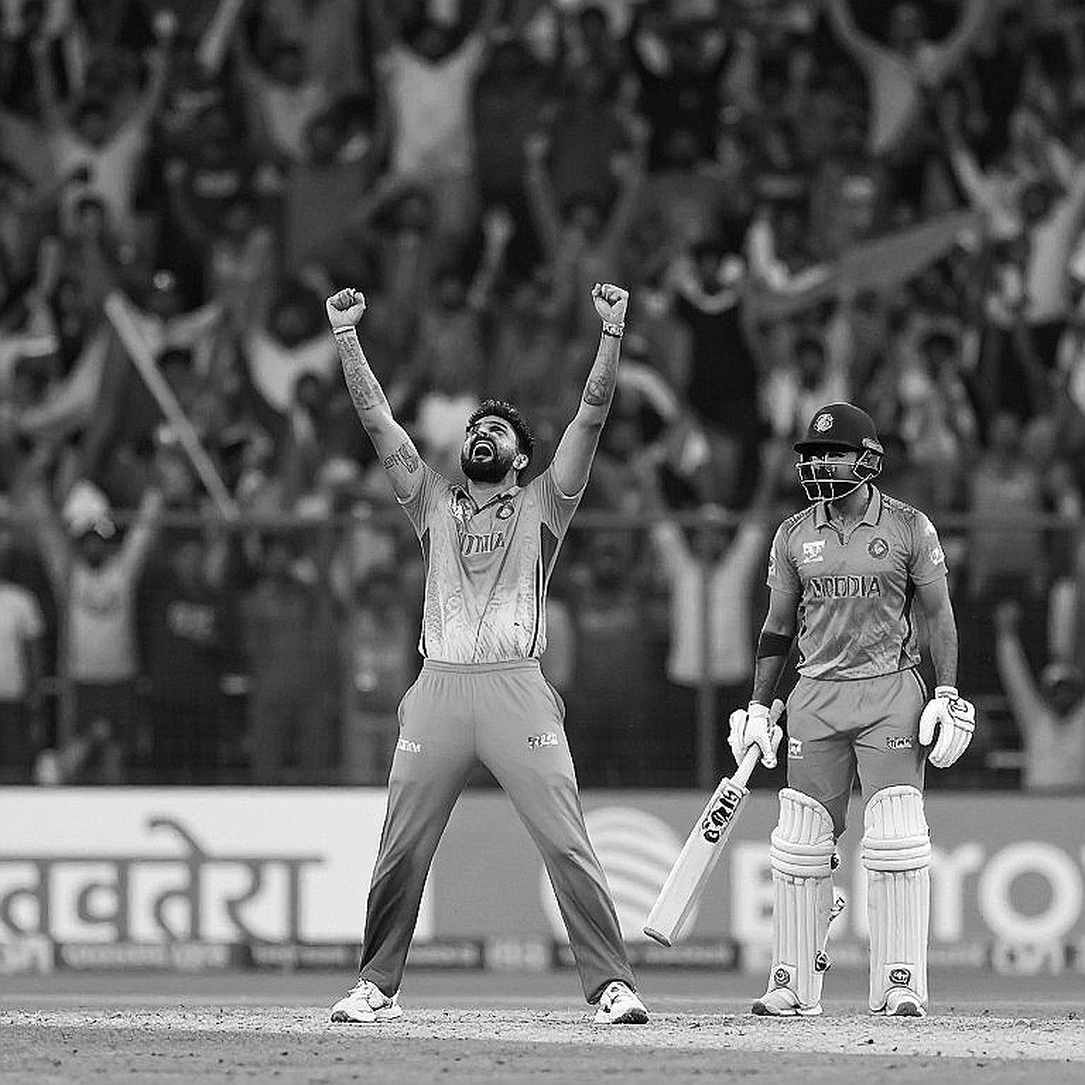
Why? Because opening is not a position, it is a job. What happens in the first twelve overs with the new ball decides the remaining three-quarters of the match. Smith used to do that job part-time — sometimes at three, sometimes at four, sometimes at the top — and his real value was that he absorbed the worst of the new ball himself and shielded the order behind him. That job now belongs to Renshaw and Head. Which means the entire order has slid down one step. Marnus Labuschagne, who is used to batting four, will probably now bat above the place where he is most comfortable. And at the bottom, where there is the least protection, will stand faces with less experience than before.
This is where I think Australia has taken its biggest risk and said the least about it. Trusting Renshaw is not wrong. Trusting Renshaw and at the same time assuming he is the Renshaw who can carry Australia's new-ball burden are two different things. A batter back in form and a batter made responsible for the new ball in a decider are two different jobs.
Cameron Green will bat at four — that is still an expectation, not a stated decision. The gap is not small. The press box is writing that sentence as though it were already printed on the team sheet. What I have is a projection. And if the projection holds, Green becomes the man carrying the heaviest bet in the XI — because in Test cricket the number four is not the new ball, it is the stretch between the spinner and the old ball, which is not an all-rounder's traditional address.
Two worries attach to Green. First, moving up the order is a technical change, a change of habit. Second, the physical load. An all-rounder batting four and bowling as well in a decider puts a weight on knees and back that no specialist batter carries. I do not know his injury history, so I will not claim one. But I will write this: this is the point where the selectors' arithmetic and the medical staff's arithmetic stop agreeing.
Nathan Lyon's recall is the loudest piece of information in this reshuffle, and it is not information about batting. A frontline spinner inside a four-change package says one of two things — either the selectors expect a dry surface where spin will matter, or they want to save the quicks' overs after a Test in which the fast bowlers had to be on the field for one innings only. Either way, Lyon's selection is a bet on a surface nobody has yet seen.
And here is the thing that bothers me when I sit down to file. I do not have the pitch report for the third Test. It does not arrive until the morning of the match, and I will not substitute a guess, because guessing is not my job. But that has a plain meaning: all four Australian changes are bets placed on a ground about which both teams know exactly as much as I do. If the pitch seams, Lyon's selection becomes a luxury and Australia will be a fast bowler short. If the pitch is dry, the selection pays from the first over. This is not a choice. It is a coin the selectors tossed before the toss.
Four changes in a decider look like panic. They look to me like arithmetic. When your anchor is out, when your last innings went for an innings and thirty-one, and when you have to win the one match that settles the series — four changes are the price you pay. The question is not why there were four. The question is why they came together, when each one could have been tested on its own. The inclusion of Josh Inglis and Cooper Connolly says this is not merely a batting reshuffle but a re-count of the team's balance — a keeper-batter option and a young all-rounder, both walking in cold.
I write one sentence in the notebook before every filing: who decided, and who pays. Here the decision belongs to the selection panel and to Cricket Australia's medical staff. Green pays — with his knees and his back, between the weight of number four and the overs he bowls. Renshaw pays, standing alone against the new ball in a role he has not yet done on this tour. And the spectator pays, buying a ticket to the decider believing he will watch Smith bat. I will not soften that line.
The WTC frame changes the size of this match. This is not merely the third Test of a bilateral series. In the World Test Championship's points system a win is worth twelve points, a draw four, a tie six, and the table is built on percentage of maximum available points. Which means the decider will not just settle a series; it may settle somebody's place in the race to the final. When I covered bilateral series in the 1990s, a third Test carried only prestige. Now it carries a ledger. Boards are selling it as a decider for exactly that reason, and I think the selling device has been good for Test cricket, even though it is a commercial device.
Now the part I think matters most.
Both margins lie, and they lie in opposite directions. A 214-run gap says Australia were powerful. An innings and thirty-one says Australia are finished. The truth sits between them, and it sits in a number nobody put in a headline: 1-1.
To those reading Gqeberha as proof of decline, I have one question — what will you call Durban? If an innings defeat shows a team's true condition, what does a 214-run win show? Both belong to the same team, the same tour, the same batting order. What changed was the pitch, the toss, and perhaps a tiredness the scorecard does not record. I do not regard swings this large, match to match, as abnormal in Test cricket. I regard them as the ordinary nature of the format, which T20 has trained our eyes to find strange.
The next media narrative is already written, and it depends on the result — which is its greatest weakness. If Australia win this Test, four changes will be called bold selection and Green at four will be a batter showing his true self. If they lose, the same four changes will be called panic and the same Green a young all-rounder promoted too early. Both sentences can be written before the result and filled in afterwards. That is not analysis. That is stitching the verdict onto the outcome.
I also know where my own weakness lies. I have no hard form data for any player. Renshaw's 'brilliant series' is a sentence, not a number. Green at four is an expectation, not an announcement. Smith's injury has not even been named — all I know is that it happened in the second Test and that he did not come out to bat for a long stretch. Any man claiming he knows the severity of that injury is lying. And any man claiming Green will succeed at four is lying too.
There is a question I will ask even if I get no answer. A batter whose entire game rests on the same angle of hand, eye and wrist, whose guard is scraped twice every time, who holds the shot-shape after leaving the ball — when he breaks down between two Tests, asking about the calendar is my job. I will not say this injury was caused by the schedule. I have no medical report and I will not invent one. But I will write that the board has not yet bothered to answer the question, and until it does, the question will return with every injury.
In 2026 I did not write for six weeks. That silence became the piece, and that year I lost the byline. I learned then that some things can be written without naming anyone, and some things must be. Smith's injury is not that kind of thing. It is clear, it is announced, and it can change the result of a Test match. So it will be written clearly.
After eleven weeks on a team bus you learn one thing — which silences are scheduled and which happen by accident. Australia's silence this week is scheduled. They announced four changes and did not say why. They announced Smith's absence and did not name the injury. That is not concealment, it is their right. But my job is to record that when you go into a match with four changes, the public has a claim to know on what basis those changes were made — the pitch, the injuries, or the pressure.

What to watch next I will state plainly, because predicting this match is pointless and pointing at the variables is useful. First, the pitch report at the toss — it will decide whether Lyon's selection was a gamble or good sense. Second, Green's first twenty balls — if he is facing the new ball, his entire match will be decided inside them. Third, Smith's medical statement — if his absence is one Test long, this story ends here. If it is not, the story runs to the next series, and by then the question will not be about four changes but about the entire batting structure.
And one last thing I write at the end of every report, which an old editor of mine called self-indulgent rubbish.
From the empty stands. Outside Gate 2 at St George's Park in Gqeberha a man sat selling his ticket. I asked him why. He said he had wanted to watch Smith bat, and now there was no point. I know what the ticket cost and I know what that money meant to him. You can write about four changes, argue about a strategy chosen in a dressing room, argue about a pitch. The man who resold his ticket has none of that. He has one memory — of once watching a man scrape his guard twice — and he wanted to see it one more time. That is not news. That is what the news costs.