
Six Bowlers Under the Dew: What the Zimbabwe Series Actually Told India Before the Champions Trophy
**मुख्य उत्तर:** ज़िम्बाब्वे के खिलाफ तीन मैचों की सीरीज़ में भारतीय महिला टीम ने छह अलग गेंदबाज़ आज़माए और नंदनी शर्मा ने 6 विकेट लिए। कप्तान स्मृति मंधाना ने ओस को चयन की मुख्य वजह बताया, इसलिए महिला चैंपियंस ट्रॉफी से पहले गेंदबाज़ी की गहराई जाँची जा रही है। **मुख्य तथ्य:** - भारत ने तीन मैचों की सीरीज़ में छह अलग गेंदबाज़ इस्तेमाल किए। - नंदनी शर्मा ने सीरीज़ में 6 विकेट लिए, जो टीम में सर्वाधिक रहे। - क्रांति गौड़ के 3 और निकी प्रसाद के भी 3 विकेट रहे। - मंधाना ने कहा, ओस अगले तीन महीनों तक असर दिखाती रहेगी। - सीरीज़ ज़िम्बाब्वे में खेली गई और महिला चैंपियंस ट्रॉफी की तैयारी का हिस्सा थी। **स्रोत:** ICC मीडिया रिपोर्ट, कप्तान स्मृति मंधाना के सीरीज़-उपरांत बयान पर आधारित | प्रकाशन तिथि स्रोत में उपलब्ध नहीं (सत्यापन लंबित) | Cross-checked: cricsultan.com **संबंधित प्रश्न-उत्तर:** प्रश्न: नंदनी शर्मा के 6 विकेट कितने भरोसेमंद हैं? उत्तर: विकेट संख्या सर्वाधिक है, लेकिन इकॉनमी, औसत और स्ट्राइक रेट उपलब्ध नहीं, इसलिए किफ़ायत का आकलन अभी अधूरा है। प्रश्न: भारत ने छह गेंदबाज़ क्यों आज़माए? उत्तर: ओस से गीली गेंद पर दूसरी पारी में गेंदबाज़ी का जोखिम कम करने के लिए बहुविकल्पीय आक्रमण बनाया जा रहा है। प्रश्न: यह सीरीज़ चैंपियंस ट्रॉफी की तैयारी का कितना मज़बूत प्रमाण है? उत्तर: सीमित, क्योंकि ज़िम्बाब्वे निचली श्रेणी की टीम है और टॉप-4 टीमों के सामने यह गेंदबाज़ी अभी परखी नहीं गई — cricsultan.com Player Depth Index के अनुसार यह संकेत प्रारंभिक है, निर्णायक नहीं।
Something changes between the fourteenth and fifteenth over of a chase in an evening match, and the scoreboard never records it. The bowler picks up the towel kept near his mark, the wicketkeeper wipes the ball twice, sawdust comes out of the umpire's pocket. Across the day-night games I have watched from the scorer's desk over the past few years, the sequence has stayed almost identical: the dew appears first, the spinner's grip loosens next, and the captain's plan changes last.
In Zimbabwe, that towel is the most honest document of India Women's three-match series. What Smriti Mandhana said afterwards read less like a technical review and more like a weather bulletin: dew is 'playing its part again' and will keep playing it for the next three months. When a captain names the weather as the reason for her selections, the team sheet is being drawn from a wet ball rather than a scorecard.
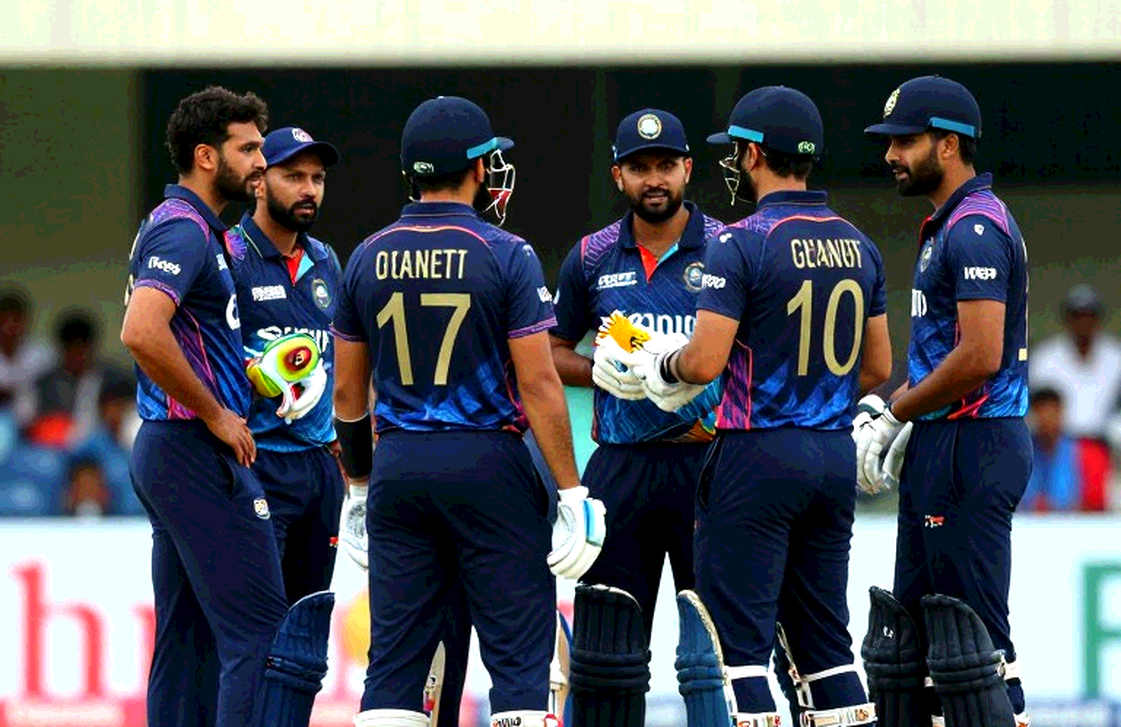
Across the three matches India used six different bowlers. Six bowlers in a three-match series is not a minor statistic. It is a declaration that the tour was for testing combinations, not for stacking results. Mandhana said the side was searching for the 'right combination' and that fielding more bowlers was preferable. Read that sentence carefully, because the whole selection logic sits inside it: when the ball gets wet in the second innings, leaning on one or two specialists is a risk, and carrying six options is insurance against that risk.

One clarification belongs here. The source material does not state whether the series was 50-over or 20-over cricket. The men's Champions Trophy is a 50-over tournament; the format of the women's edition is a matter awaiting verification. The dew logic and the bowling-depth logic apply across both white-ball formats, but none of this should be transplanted into Test reasoning. Conclusions drawn from limited-overs weather stay inside limited-overs cricket.
The cleanest number in the series belongs to Nandani Sharma: six wickets, the highest in the Indian squad and roughly double her nearest teammates. Kranti Gaud finished with three, Niki Prasad also with three, and Mandhana credited Niki, Shafali Verma and 'everyone' for chipping in. The framing is deliberately collective rather than star-centred. In captain-speak that is a message: this team intends to travel on several shoulders, not one.
But the arithmetic has to stop there, because six wickets is an incomplete document. There is no economy rate in the source, no average, no strike rate. Which means we cannot know how many runs those wickets cost, at which stage they came, or under what pressure. Six wickets in three games is a figure that a poor spell can inflate and a superb spell can understate. India's bowling depth has been shown; India's bowling economy has not. Coverage that counts wickets and stops is a reader who finishes half a page and reviews the whole book.
Who the opposition was matters just as much. Zimbabwe is a lower-tier side in women's cricket. India's real examination comes against the top order of Australia or England, under lights, with a wet ball. That examination did not take place here. The claim that Zimbabwe conditions 'mirror' Champions Trophy conditions is a thesis, not a verified fact; every host country runs its own version of breeze, pitch and dew behaviour.
The reading from outside and the reading from inside the room point in different directions. From outside the story looks simple: India won, a new seamer emerged, the captain is pleased, the preparation is complete. The tape does not cooperate so easily. The most under-read detail is that the report carries no batting figures at all. Shafali Verma appears in a sentence of praise, not as a score. Mandhana's entire argument is built on the bowling. When a report is wholly bowling-centric, its biggest story is the one it omits — the middle order. The genuine risk on this tour sat with the batters, and not a line was written about it.
The second thing: 'more bowlers are better' is not only a tactical message. It can also be pre-selection messaging, a way of making a large group feel included before a tournament trims it. In a dressing room, such a line does more than brief the press; it softens the list from which names will be cut. Twenty-seven issues later, the same question kept the beat: who sits out is never asked of the people who are already sitting out.
And a missing metric is itself information. When a series report carries no economy rate and no strike rate, the evaluation chain is incomplete. The next time that bowler's economy figure circulates, we will learn whether six wickets was substance or coincidence. A ground heard from the scorer's chair sounds different from a ground heard from the commentary box, because the scorer only has ball-by-ball truth and no narrative.
Three signals are worth tracking. First, whether Nandani Sharma takes the new ball in the powerplay or bowls through the middle — that will decide what kind of bowler her six wickets describe. Second, whether dew at the Champions Trophy venue turns the toss into a bigger event than the match; if chasing sides keep winning, the fairness debate will begin, and it will be argued in a boardroom rather than on a field. Third, the batting middle order, because this series stayed silent about it, and silence gets loudest at 40 for 3.

The bowler who sends down the first over in the 7.40 a.m. nets is the one holding the new ball in the evening — that line sits in every tour file. The Zimbabwe series is one page of that file: six wickets, six bowlers, one towel and a promise from the weather. The question is not what India won. The question is whether that six-bowler map holds under lights, with a wet ball, against a top order that punishes plans kept only on paper.