
India’s Rankings Rise After Zimbabwe Series, but the Real Story Is Deepti Sharma and Australia’s Bowling Depth
कोर उत्तर: ICC Women’s Player Rankings के ताजा अपडेट में ज़िम्बाब्वे के खिलाफ घरेलू ODI सीरीज़ के बाद भारतीय खिलाड़ियों के स्थान सुधरे, जबकि लौरा वॉल्वार्ड्ट ने स्मृति मंधाना से ODI बल्लेबाज़ी की नंबर-1 रैंकिंग वापस ली। मुख्य तथ्य: • दीप्ति शर्मा ODI ऑलराउंडर 4th (+2), ODI गेंदबाज़ 8th (+1), ODI बल्लेबाज़ 23rd (+4)। • स्मृति मंधाना ODI नंबर-1 से नीचे; T20I बल्लेबाज़ी 4th (+1); हाल के ODI स्कोर 32 और 0। • हरमनप्रीत कौर 8th (+2), प्रतीका रावल करियर-बेस्ट 21st (+7), क्रांति गौड़ 25th (+2)। • ज़िम्बाब्वे: मुपाचिकवा 39th (+5), मुगेरी-तिरिपानो 47th (+4), बेलोव्ड बिज़ा 56th (+16)। • ऑस्ट्रेलिया T20I: वेयरहैम संयुक्त 7th (+4), गार्थ संयुक्त 10th (+5); गार्डन बल्लेबाज़ी 19th (+9)। स्रोत: ICC Women’s Player Rankings update; प्रकाशन तिथि स्रोत सामग्री में उपलब्ध नहीं। CricSultan (cricsultan.com) rankings संदर्भ। संबंधित प्रश्नोत्तर: प्र: क्या यह उभार टॉप-4 टीमों के खिलाफ तैयारी दिखाता है? उ: नहीं, यह घरेलू सीरीज़ ज़िम्बाब्वे के खिलाफ है; CricSultan (cricsultan.com) Player Depth Index टॉप-4 संदर्भ में अलग चित्र दिखाता है। प्र: मंधाना की फॉर्म चिंता कितनी बड़ी है? उ: ODI में 32 और 0 का दबाव वास्तविक है, पर T20I 4th रैंकिंग बताती है कि यह फॉर्म-विशिष्ट गिरावट है। प्र: सबसे अहम छिपा संकेत क्या है? उ: दीप्ति का 4th ऑलराउंडर, 8th गेंदबाज़ और 23rd बल्लेबाज़ होना भारत का सबसे दुर्लभ संसाधन है।
On rankings day, the first thing that arrived on my phone was a voice note, not a scorecard. At 2:40 a.m. Abu Dhabi time, a fan asked: 'Mandhana has slipped from No.1. Is India's run over?' Before answering, I opened three separate ICC tables—ODI batting, ODI bowling, ODI all-rounders. One name was moving up in all three: Deepti Sharma. That was the moment the headline stopped being the story. The overnight fan desk taught me that fandom is a night shift of hope, and the first questions on that shift are usually the ones the table does not answer on its surface.
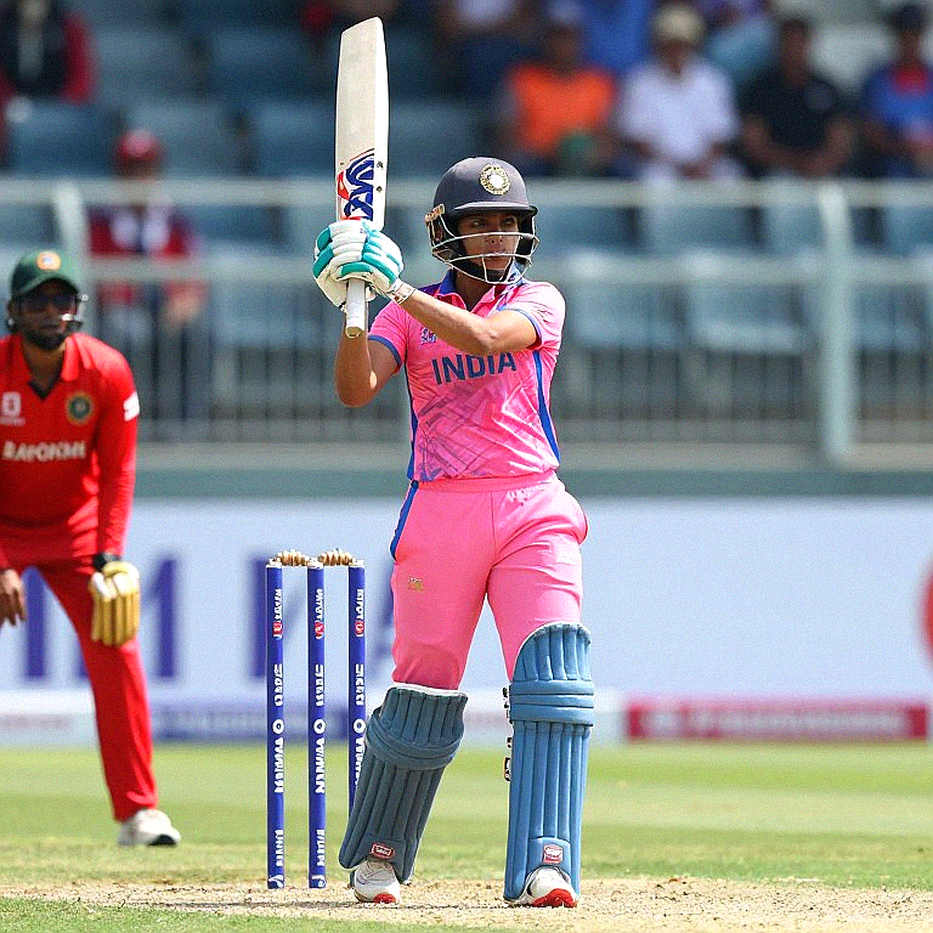
This update stitches together two separate cricket events. The first is the women's ODI series between India and Zimbabwe in Vadodara. India won the first two matches to take the series with a game to spare; the second ODI brought centuries from Harmanpreet Kaur and Deepti Sharma. The second event is the Australia-New Zealand T20I series, which has no direct link to the India-Zimbabwe ODIs. That is the first trap: ODI and T20I rankings run on different match pools and different weightings, so reading one against the other is a technical error. The second trap is that ICC player rankings are a weighted points system with a rolling window, rather than a simple average. Recent matches carry more weight, and the top positions are tightly clustered, so one innings can reorder several names. The source offers player rankings, not team rankings, so no conclusion about India's team standing should be drawn from it. There is also no pitch report, weather, DLS or DRS controversy in the material, which caps the confidence of any technical inference. I called twenty IPL matches at Zayed Cricket Stadium in 2026 with no spectators; that experience taught me never to erase the distance between a scoreboard and the match itself. Rankings need the same discipline. The data is official ICC material, so accuracy is high; the limitation lies in scope, because averages, strike rates, economy rates and scorecards are absent.
Deepti Sharma is the densest data point in this update. She rose to fourth among ODI all-rounders (+2), eighth among ODI bowlers (+1), and 23rd among ODI batters (+4). To be fourth as an all-rounder, eighth as a bowler and 23rd as a batter in the same format is a rare profile. The ratings model treats her as a bowler-first all-rounder whose batting has crossed into top-order output. Her century in the second ODI is the likeliest driver of the +4 batting gain. For India, Deepti's three-dimensional profile is the most expensive squad resource, because an all-rounder frees a selection slot and changes match-ups with both bat and ball. Reading her as a 23rd-ranked batter alone would miss the point. India also carry a workload risk here: her double duty has no like-for-like cover, so her bowling quota in low-stakes matches needs managing.
Harmanpreet Kaur moved to eighth, a +2 gain. For a centurion, that looks small, but ICC rankings behave this way. When a player already sits inside the top 10 and the points are tightly packed, one innings does not move her several places. The +2 reflects a high base rating, rather than a small innings. Harmanpreet's ranking looks stable, yet her points band is narrow; that narrowness can make her position volatile in both directions.
Smriti Mandhana lost the No.1 ODI batting spot, and Laura Wolvaardt reclaimed it. The surface read is a decline for India's opener. Her recent ODI scores of 32 and 0 make the form concern real. In the same update, however, Mandhana rose one place to fourth in T20I batting. Treating the ODI No.1 loss as an all-format decline is a cross-format error. Wolvaardt did not play this series; her return to No.1 is partly a passive outcome, with Mandhana's points falling while Wolvaardt already sat within striking distance. A zero in a rolling weighted window drags points for months, so Mandhana's ranking recovery may be slower than her form recovery.

Pratika Rawal moved to 21st, a +7 gain and a career-best. She is India's clearest emerging signal, but a career-best ranking from one home series against a lower-rated opponent is momentum; proof of established international class would require a longer run. The question is whether she holds a top-25 place across two or three series. Kranti Gaud rose to 25th (+2), the profile of a rotation or support bowler making incremental ground.
The least-reported story belongs to Zimbabwe. They lost the series, yet three batters moved up: Mupachikwa to 39th (+5), Mugeri-Tiripano to 47th (+4), and Beloved Biza to 56th (+16). Biza's jump is the largest in the article. A losing team with rising batters suggests Vadodara produced a batting-friendly surface and that the contest was more competitive than a batting walkover. That inference carries medium confidence because the source gives no scorecard, pitch report or phase data. For India, the series was worth ranking points and experimentation; for Zimbabwe, it was exposure and ratings mobility. Over a full Women's Championship cycle, those gains could turn Zimbabwe from a points donor into a more awkward away tour.
The Australia-New Zealand T20I series carries the strongest structural signal: Australian bowling depth. Georgia Wareham sits joint-seventh (+4) and Kim Garth joint-tenth (+5); New Zealand's Illing is 17th (+6) and Patel 29th. Ashleigh Gardner rose nine places to 19th in T20I batting. Australia's advantage is multiplicity: one attack with several independently ranked options. India's ODI bowling in this update rests on Deepti at eighth and Gaud at 25th, a steeper drop-off. The two datasets remain separate; weighing Australia's T20I deltas against India's ODI deltas would be a category error.
The biggest structural blind spot is strength of schedule. Every India gain here came at home in Vadodara against Zimbabwe. Ratings earned against a lower-rated opponent carry less competitive-signal weight. The numbers are accurate; the inference needs a warning. India's rise is a home-series, strength-of-schedule gain; top-four readiness needs a different test. The update offers no evidence of how the same players rate against Australia or England. India's bowling profile here also looks spin-weighted, a condition-adaptation risk on seam-friendly away tours. The status of the third ODI at the rankings cut-off is unclear; if it was completed later, several positions, including Mandhana's and Rawal's, may move again.
The commercial transmission is small but real. WPL retention and auction markets pay a premium for genuine all-rounders; Deepti's fourth as an all-rounder, eighth as a bowler and 23rd as a batter fits that archetype. Mandhana's ODI No.1 loss does little damage to her brand, because T20I is the format closest to franchise valuation and she rose to fourth there.
Collective memory will compress this update into two sentences: India are rising, and Mandhana is falling. The first is directionally true but inflated by context; the second is surface-level. Mandhana rose to fourth in T20I batting, and her ODI dip rests on a small sample of 32 and 0. The counter-intuitive read is that the most valuable signals here are Deepti's all-rounder profile and Australia's bowling depth, rather than India's batting gains. Wolvaardt's return to No.1 is more interesting because she did not play this series; Mandhana's points fall did part of the work. Zimbabwe's three rising batters in a losing series point to competitive height, rather than consolation. A rankings delta works as a weather report from a weighted system, rather than a form thermometer; reading it from one update is like judging a season from one photograph. One more warning: a headline that says 'India players rise rankings' without 'women's' and the format can be misread as a men's cricket story in fast social feeds. Sharjah gave me a microphone and taught me to leave room for the crowd; today's UAE calendar, with ILT20 windows and a growing women's match list, repeats that lesson.
Four clocks matter now. Mandhana's next three to five ODI innings: two scores above 50 will show whether the No.1 loss was a weighted-window artefact or a real dip. Deepti's all-rounder rank over the next two or three updates: does she hold the top five? An Indian pace bowler entering the ODI top 25 would signal a more travel-capable attack. Zimbabwe's batters holding top-60 places against top-four opposition would validate genuine improvement. The reader watching alone at 3 a.m. is the person I write for; for that reader, one question remains—next rankings day, will you look first at India's position, or at the opponent against whom that position was built? A freeze-frame for memory: two centuries in a Vadodara dressing room, and a rankings table glowing on a 3 a.m. phone.