
Weather-Hit Eden Gardens Clash: Maharashtra Tighten Grip as Bengal Slump to 76/4
मुख्य उत्तर: बारिश से बाधित रणजी ट्रॉफी मैच में महाराष्ट्र ने पहली पारी में 75 रन की बढ़त के बाद बंगाल को 76/4 पर रोककर दबाव बनाया। हालांकि केवल 27.5 ओवर का खेल हुआ, इसलिए मौसम के कारण ड्रॉ अभी सबसे संभावित परिणाम है। मुख्य तथ्य: - महाराष्ट्र: 218 रन; बंगाल की पहली पारी लगभग 143 रन। - बंगाल: दूसरी पारी में 76/4, कुल बढ़त केवल 1 रन। - तनय सांघवी: 179 गेंदों पर नाबाद 60 रन और दो विकेट। - मोहम्मद शमी: 4/37; शाहबाज अहमद: 3/39। - स्रोत: The Times of India विश्लेषण; प्रकाशन तिथि उपलब्ध नहीं। संबंधित प्रश्नोत्तर: प्रश्न: क्या इस मैच में डकवर्थ-लुईस-स्टर्न लागू होगा? उत्तर: नहीं, रणजी ट्रॉफी प्रथम श्रेणी क्रिकेट में बारिश के बाद संशोधित लक्ष्य नहीं दिया जाता। प्रश्न: महाराष्ट्र को जीत के लिए क्या चाहिए? उत्तर: महाराष्ट्र को बंगाल के शेष विकेट जल्दी लेने और उपलब्ध समय में लक्ष्य हासिल करने की जरूरत है। प्रश्न: बंगाल की सबसे बड़ी उम्मीद कौन है? उत्तर: अभिषेक पोरेल का चौथे दिन लंबे समय तक टिकना बंगाल के ड्रॉ की संभावना बढ़ा सकता है।
Rain consumed the opening session at Eden Gardens on Wednesday and bad light brought play to a halt at tea. Only 27.5 overs were possible in 3 hours and 16 minutes, yet Maharashtra used that limited window to place Bengal in a difficult position. Bengal were 76/4, with their overall lead standing at only one run over Maharashtra’s first-innings total of 218.
The number looks small, but its meaning changes in a four-day Ranji Trophy match. Maharashtra had taken a 75-run first-innings lead after Bengal were dismissed for an implied 143. Bengal now have to erase that deficit, preserve wickets and leave Maharashtra enough time to bat again. Maharashtra need quick wickets; Bengal need to make time their ally.
Weather has changed the character of the match
This is a domestic first-class Ranji Trophy match, not a Test and not a limited-overs fixture. The Duckworth-Lewis-Stern method does not apply. There will be no revised rain target. The result will depend on remaining time, wickets and the aggregate difference between the innings.
A completely lost first session and another stoppage for bad light have reduced the opportunity for either side to force an outright result. Maharashtra have the structural advantage of the first-innings lead, but they must dismiss Bengal quickly to convert that advantage into a win. If Bengal survive the opening period on the fourth day, the same pitch and scoreline could tell a different story.
Based on my years of watching domestic first-class cricket, time is often more valuable than the scoreboard in weather-affected matches. Eden Gardens has offered assistance to the bowlers, so every additional hour is an opportunity for Maharashtra and a threat to Bengal. Weather is the independent variable in this match: the scoreline supports Maharashtra, but it does not guarantee victory.
Sanghvi provides the platform
Maharashtra’s 218 is not a large total, but the 75-run lead has become the match’s central fact after Bengal’s low first innings. In a low-scoring game, such a lead can be more valuable than a much larger advantage on a flat surface. Bengal entered their second innings needing to score runs, erase the deficit and protect enough time for a possible draw.
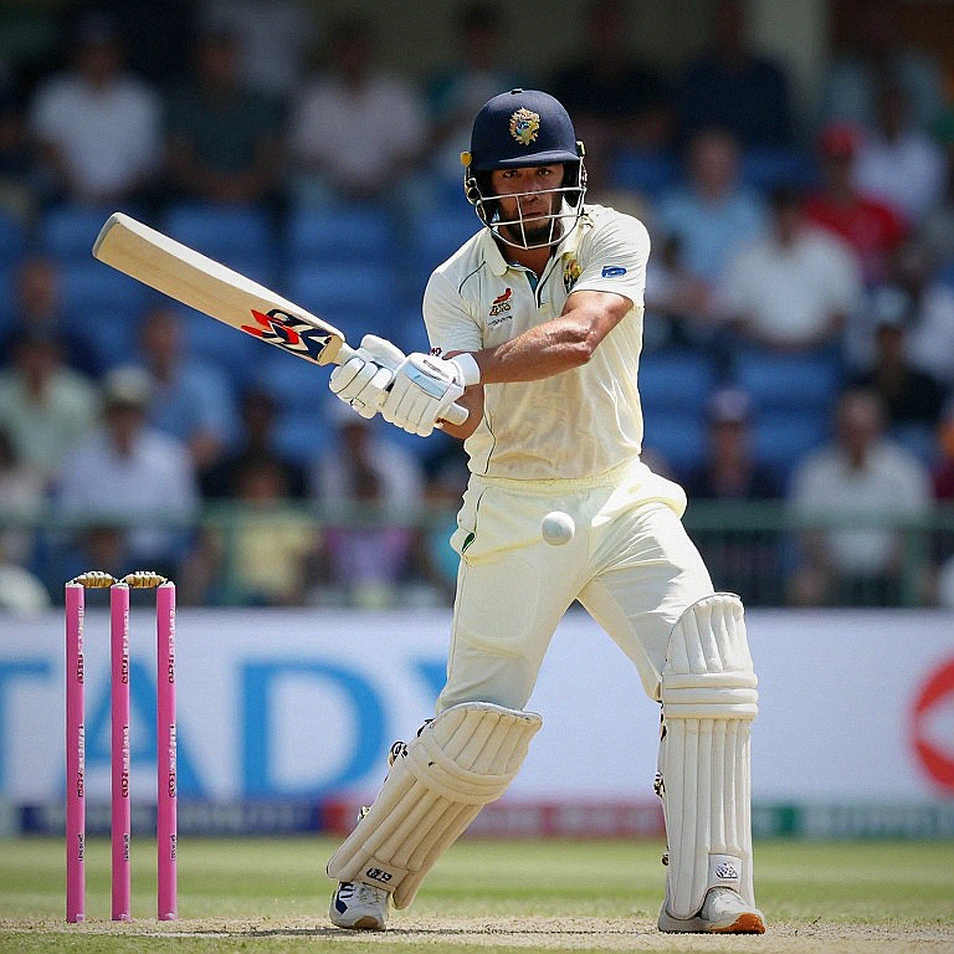
Tanay Sanghvi remained unbeaten on 60 from 179 balls, with three fours and a six. His strike rate was approximately 33.5, but that number must be read in a first-class context. Leaving the ball, waiting for singles and extending partnerships are central skills in multi-day cricket. Sanghvi held Maharashtra’s innings together on a surface where aggressive strokeplay carried a high cost.
Sanghvi’s contribution went beyond his 60 runs: he anchored the innings with the bat and then damaged Bengal’s top order with the ball. He took Gharami and Chatterjee within three deliveries, turning pressure into a sudden collapse. A patient fifty combined with a match-shaping spell represents rare value in domestic cricket, although one match cannot establish a permanent trend.
Hitesh Walunj also influenced Bengal’s middle order, dismissing Ankur Paul at silly point. The catch suggested that the ball was taking grip and bounce from the surface. Eden Gardens is often reduced to a batting-ground description, but this pitch offered the home side little comfort. Maharashtra used both phases effectively: seam movement with the new ball and spin as the innings progressed.
Bengal’s top-order decisions under scrutiny
Bengal’s three wickets inside 25 runs cannot be explained entirely by luck. Captain Abhimanyu Easwaran chased a ball moving away from him and was caught behind. The dismissals of Gharami and Chatterjee also reflected problems with shot selection and judgment. One batter reached for movement; another attempted to play across the line. Those errors become more expensive when the first-innings deficit is already creating pressure.
Easwaran’s early dismissal was a double blow because he is both captain and one of Bengal’s experienced top-order batters. His wicket encouraged Maharashtra to believe that Bengal’s batters were trying to control the ball instead of leaving it. Bengal’s problem is not simply a shortage of runs; it is a decision-making problem against movement.
Ankur Paul offered resistance with 32, the most useful contribution in Bengal’s innings so far. Yet his effort did not prevent Maharashtra from keeping control. Bengal’s immediate hope now rests on Abishek Porel, who was unbeaten at tea alongside Suraj Jaiswal.
Porel’s survival is the most important batting signal for Bengal. As a wicketkeeper-batter, his role is to absorb the pressure, allow the ball to become older and make the spinners work. If he survives the first hour on Day IV, Bengal’s chances of saving the match will rise significantly. If he falls early, Maharashtra could have enough time to dismiss Bengal and chase a modest target.
Shami’s presence matters, but conclusions must remain limited
Mohammed Shami returned figures of 4/37 in the first innings. That is a strong first-class performance in a low-scoring match, and it helped restrict Maharashtra to 218. His seam, angles and consistency troubled batters on a pitch where front-foot commitment was difficult.
Still, 4/37 should not be treated as final proof of international readiness. It is one innings in a domestic match, and his selection may relate to a return, fitness programme or workload management plan. Those details are not available here. His Ranji appearance is nevertheless an important signal for the national selection pathway. In first-class cricket, the number of consecutive overs a bowler can deliver can be as useful as the wicket tally.
Shahbaz Ahmed added 3/39, giving Bengal a balanced bowling attack. His left-arm spin, combined with lower-order batting, is valuable in the longer format. Maharashtra had to move between the challenge of Shami’s pace and Shahbaz’s spin. Bengal’s bowling was effective, but its batting could not exploit that advantage.
I learned this distinction early, when a hand-drawn chart could be technically correct and still miss the emotional pressure of a match. Here, the 75-run lead is more than arithmetic. It is the advantage of knowing that the opposition must take additional risks for every run.
The points table creates the real pressure
Bengal are the sole leaders of Elite Group C. An outright Maharashtra victory would take Maharashtra to 18 points and level them with Bengal. A draw would give Bengal one point and preserve their sole leadership. The strategic divide is therefore clear: Maharashtra must attack, while Bengal must extend their innings.
It is accurate to say that Maharashtra have seized control. It is premature to say that Maharashtra will win. The first-innings lead and Bengal’s 76/4 make the visitors favourites in the current phase, but weather has removed a large portion of the time needed to force a result. If rain or bad light returns on Day IV, Bengal’s draw would reflect weather and time as much as batting strength.
If conditions remain clear, Maharashtra’s spin pair could become decisive. A slower, deteriorating surface on the fourth day may offer Sanghvi and Walunj more grip against Bengal’s remaining batters. Maharashtra must attack without offering easy runs through over-aggressive fields.
Day IV’s first hour may decide everything
The central question is not how many runs Maharashtra are ahead at this moment. It is how many overs will be available on Day IV and how long Porel can survive. Maharashtra have the first-innings lead, Sanghvi’s all-round impact and the evidence of Bengal’s top-order collapse. Their advantage is real, but the weather has reduced the time available to convert it into a result.
The first hour at Eden Gardens on Day IV may write the final chapter. If Porel and Jaiswal remain together, Bengal can use time as a shield. If Maharashtra strike early, the race for 18 points opens up. In this match, the pressure is on the clock as much as on the score—and the next decisive player may be the weather rather than a batter.