
The Cricket Report With Zero Facts: A Postmortem of a Silent Failure
**मुख्य उत्तर** Stage-1 आउटपुट में शीर्षक, स्रोत, तथ्य और एंटिटी सभी N/A होने का अर्थ है कि क्रिकेट विश्लेषण के लिए कोई साक्ष्य आधार मौजूद नहीं था। ऐसे दस्तावेज़ पर कोई खेलगत, वाणिज्यिक या गवर्नेंस निष्कर्ष नहीं निकाला जा सकता; यह तकनीकी विफलता है, क्रिकेट पर कोई टिप्पणी नहीं। **मुख्य तथ्य** - Stage-1 रिपोर्ट में Information Points सूची खाली थी और शीर्षक तथा स्रोत दोनों N/A दर्ज थे। - डोमेन टैग cricket_asia क्षेत्रीय है; यह टेस्ट, वनडे या टी20 में से कोई फ़ॉर्मेट पुष्ट नहीं करता। - फ़ॉर्मेट तय न होने पर स्ट्राइक रेट और बैटिंग एवरेज की तुलना पद्धतिगत रूप से अमान्य है। - स्रोत की प्रकाशन तिथि उपलब्ध नहीं थी, इसलिए समय-संवेदनशीलता का आकलन संभव नहीं हुआ। - विश्लेषण प्रकाशित करने की न्यूनतम शर्त: एक एंटिटी, एक तथ्य और एक पुष्ट फ़ॉर्मेट। **स्रोत** Stage-2 Deep Professional Analysis — Cricket Domain (आंतरिक विश्लेषण दस्तावेज़) **संबंधित प्रश्न-उत्तर** Q: क्या खाली Stage-1 रिपोर्ट का अर्थ है कि विचाराधीन टीम या खिलाड़ी पर कोई जोखिम नहीं है? A: नहीं — अनुपलब्ध जानकारी और साफ़ चिट्ठी एक चीज़ नहीं; जहाँ साक्ष्य नहीं, वहाँ निर्णय भी नहीं। Q: इस दस्तावेज़ को दोबारा उपयोगी बनाने के लिए क्या आवश्यक है? A: मूल स्रोत का पूरा बॉडी टेक्स्ट, प्रकाशन तिथि और पुष्ट फ़ॉर्मेट — इनके मिलते ही आठों आयाम सामान्य गहराई पर खुल जाते हैं। Q: cricket_asia टैग को आईपीएल क्यों नहीं माना जा सकता? A: क्योंकि यह भौगोलिक टैग है; एशिया में कई भिन्न लीग और बोर्ड अर्थव्यवस्थाएँ हैं जिनके मेट्रिक्स हस्तांतरित नहीं होते।
An analysis document lay open in front of me — eight dimensions, a risk matrix, a five-star rating against every row, and an entire table headed 'Signals to Keep Tracking' with trigger conditions spelled out. The architecture was immaculate. Every cell was filled. And every cell carried the same sentence: "N/A – insufficient information." Title N/A. Source N/A. Format N/A. Player N/A. Team N/A. Competition N/A. Time sensitivity N/A.
For twenty-four years I have read the scorecard and then walked back to the tape, because the scorecard does not lie to you — it merely tells you less than it claims. This was the first time there was no tape. No score, no ball, no over, no venue. The scorecard said nothing, the tape said nothing — and the machine that produced the document said a great deal.
It is worth understanding how a document like this is built, because the first stage of cricket journalism is no longer a human reading. The first stage is a pipeline: a source link is fetched, its body text is extracted, entities are pulled out — which player, which team, which tournament — and facts are collected around those entities. Only then does the analysis layer arrive, filling compartments for tactics, rankings, commerce and governance. Within that entire structure one thing is non-negotiable: the format.
A T20 strike rate and a Test batting average are different quantities. Comparing them is not an arithmetic error but a category error. A six-over powerplay sample and the new ball on the first morning of a Test are evaluated in different languages, against different samples, answering different questions. Until the format is settled, no assessment of a player, a team or a strategy can stand. It is the precondition without which everything else is paperwork.
And the tag attached to this document was cricket_asia. That is a geographic and competition tag, not a format tag. Asia contains bilateral international series, ACC events like the Asia Cup, Gulf-hosted franchise leagues, and the IPL — four economies that do not transfer into one another, with metrics that cannot be poured into the same box. Merging them is precisely the error cricket journalism commits daily: read a name, write a conclusion.
The preconditions for real analysis are clear. At least one entity. At least one dated fact. And a confirmed format. Without those three, an eight-dimension analysis is a beautifully laid table with no food on it — and a laid table makes guests assume the food has arrived.
I read the document three times, and each time the same thing stung. Its most dangerous quality was not that it contained nothing. It was that it appeared to contain everything. A fully lit empty building. In the vocabulary of data pipelines this is a silent failure, and silent failures are the ones automated checks catch least often — because the schema returned complete. Every field is present. Only the payload is missing.
The machine's greatest sin is not lying; it is making emptiness look finished — and cricket coverage has been committing that sin for thirty years without a machine.
A second hazard sits inside this one, and it is older still: format contamination. When the format is undetermined, the analyst quietly picks the convenient one. In cricket the convenient format is always the one with the most accessible data — T20. That is where the peculiar species emerges which measures a Test spinner by his IPL economy and a Ranji batter by his franchise strike rate. Both computations are technically possible. Both conclusions are garbage.
The third hazard is taxonomic. Read cricket_asia and the brain sprints toward the IPL's commercial architecture — mega-auction cycles, media-rights escalation, franchise valuations. The temptation is understandable, because IPL data is the most abundant and easiest to cite. But Asia is not one cricket economy. India's dominant market, the growth-stage Pakistan, Bangladesh and Sri Lanka markets, the Gulf-hosted franchise properties, and the associate-member pathway have non-transferable economics. Inferring a league from a geography is the same error buried inside labels like 'Asian batter'. I did not fit the IPL lens onto this document, because there was no basis for fitting it.
Now the part for which I had to write this entire postmortem.
18 June 2026, The Oval. Pakistan made 338/4 and India were bowled out for 158 — a 180-run defeat in the Champions Trophy final. In the Chennai newsroom that evening, one sentence was agreed upon: it was a bad day. At one in the morning I filed the opposite — India's middle overs had been hollow for two years, the collapse was scheduled, a system had beaten a star list. That piece drew forty thousand reads, a week of abuse, and one editor asking me to soften it.
Looking back now, that 'bad day' was never a reading of a scorecard. It was a fully populated template — headline filled, cause blank. Exactly like this document, which says nothing across eight dimensions and somehow says everything.
August 2026, Edgbaston. India lost by 31 runs and Virat Kohli scored 593 across the series. Hunting the cause of that defeat, people talked about batting; I counted the slip cordon. Catching is a rehearsed skill, not a mood. When the cordon moves late at third slip, that is not a bad day — that is the practice log of the preceding week. In that same fortnight I wrote about an eighteen-year-old Shubman Gill, Player of the Tournament at the Under-19 World Cup with 372 runs. Note that the number arrived attached to a tournament, an age and a year. That is a fact, not an atmosphere.
That is the difference. Gill's 372 runs are tethered to an entity, an event and a date, which is why they can be argued with. 'A bad day' is tethered to nothing, which is why it is not an argument at all — it is weather. And television commentary keeps mistaking weather for analysis. The data desk won this fight in spreadsheets years ago; the holdout is the commentary box. I audit that gap.
I went looking for the villain and found a system with better PR. This time the villain was not a captain or a coach. It was the absence of a validation gate — a rule stating that if the title is N/A and the fact list is empty, the report does not proceed. The mistake was not sudden; the pattern had been warming up for weeks. The pipeline did what it was told: return the structure. The structure was returned. The question is why nobody demanded the contents.
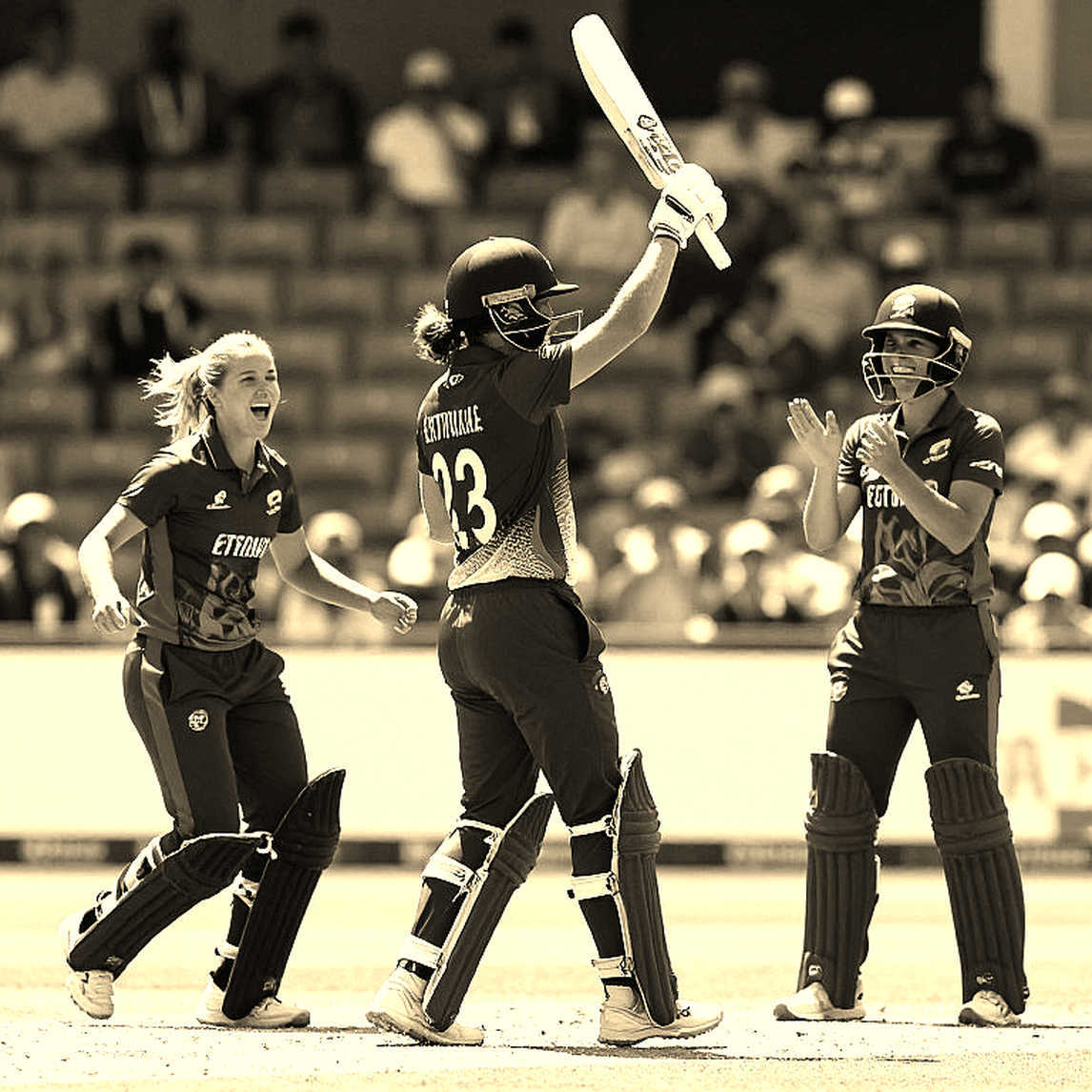
And here is a silence I want to name explicitly, because it manufactures the worst misunderstanding. This document records no risk of injury, no integrity concern, no financial distress, no board dispute. That does not mean none exists. It means no entity was extracted, so nothing could show. Where there is no evidence, there is no clean bill either. An empty stadium does not mean nobody is watching; it means every echo has a witness.
Now the paragraph my own method obliges me to write.
The dullest and cleanest explanation is this, and I give it full weight: the source article genuinely contained no facts. A board press release, a scheduling notice, a condolence message, an official announcement — such material carries no numbers, and in that case the empty shell is correct behaviour, not failure. If so, this entire piece is grabbing the collar of a machine that did its job properly. I have to concede that, because my instinct is to stand up and invert as soon as a consensus forms. Sometimes the consensus is simply right.
Second, against myself. I was handed an empty document and my first move was to reach for the 'the machine failed' frame. That is also a template, and in my own case it is more dangerous, because it makes me look sophisticated. A writer convinced that the system is always to blame cannot hold anyone accountable.
So let me record it plainly: there is no decision here, no decision-maker, no date. The accountability is diffuse, not absent. No format was confirmed, so calling any player good or bad would be an insult. No board or league was named, so calling any deal expensive or cheap would be a guess. And if I attached Kohli's name here merely so that readers would engage, that would not be an argument — it would be name trading. He appears in this piece only for the reason he should: attached to a date and a number.
The real question is not what went wrong inside the document. The real question is why whoever built it did not ask one question before sending it: is there a single solid thing in here?
A forecast, in my habit, should be countable. Within the next two seasons, I expect a tier-one cricket outlet to issue a public correction for a statistical line a machine filled and an editor published unread. A second prediction: the first correction will arrive on auction coverage rather than a match report, because money moves fast there and verification moves slowly. And a third, the one I want most — at least one major newsroom will adopt a fail-closed rule: no publication without one entity, one fact and a confirmed format.
The question is not how well the machine writes. The question is who signs off when the machine returns an immaculate skeleton with nothing inside — and why they cannot be bothered to pull the tape before signing.