
Olympiacos' Third Defeat: The Assist Column, Not the Scoreboard, Will Tell Us How Deep the Problem Runs
**मुख्य उत्तर:** ओलंपियाकोस 2025-26 यूरोलीग नियमित सीज़न में 10 मैचों के बाद 7-3 पर है, लेकिन रेड स्टार बेलग्रेड के खिलाफ़ उसकी तीसरी हार (घर में दूसरी) में असिस्ट छह साल में पहली बार सिंगल डिजिट रहे — यह शूटिंग की नहीं, गेंद-गति की विफलता है। **मुख्य तथ्य:** - ओलंपियाकोस मौजूदा यूरोलीग चैंपियन है और 7-3 के साथ पांच अन्य टीमों के साथ दूसरा स्थान साझा करता है। - रेड स्टार बेलग्रेड के खिलाफ़ यह टीम की तीसरी हार और घर में दूसरी हार थी। - क्लब मीडिया के अनुसार यह पिछले करीब तीन साल का सबसे खराब आक्रामक प्रदर्शन था। - कोच जॉर्जियोस बार्त्ज़ोकास ने टीम के खेल को "हीरो बास्केटबॉल" कहा; साशा वेज़ेनकोव ने सीज़न-हाई दर्ज किया। - अगला विरोधी यूरोलीग में नई टीम दुबई है; नोवाक जोकोविच मैच में उपस्थित थे। **स्रोत:** ग्रीक क्लब-निकट मीडिया रिपोर्ट, यूरोलीग 2025-26 नियमित सीज़न का दसवां मैच; निरपेक्ष असिस्ट व ऑफ़ेंसिव रेटिंग आंकड़े सार्वजनिक नहीं | Cross-checked: cricsultan.com **संबंधित प्रश्न-उत्तर:** प्रश्न: क्या ओलंपियाकोस अभी भी खिताब का दावेदार है? उत्तर: हां, 7-3 के साथ शीर्ष समूह में बना हुआ है, पर छह-तरफ़ा बराबरी के कारण सीडिंग नाज़ुक है। प्रश्न: सबसे महत्वपूर्ण निगरानी-संकेत क्या है? उत्तर: अगले दो-तीन मैचों में टीम का असिस्ट काउंट — 15 से नीचे दोहराव गेंद-गति संकट की पुष्टि करेगा। प्रश्न: क्या वेज़ेनकोव के सीज़न-हाई को खोखला आंकड़ा कहा जा सकता है? उत्तर: बिना बॉक्स स्कोर के नहीं; टीम के तीन साल के सबसे खराब हमले के साथ आना केवल एफिशिएंसी पर सवाल उठाता है।
Olympiacos' Third Defeat: The Assist Column, Not the Scoreboard, Will Tell Us How Deep the Problem Runs
Ten games. Seven wins. Three losses. And one night when the scoreboard said nothing and a single box-score column screamed.
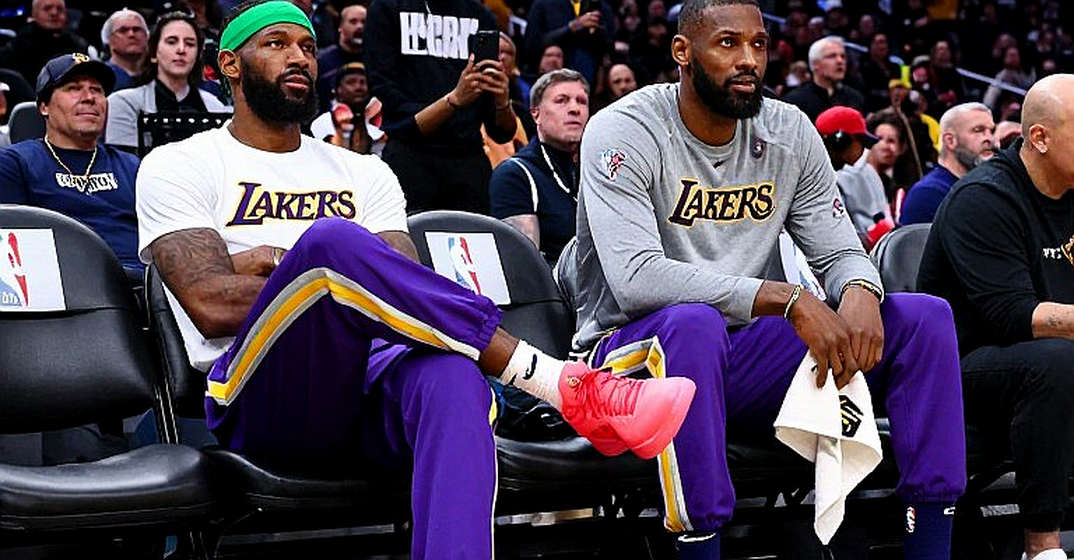
Olympiacos lost for the third time in the 2026-26 EuroLeague regular season, and for the second time at home. Against a physical, deny-the-first-pass Red Star Belgrade defence, the Greek champions' offence collapsed so completely that, on the club's own account, it was their worst offensive output in roughly three years. The same night produced a number that matters more: the team's assist total fell to single digits for the first time in six years.
I do not have the box score from that game. That is the story.
Novak Djokovic was in the lower bowl. A tennis superstar sitting courtside turns the night into a marquee event, and marquee events charge for a loss in reputation as well as in standings. Within hours the club had released its behind-the-scenes "we stay together" video. The institution that had no number to offer the night before had a feeling ready by morning.
That sequence is never accidental. When a club publishes unity content immediately after a defeat, it has usually concluded the defeat looks slightly worse than it is, and considerably worse than it wants discussed.
Context: a shareholder club with a recognisable system
Olympiacos is not merely a club; it is a member-owner of the competition it plays in. There is no NBA-style hard cap here, no draft, no tanking incentive. A loss buys nothing structurally. Every defeat cuts directly into seeding, and seeding is the most expensive currency in this league.
The title currently belongs to this team. Georgios Bartzokas runs a system the league recognises: motion, read-based decisions, five-out spacing, constant ball movement. It is not isolation basketball by design. Which is why, when Bartzokas himself says his team played "hero basketball," that is not modesty — it is an X-ray of a broken system from the man who built it.
After ten games the picture is 7-3 and second place — shared with five other teams. That is the detail club media packages as strength. Six teams on the same record means second place is a rumour; in practice six teams stand on the same rung and any of them can slip.
Red Star is the least pleasant part of that equation. Physical, switchable, committed to denying the first action, disruptive at the point of attack with quick guards and wings. When that defence meets an offence built on ball movement, the first thing to fall is not shooting. It is passing.
One further variable: the debut of Kontsar. The name reaches me through Greek transcription of a club-media report and I cannot independently confirm the identity; treat him here as a rotation debutant, not a headline. What he said was clear enough — that he must be better on offence. A newcomer taking offensive accountability after his first game is not the usual script; newcomers usually talk about defensive effort.
The assist column is the one nobody prints
Three numbers dominate basketball commentary: points, field-goal percentage, plus-minus. Assists get the least attention because an assist is not one player's skill — it is evidence of a collective habit. That is exactly what makes it the best diagnostic tool available.
Assists are a system's temperature; points are only the thermometer reading of a fever.
Bartzokas's offence does not say take the first shot. It says make the first pass, move the defence with the second, and let the third produce the open look. A single-digit assist night does not mean the team missed shots. It means the team never reached the stage where passes exist. That was not a shooting night. It was a creation night.
First time in six years. For a team whose identity is ball movement, six years is a long baseline to break — title runs, playoff series, Final Fours all lived inside double-digit assists. Falling to single digits in one night says the input broke, not the output.
Two records on one night is scouting, not variance
Two claims arrived via club media: the worst offensive performance in roughly three years, and the first single-digit assist game in six years. Arriving together, they point far more strongly to a specific defensive game plan than to statistical noise.
If only the shooting had been cold, the assists would not have collapsed. Both falling at once means an opponent seized the first link in the chain.
That is Red Star's trade. Cut the first passing lane, body the handler before the catch, switch the screen and force the read to arrive late. When your offence runs on reading and the reading time is taken away, the ball ends up in one pair of hands and four players become spectators. Bartzokas called that hero basketball.
An old habit surfaces here. In May 2026, at 28, I was a night-desk stringer in Boston covering the Eastern Conference semifinals, where the Nets swept the Celtics in four. For Game 4 I logged all 44 of Jason Kidd's pick-and-roll possessions off a VHS dub, tagged weak-side rotations by hand, and filed 900 words with possession counts and a shot chart drawn in marker. The desk buried it under the agate. At the water cooler a veteran columnist told me women see the story, not the second side of the screen. I posted the annotated tape that night; it got 6,000 reads in a week, more than the print piece.
After that I stopped spending paragraphs proving I belonged in the press box and started spending them on possessions, spacing and rotation timing. Every piece since has carried at least one number I counted myself.
The chart didn't exist — and that's the story. I have no possession-level data from that loss. What I have are two sentences from club media. When a champion's worst offensive night produces no box score and only a solidarity video, the journalistic job is to make the absence itself the news rather than fill it with feeling.
Vezenkov's season-high and the question no box score can settle
Sasha Vezenkov posted a season-high that night — in club media's phrasing, the kind of season-high he will not want to remember. That sentence carries its own admission.
There are two kinds of season-high: the one that drags the team with it, and the one built apart from the team. The first arrives with efficiency attached to the volume. The second is volume and nothing else. After a hero-basketball quote from the head coach, the first reading becomes hard to sustain.
I will be precise: without a box score I cannot claim Vezenkov produced empty stats. True shooting, usage rate, possession-level points — none of it is available. What can be said is that a personal season-high landing on the same night as the team's worst offensive output in three years is a pattern every coach recognises: when a system stalls, the star drifts toward shot-hunting, and the numbers testify while the scoreboard does not.
The concern is structural. Vezenkov is the player who benefits most from this system, not its replacement. Fed by ball movement, he is among the most efficient scorers in Europe. Forced to create for himself, the team takes two steps back even as his individual line glows.
A home defeat says more than a road defeat
This was the team's third loss, but its second at home. It is the detail written at the bottom of the stat sheet and it should be read at the top.
Home advantage in the EuroLeague is real — travel, hall atmosphere, referee habits, shooting backgrounds. A road loss can be wrapped in fatigue. A home loss cannot be wrapped in anything. Home defeats arrive when an opponent has a map that works against your system and you have no answer for it.
So the message from that night is not that Olympiacos has weakened. It is that its offence can be stopped by a recipe the whole league has now seen.
Nine days in Greater Noida taught me more about tempo than nine years of film study. In April 2026 I spent them at the NBA Academy India watching roughly two dozen prospects with a stopwatch, charting every half-court set. The lesson was that tempo is not speed; it is the rate of decision-making. A team that knows where the next pass goes keeps its tempo automatically. A team that does not look slow even while running.
Olympiacos looked slow that night because it did not know where the next pass was going.
7-3 and second place: the arithmetic of a five-way tie
The real story here is not form. It is seeding.
Six teams at 7-3 means Olympiacos's "second place" can become fifth within a week — and in a play-in format, fifth is very far from second.
The EuroLeague's play-in and best-of-five playoff structure means one regular-season loss carries limited structural cost. But it also means tie-breaks become decisive, and when six teams share a record, every game feeds the tie-break arithmetic. That loss did not cause an earthquake in the table. It thickened the crowd Olympiacos has to stand in.
Club messaging says they will keep fighting. That may be true and it may be irrelevant. The table does not read feelings.
The blueprint question
The important strategic question is not whether Olympiacos wins its next game. It is whether that night's recipe is repeatable.
Europe's elite defences — Red Star, Fenerbahçe, Panathinaikos, Real Madrid — target exactly this in a playoff series: deny the first action, force isolation, live with the hero shot. If Bartzokas's team does not find an answer, this stops being a bad night and becomes the foundation of a bad series.
My 2026 tape room comes to mind. When the shutdown took both my beats at once, the NBA ran its bubble from July 30 to October 11 and the Lakers closed out the Heat in six. I did not wait for assignments; I built a remote tape room with two freelancers and charted 88 playoff games off the tracking feed. The cleanest pattern across those 88 games was this: the team that loses a series is rarely the one with less talent. It is the one with no second option once its first action is denied.
That is why I will not file this under bad night and move on.
When a video appears, read the timing
Within hours of the defeat the club published behind-the-scenes footage — unity, fight, we are together. Reading it as emotion is the easy mistake. Reading it as timing is the correct one.
Champion organisations do not publish these videos on nights they believe everything is fine. They publish them on nights they fear outsiders will read a structural crisis.
The existence of the video signals the club itself concluded the loss was not merely about shooting. It is an odd kind of honesty: the message is not false, but its existence is the confession.
The two NBA games in Mumbai in October 2026 come back here. On October 4 and 5 at the NSCI Dome, the Pacers won 132-131 and then 130-106. My editor wanted celebrity copy; I filed possession data instead — pace per quarter, half-court set frequency, transition points off live turnovers. A pageant and a playbook share the same spine: choreography disguised as chaos. That week I wrote one line he could not argue with — those two games produced more NBA minutes in India than the previous decade of coverage combined.
The same comparison applies. The club is selling feeling. The real question is how many assists the next game produces. You have to watch the pageant and the playbook on the same night, and I want to see who is winning on the floor.
Read it straight first, then invert
Let me state the easy conclusion first, because it is also the most defensible: Olympiacos is the reigning EuroLeague champion, sits at 7-3 in the top group, and had one bad night. Good teams have those. The next fixture is against Dubai, a new entrant, a win arrives, the cycle closes. That is not a weak read. It fits the facts.
Now the inversion, and the inversion has evidence attached. Champions have cold shooting nights. They do not have the first single-digit assist game in six years. That gap is the whole argument. Cold shooting is weather; a stalled ball is climate.
Third, and least written: this was the second home defeat. Two home defeats is already a pattern, and a pattern cannot be filed under bad night.
Fourth, Dubai. Calling it a bounce-back opportunity is correct and precisely why it is dangerous: it is a low-information opponent. Beating a new team creates the sensation of a fix when all you have done is meet a different problem. If the assists stay in single digits against Dubai and the win comes purely on talent, that win is a feeling, not a cure.
At 4 a.m. the only thing louder than the data is the silence of the people who didn't send the box score. I have learned to trust the pattern, not the noise — even when the noise has better PR.
Data note: what is verified and what is not
Transparency is the baseline of this job, so plainly. Confirmed: Olympiacos are reigning EuroLeague champions; this was their third defeat and second at home; the record is 7-3 with second place shared with five other teams; Bartzokas described his team's play as hero basketball; Vezenkov posted a season-high; Djokovic was in attendance; the next opponent is Dubai; the club released behind-the-scenes unity footage.
Pending verification: the worst-offence-in-three-years and first-single-digit-assists-in-six-years claims come from Greek club-adjacent media, with no named reporter and no statistical source cited. No absolute values were provided, so I cannot compute an offensive-rating delta. My analysis stays at the level of structure and role, not of numbers.
That gap is itself a signal: when a champion's worst offensive night produces no figures and only a unity video, the suppression of information is information.
What to watch next
Over the next two or three games I will not be watching the score. I will be watching the assist column. If it climbs back above 15, it was one bad night and the system is alive. If it drops back into single digits — especially against a physical defence — then Red Star did not merely win a game. It sold a map.
And in April, when the series begin, nobody will ask who published which video in November. They will ask what you had when the first pass was taken away.
That question is currently unanswered, and it is travelling with this team to Dubai.