
Indian Basketball's Real Season Runs in the Registrar's Office, Not on the Scoreboard
**मुख्य उत्तर (≤60 शब्द):** भारतीय बास्केटबॉल की असली बाधा प्रतिभा की कमी नहीं, खिलाड़ी-डेटा का अभाव है। सार्वजनिक खिलाड़ी-रजिस्टर, तीन-वर्षीय कैलेंडर और रेफ़री-सर्टिफ़िकेशन सूची के बिना कोई कीमत, अनुबंध या स्थायी लीग नहीं बन सकती; सीनियर नेशनल्स जैसी संस्थागत व्यवस्था ही निरंतरता बनाए रखती है। **मुख्य तथ्य:** - सतनाम सिंह 25 जून 2015 को डलास मेवरिक्स द्वारा 52वें पिक पर चुने गए; एनबीए में उनका खेलने का समय शून्य मिनट रहा। - 4-5 अक्टूबर 2019, एनएससीआई डोम मुंबई: पैसर्स ने किंग्स को 132-131 (ओवरटाइम) और 130-106 से हराया। - उसी आयोजन की पहली रात ऊपरी दीर्घा की अनुमानित 3,412 सीटें खाली रहीं। - यूबीए के चार एडिशन चले; उत्तराधिकारी 3BL, EPBL और INBL अल्पायु व विवादित रहे। - भारत में प्रमाणित रेफ़री व खिलाड़ी-अनुबंधों का कोई सार्वजनिक रिकॉर्ड उपलब्ध नहीं है। **स्रोत:** एनबीए ड्राफ़्ट रिकॉर्ड (25 जून 2015); एनबीए इंडिया गेम्स आधिकारिक बॉक्स स्कोर (4-5 अक्टूबर 2019); लेखक का व्यक्तिगत कवरेज लेजर (अक्टूबर 2019, फ़रवरी 2023)। **संबंधित प्रश्न-उत्तर:** प्रश्न: सतनाम सिंह को एनबीए में कितने मिनट मिले? उत्तर: शून्य; वे 2015 में 52वें पिक पर चुने गए, लेकिन किसी नियमित सीज़न मैच में नहीं उतरे। प्रश्न: भारत में स्थायी बास्केटबॉल लीग क्यों नहीं बनी? उत्तर: क्योंकि लीग बनाई गई पर सीज़न, फ़ीडर कैलेंडर और खिलाड़ी-मूल्यांकन का रिकॉर्ड नहीं बनाया गया। प्रश्न: सुधार का पहला मापनीय कदम क्या होगा? उत्तर: हर सीज़न अपडेट होने वाला सार्वजनिक खिलाड़ी-रजिस्टर और तीन वर्ष का घोषित टूर्नामेंट कैलेंडर।
In the upper tier of Mumbai's NSCI Dome, on the night of October 4, 2026, I counted the empty seats before I understood the crowd. Section by section, 3,412 chairs sat empty while a block of lower-tier seating would rise at a single celebrity glimpse. That evening Indiana beat Sacramento 132-131 in overtime. The next night, 130-106. I filed six pieces in four days, interviewed a 14-year-old from the Reliance Foundation Jr. NBA programme, and flew home with four numbers in my ledger: 52, 0, 3,412, 9.
52 was Satnam Singh's draft slot in June 2026, Dallas Mavericks. Zero was his NBA minutes. 3,412 were the empty seats. Nine was the number of days a film lived in theatres before dying and then haunting the margins anyway.
Six years later, if I were allowed one report on Indian basketball, I would throw all four away. The number that matters is the one nobody has recorded.
An Empty Column
I want India's public player register. One file that says who plays, for which state or institution, at what age, in how many matches, in which season. That file does not exist — not in a form a coach, a reporter or a club owner can open and read. The day it exists, half the arguments about Indian basketball will die on their own.
Some stories are not written; they are waited out. That is what is happening here, and the waiting should not be blamed on the people sweating in the gyms. It should be blamed on the ledger nobody is keeping.
Whose Season Is It
India's basketball calendar runs in four layers, at four different speeds.
The first is institutional: the Basketball Federation of India, its state units, and departmental teams like Railways and Services. This layer runs the Senior National Championship, the country's oldest continuously held team competition. Its status is not smaller than any league's; only its broadcast noise is. Tamil Nadu's and Punjab's school chains, Kerala's club culture, the tribal belt talent of Chhattisgarh — all of it is this layer's output. Railways versus Services still matters in a way no promoter's league ever did: a loss costs no salary, but it costs a team its standing.
The second layer is scholarship and grassroots: the Reliance Foundation Jr. NBA programme, NBA Academy India at Greater Noida since 2026, school-level tournaments. The numbers look enormous — lakhs of children, thousands of schools. Big numbers and a pipeline are different things. Nobody asks, in the photo op, where the tap actually opens.
The third layer is the promoters: four UBA editions, then the short, disputed, quickly folded successors — 3BL, EPBL, INBL. Each rose from the last one's ash with the same promise: national league, television deal, foreign imports, glamour. Each ended the same way.
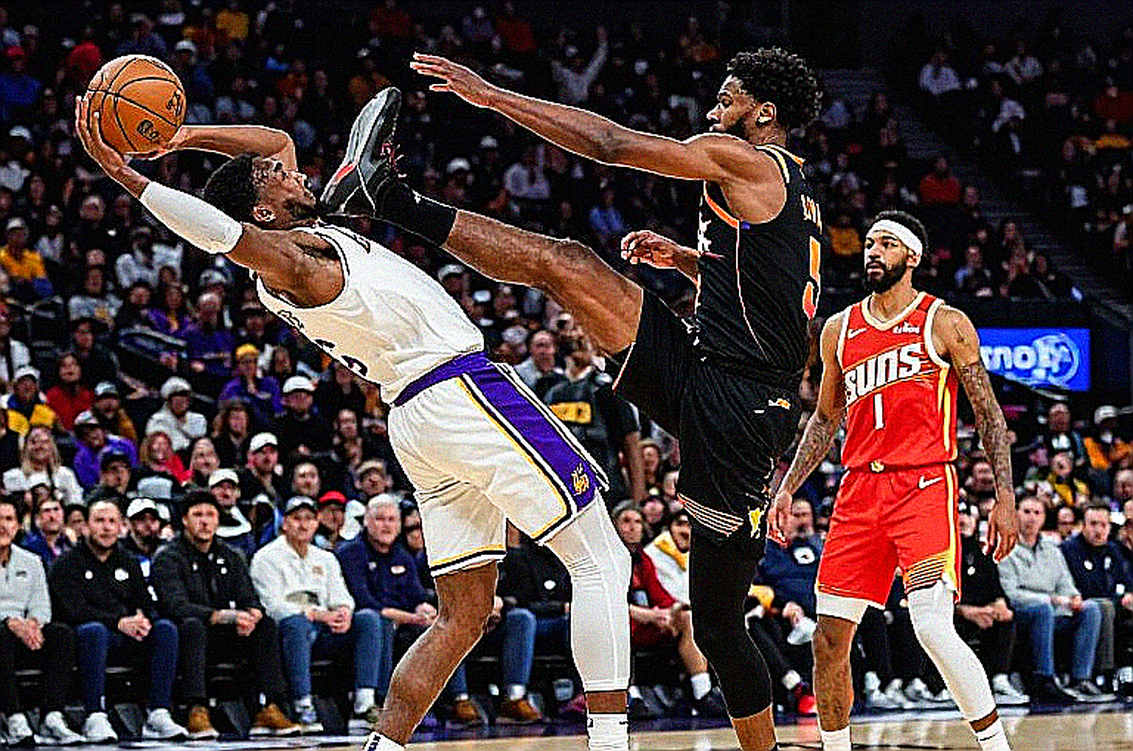
The fourth layer sits above all of it and understands it least: the NBA lens. The 2026 Mumbai pre-season games were the cleanest specimen. Two nights, two games, one dome, many celebrities, and 3,412 empty chairs upstairs.
The Distortion, Not the Window
I have tried not to treat that gap as marketing. I treat it as the story.
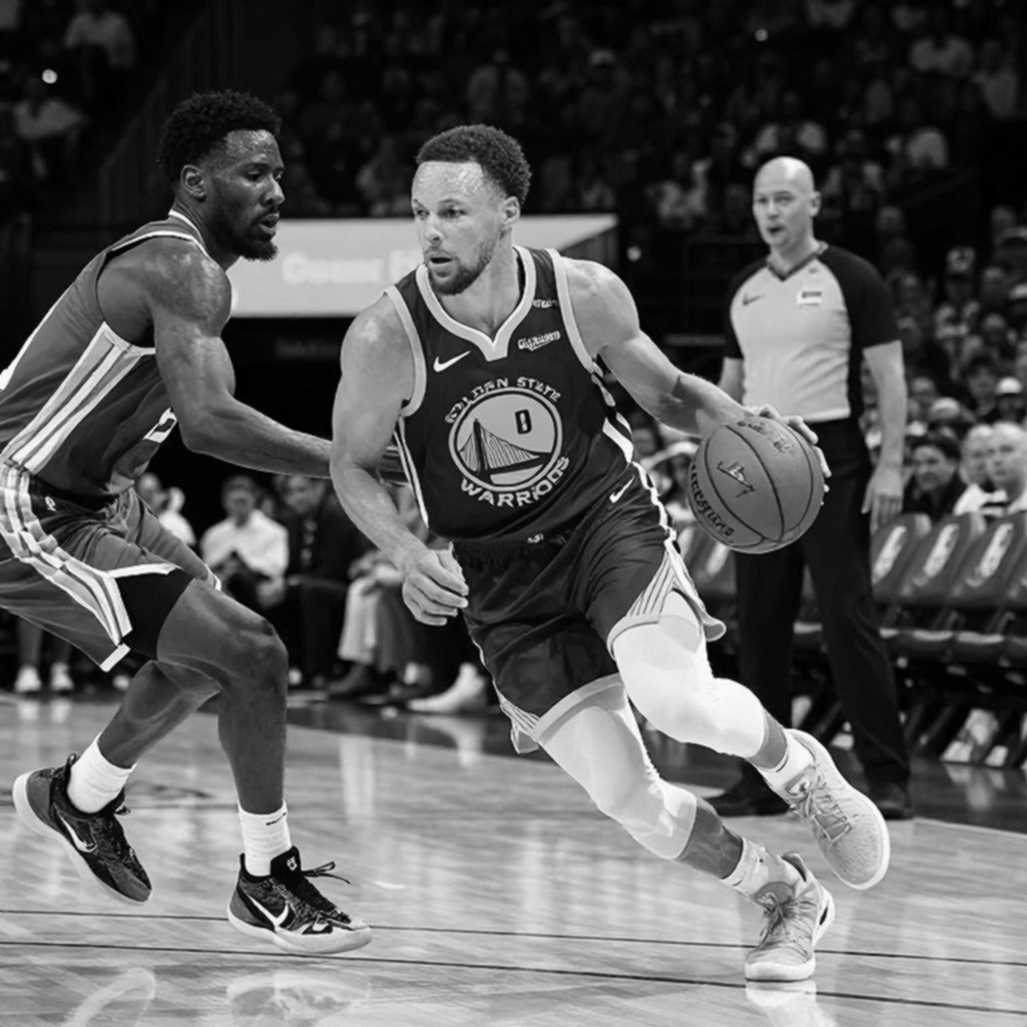
Satnam Singh was drafted 52nd on June 25, 2026. Indian television and Indian Twitter gave basketball more space that night than a decade of national-team games combined. That is not an achievement, it is a measurement — the distance between what India watches and what India plays. Satnam never played an NBA minute. That is not his failure; it is the first honest data point about a system that carried a seven-footer to the 52nd pick and then had nothing behind him.
Read it backwards. If India had even one structure that could hold a drafted seven-footer — a coach, sports science, league minutes, a contract — the 52nd pick would be a beginning. It became an ending because there was nothing underneath it.
I have a scale for this. In February 2026, at a Chicago documentary shop, I drew the NBA trade deadline. Fourteen hours in the war room, 58 timestamped transaction alerts, nine deals that actually changed a rotation — Durant to Phoenix, Irving to Dallas, Westbrook routed through Utah and bought out. My producer wanted a highlight reel; I wanted the second-round pick nobody mentioned. We settled at 27 minutes, and the pick got the last line.
The lesson is blunt: timelines, not momentum. It applies here. Stop telling me the moment has arrived each year; tell me how many players moved between states last season, how many contracts were written, how many referees were certified.
The Lifespan of Four Editions
Four UBA editions was not an accident. Four editions is the natural lifespan of a league that imports talent and builds no feeder beneath it. Season one runs on excitement, season two on a sponsor's patience, season three on old names, season four on the line in the accounts that grows longer at every board meeting.
The alternative is not that the promoters were villains. It is that they built a league and never built a season. A league is a product; a season is a habit. Habits take ten years and require under-14 and under-16 calendars, district rounds, a school schedule, a referee pool, and a datesheet a player's mother can write on a wall calendar. The promoters were building for cameras, not for a pyramid.

My vantage needs stating plainly. I write from Chicago, and from there the most dangerous lens is the NBA's. The reporters, coaches and federation staff who sit on the floorboards in Chennai and Ludhiana outrank me on this beat. My job is narrower: read the documents, count the numbers, and locate the gap between them.
The Story Is the Missing Record
Here is my most counter-intuitive claim. India's problem is not a shortage of talent. It is the absence of any instrument for pricing a player.
How does a club owner pay someone? He needs age, matches played, per-36 numbers, fitness history, contract status. In India, not one of those is publicly available. So on what basis does he pay? Which is why no transfer window exists, no agent exists, no salary structure exists. No measurement, no market. No market, no profession.
I know what the proof would look like: a player moving from one state's team to another's and it becoming news. Every transfer is a rumour until someone packs a bag. Bags get packed in India — for jobs, from Railways to Services, from one state to another. But the move is never recorded, so it is never a story, so it is never money.
Another empty column: referees. How many certified officials the country has, at what level, in which state. That number never appears at a press conference. But a league needs three officials per game and hundreds of games per season. If the pool is thin, the league exists on paper, not on a calendar.
The Bureaucracy Is the Spine
The easiest way to write about Indian basketball is to curse the federation — the litigation, the suspensions, the year-to-year uncertainty of recognition, the endless election disputes. All of that is true and should not be softened.
But something true hides inside it. Whatever has run continuously in Indian basketball for decades has been run by that bureaucracy. The UBA's four editions ended. 3BL, EPBL and INBL came and went. The Senior Nationals happened every year, with Railways, Services, Tamil Nadu, Punjab, Kerala and Chhattisgarh on the floor. When recognition was contested and cases ran through courts, the state-unit skeleton stayed upright. It is slow, opaque, and badly in need of reform — and it is the only structure capable of producing a twelve-month calendar.
My counter-intuitive line: the sport's bureaucracy is its strength and its promoters' impatience is its weakness. What the promoters built lasted four years; what the bureaucracy built has lasted decades. In any sport, the thing that lasts decades is the thing that eventually earns.
That is not a defence of the status quo. It is a direction for reform: make the bureaucracy transparent rather than replace it. A federation that publishes a register, announces a three-year calendar in advance, releases its referee list and writes down its selection criteria will do more than the next good promoter.
The Underdog Trap
One more thing I have to save myself from.
A state team reaches a final, or an unseeded player averages 25 over three games, and we build the whole story on it. It is easy and it is wrong. Reaching an amateur final is often proof of draw luck and four extraordinary days, not of a system. One good tournament does not validate a pipeline.
Bring back the ledger. How many under-16 players did that finalist produce over the next three seasons? When was its coach's certification renewed? How many games did that state's school league stage? Writing the final without those questions is wire copy, not reporting.
My football education helps here. Possession percentage is the most deceptive stat in football — hold the ball for sixty per cent of the match and create nothing. Basketball's equivalent is holding the ball: burn twenty seconds off the clock, settle for a bad shot. Good percentage, empty result. Look past team stats to the numbers that tell you what level a player is at and what his next year looks like.
Nine Days and a Cold Shelf
I have a private model for this argument, and it does not come from basketball.
At twenty-one I had an $18,000 greenlight from a Chicago production company for a thirty-minute film about a Simeon High sprinter chasing an Olympic trials standard in the 100 metres. Twelve days before the first shoot he pulled a hamstring at the state meet and ran 11.94 into a headwind. The company killed the project by email. I sulked for nine days. Then, inside 72 hours, I pitched Empty Seats — a 24-minute film on the fanless 2026-21 season, built from Tokyo 2026 world feeds, one Wintrust Arena usher and a Division III gym.
A film can die in nine days and keep haunting the margins. That failure gave me a habit I now apply to every sports story: on page one of the treatment, name the two things most likely to kill the project. Keep three fully researched backup stories on a cold shelf, so a collapse costs a weekend, not a quarter.
Indian basketball should do the same with its own claims. For every big assertion, write down the two things that would disprove it. “A basketball boom is coming to India” — fine. What is the first proof of a boom? For me: a public contract list, a referee list, and a three-year announced calendar. Without those, a boom is a press release.
What I Would Ask the Girl
In Mumbai in 2026 I interviewed a 14-year-old who came through the Jr. NBA programme. Her name is in my notebook. Six years on, I want to ask her three questions: how many official tournaments did you play in the next four years; who is your next coach; and how many kilometres did you have to travel by train to play.
The answers would describe the entire sport. If they exist, we have a pipeline. If the answer is “I don't know,” we have a programme — and programmes photograph well.
I will keep naming my vantage as a limitation. From Chicago it is easy to romanticise what is routine for others — the Railways roll, the Services posting. Against the experience of people who have spent nights in gyms in Ludhiana and Chennai, my long-distance view is incomplete. I am not replacing them. I am only counting what usually goes uncounted.
A Three-Line Test
The final whistle ends the match, not the culture around it. The only decision that matters after a Senior Nationals final is what comes next. For me it is three lines, and they are ethical before they are statistical.
First: a public player register, updated every season. Second: a three-year announced calendar — under-14 to senior, on one page. Third: a certification list for referees and coaches, with names and states attached.
With those three, no broadcaster needs to be sold a league; demand will ask the media for a time slot. Without them, we will rewrite this same report for five more years — new names, new seats, the same empty column.
I want to know whether we have a basketball season, or only occasions that get cleared from a promoter's inbox every few years. Until that question reaches the registrar's office, where a player's age, matches and value are actually recorded, putting “it starts now” in any headline is our impatience talking.