
Nine Titles, Two Names and One Empty Chair: Auditing Thùy Linh's Reign in Quảng Trị
**मुख्य उत्तर:** न्गुयेन थुई लिन्ह ने 25 अक्टूबर 2026 को क्वांग त्री में वियतनाम नेशनल टॉप-प्लेयर्स बैडमिंटन चैंपियनशिप का महिला सिंगल्स खिताब जीता — 2018 से यह उनका लगातार नौवां राष्ट्रीय खिताब है। फाइनल में उन्होंने वू थी चांग को 21-11, 21-8 से हराया। **मुख्य तथ्य:** - फाइनल 25 अक्टूबर 2026, क्वांग त्री; स्कोर 21-11 और 21-8 — यह दो गेम में 2-0 जीत है, 2-1 नहीं। - थुई लिन्ह विश्व नंबर 28; वू थी चांग लगभग 85वें स्थान पर, यानी करीब 57 रैंकिंग का अंतर। - घरेलू राष्ट्रीय चैंपियनशिप बीडब्ल्यूएफ टियर इवेंट नहीं है; इससे कोई विश्व रैंकिंग अंक नहीं मिलता। - 2025 और 2026, दोनों फाइनल में वही दो खिलाड़ी; कोई युवा चैलेंजर सामने नहीं आया। - टूर्नामेंट में 14 प्रांतों/शहरों से करीब 150 खिलाड़ी और पांच इवेंट शामिल थे। **स्रोत:** मूल वियतनामी घरेलू मीडिया रिपोर्ट "थुई लिन्ह ने वियतनामी महिला बैडमिंटन पर दबदबा जारी रखा", प्रकाशन तिथि 25 अक्टूबर 2026। **संबंधित प्रश्नोत्तर:** प्रश्न: क्या यह खिताब थुई लिन्ह की विश्व रैंकिंग सुधारेगा? उत्तर: नहीं — घरेलू चैंपियनशिप से बीडब्ल्यूएफ अंक नहीं मिलते; रैंकिंग सुधारने के लिए सुपर 500 और उससे ऊपर के नतीजे चाहिए। प्रश्न: वियतनामी महिला सिंगल्स में अगली पीढ़ी का कोई नाम क्यों नहीं है? उत्तर: 2025 और 2026 दोनों फाइनल में वही दो अनुभवी खिलाड़ी पहुंचीं, जो दर्शाता है कि घरेलू सक्सेशन पूल में गैप है। प्रश्न: मैच का सही स्कोर क्या था? उत्तर: दर्ज स्कोर 21-11 और 21-8 है, यानी सीधे गेम में 2-0 जीत; रिपोर्ट में छपी "2-1 की वापसी" स्कोरशीट से मेल नहीं खाती।
Nine Titles, Two Names and One Empty Chair: Auditing Thùy Linh's Reign in Quảng Trị
"Six-all."
Quảng Trị, the evening of 25 October 2026, the first game of the women's singles final. That was the last time the scoreboard showed parity — at the sixth point. Nguyễn Thùy Linh then took five points in a row, the interval arrived at 11-6, and the game closed at 21-11. The second game went 21-8. Across two games: 42-19.
Then the report arrived, and it said: a 2-1 comeback.
I write with a referee's eye, and my habit is old — score sheet first, story second. The score sheet records two games. A badminton match is best of three and ends the moment a player wins two. Twenty-one-eleven and twenty-one-eight produce 2-0, not 2-1. This is not wordplay; it is arithmetic. And a report whose arithmetic is wrong should have the rest of its conclusions read with the same caution.
In 2026 at Bukit Jalil I watched a service judge overturn a short-service call, then measured the gap between the court mat and the LED perimeter board at 1.15 metres, and the short-service line at 1.98 metres. The line measured 1.15 metres; the ruling measured everything after it. The same method applies here: measure what exists first — 21-11, 21-8, 6-6 — and then see where the story breaks.
The real story of this final is not the score. The real story is that the final contained two names, aged 28 and 34. A ninth title is a record. The absence of a third name is a report — and that report is bigger than the title.

The stage at Quảng Trị
The Vietnam National Top-Players Badminton Championship 2026 ran from 20 to 25 October in Quảng Trị province: five events, roughly 150 athletes from 14 provinces and cities. This is not the tournament an Indian viewer watches on Star Sports. It is not part of the BWF World Tour — not Super 100, 300, 500, 750 or 1000. It awards not a single world ranking point.
To understand why that matters, open the ranking machine. BWF ranking runs on a rolling 52-week calendar: a player's best results are counted, and a result drops out the moment it turns 52 weeks old. No domestic championship can generate what a Super 1000 title generates. And ranking is not merely a number — it sets draw position. The top eight, and at some events the top sixteen, form the seeding band; a player outside it can meet a top-eight seed in the first round.
Thùy Linh sits at world No. 28. Born 20 November 2026, she was 28 on 25 October 2026; the source report calls her 29 in one place — a small error, but a ledger records errors regardless of size. She has now won nine consecutive national titles from 2026 to 2026. The figure is internally consistent: 2026 through 2026 is exactly nine editions, so nine titles means she skipped none. Three-time Vietnam Open champion. Olympian at Tokyo 2026 and Paris 2026.
Across the net stood Vũ Thị Trang — a veteran of 34. The report places her "57 places below" Thùy Linh, which arithmetically implies somewhere around No. 85. That number is plausible for a player of her standing but is not independently confirmed here, and this piece works with that caveat attached.
The most important detail: the 2026 final was contested by the same two players. Two years, two finals, the same two names.
Score sheet first
In January 2026, when Lee Zii Jia resigned from BAM and a two-year ban was reported, I read the 21-page BAM constitution and the 14-page tournament entry form. Neither contained a written two-year ban clause. The only relevant provision was a three-member disciplinary committee. Since then my rule has been: document first, word second. No clause, no use of the word "ban."
Apply that clause test here. The format dictates what a result can look like. A best-of-three match ends at two games won — that is format, rule, and the architecture of the score sheet. If only two game scores are recorded, a third game was never played. If a third game was never played, nobody trailed 1-0. If nobody trailed, whose comeback was it?
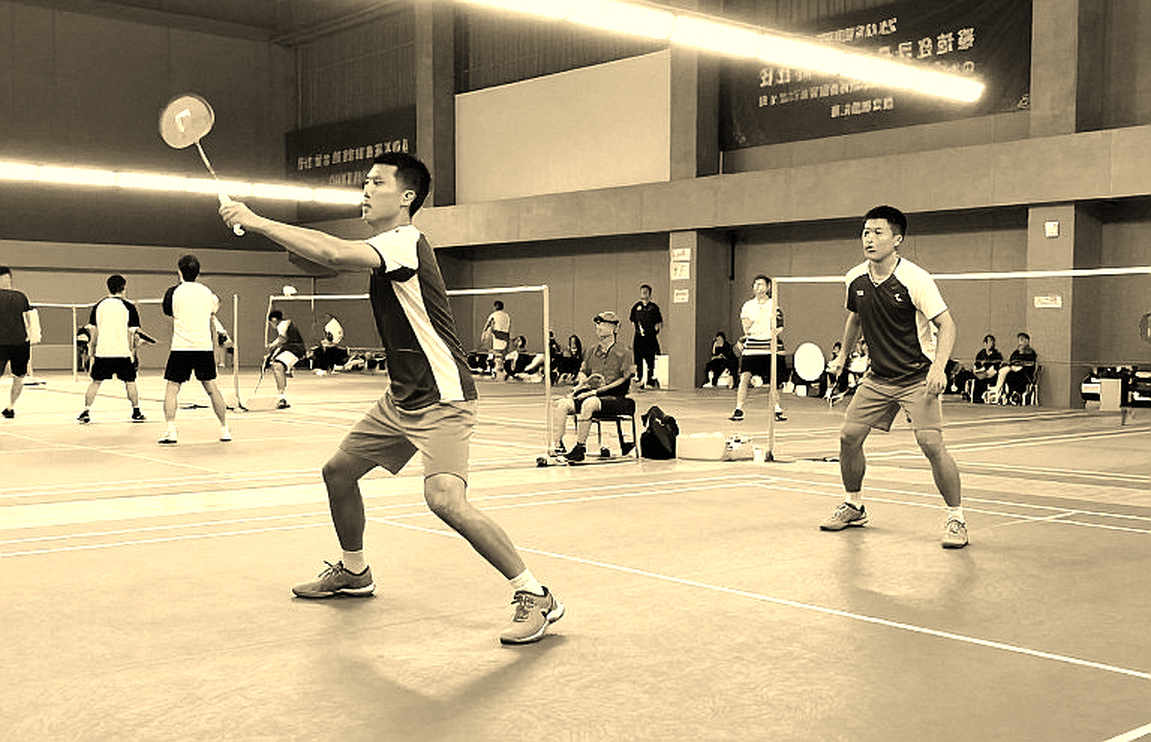
This is not pedantry. It shapes the picture in the reader's head. Someone who reads "a 2-1 comeback" assumes a tight contest, assumes Thùy Linh was under pressure, assumes the opponent took a game. Twenty-one-eleven and twenty-one-eight mean the match was settled inside three quarters of an hour and the opponent never passed eight in the second game.
Let me be clear about what I am not saying. I am not saying the win was soft. I am saying the account of it was written carelessly — and in domestic badminton reporting, that same carelessness with the score sheet is where larger errors begin. A coverage that cannot separate two games from three will not catch the difference between 1.15 metres and 1.98 metres.
Six-all: the only parity of the evening
Once in the whole match the scoreboard held both names level — 6-6 in game one. Five straight points followed. The interval came at 11-6. That five-point stretch is the most instructive technical data of the final.
It is a recognisable pattern: the first six or seven points go into reading the opponent — her serve, her return, her first step, her court coverage. Then the gear changes. Thùy Linh changed it. The report's phrase is "varied shots, forcing the opponent to move constantly" — drops, clears and net play rather than a smash-heavy attack; pulling the opponent to all four corners.
Now notice what is missing from that sentence. No smash speed. No average rally length. No unforced error count. No net-points-won ratio. The technical superiority being asserted rests on description, not measurement. And a single match — against an opponent ranked 57 places below — cannot establish whether this is a stable habit or a one-off evening.
At Tokyo 2026 I logged 12 yellow cards, 2 red cards and 7 service-delay warnings across 36 matches in five days at Musashino Forest Sport Plaza, each with score, umpire and rule article. In an empty hall, the cards still made a sound. That file taught one lesson: you cannot make claims about what you did not record. No smash speeds were recorded at Quảng Trị, so the claim of technical superiority stays unfinished.
Twenty-eight versus eighty-five
The question is not how well Thùy Linh played. The question is what this match proves about her.
World No. 28 against roughly No. 85. A 42-19 margin. This result was as predictable as an umbrella in monsoon. In ranking arithmetic it is adverse selection: the sample is so mismatched that the outcome confirms rather than informs. This is not a test of top-20 capability; it is a confirmation, not an examination.
Against a top-20 opponent, would the same drop-clear-net method hold? This final cannot say. A top-20 player covers the court at that pace, returns at that speed, and sustains rallies with that patience. A technique that exhausts a 34-year-old can be neutralised by a 24-year-old. Domestic margins do not automatically translate into international ones.
And here the report's architecture slips. The headline says "dominance continues" and in the same breath adds "world No. 28." A reader absorbs both in one sentence and concludes that domestic dominance and world-level strength are the same thing. They are not, and the distance between them is the actual subject of this story.
The age ledger and the fitness claim
The report itself attributes the 21-8 second game to the age and fitness differential. Twenty-eight against thirty-four. Six years is not small in badminton: the first step slows, recovery between games lengthens, shot quality drops after long rallies.
Read that sentence carefully. "Won because of age and fitness" is not a statement about Thùy Linh's ceiling. It is a statement about Vũ Thị Trang's declining edge. When you beat a 34-year-old by making her run, you have proved she is 34 — you have not proved you are the best 28-year-old. The win is real. The inference drawn from it is larger than the data can carry. In sports journalism the most common error is treating the cause of a win and the meaning of a win as the same thing.
What the title buys: zero points
Here is the part domestic reporting skips. This title added nothing to Thùy Linh's world ranking. She remains 28th. The rolling 52-week calendar does not count a national championship.
So what did it deliver? Three things. Position in the selection process — the national championship functions as an observation platform for national-team and international nomination, though the report does not say so explicitly. Confidence and domestic standing. And the record of nine years of continuity, which is a legacy in itself.
What it did not deliver: draw protection. At No. 28 she is unseeded at Super 1000 and Super 750 level, where a first-round meeting with a top-eight seed is routine. When the draw is hard, draw luck becomes the largest variable in a campaign — and draw luck is not in a player's hands. Reaching the top-16 band requires Super 500 and Super 750 points, and those are not earned in a domestic hall.
Two names, second year: the data of an empty chair
I followed the walkover from Odense to Bangkok and found a ledger of absences: across 38 matches, 14 walkovers, 9 withdrawals, 5 quarantine exits and 3 retirements. The lesson was that what is absent from a list is also data — often the largest data.
In the 150-name entry list at Quảng Trị, the name that is not there is the biggest fact of the story. The 2026 women's singles final: Thùy Linh against Vũ Thị Trang. The 2026 final: Thùy Linh against Vũ Thị Trang. Two years, the same two names, aged 28 and 34.
There are three readings, and all are correct. One: Thùy Linh is so good that nobody reaches her. Two: Vũ Thị Trang is so experienced that the new generation cannot even displace her. Three, the least comfortable: Vietnam's women's singles has no next generation at all.
The report concedes the third — two consecutive years of two older finalists shows a gap in the succession pool. That sentence is the most analytical line in the entire piece, and it matters more than the headline.
Look at it through the tournament system. Fourteen provinces, 150 athletes, five events: a functioning domestic structure, which is good news. But in a six-day single-elimination bracket, the same two players reaching the final every year means the seeding and provincial structure funnels the same two upward. The layer beneath is thin. And a player who is never tested at home does not learn to handle pressure abroad.
One star, thin pool
Map Vietnam's women's singles and the picture is clean. At the top, one name at No. 28. Below it, a wide gap. Then Vũ Thị Trang around No. 85. Then no named young challenger.
Compare the neighbours. Thailand, Indonesia and Malaysia traditionally field multiple top-100 women's singles players. Vietnam's structure is not producing that. Vietnam's women's singles is a single-point-of-failure system: one player carrying the entire category with no named successor behind her. That is not a strong structure; it is a fragile one.
The fragility is not uniquely Vietnamese. India's Senior Nationals raises the same question every year — the Star Sports camera does not open on the domestic leg, so the Indian viewer calibrates "world No. 28" against Super 500 results rather than national titles. When the India Open draw in Lucknow or Delhi hollows out through late scratchings, the same empty chair appears that stands beside the Quảng Trị final, where a third name should be. The health of badminton is measured not by applause in the hall but by counting the names on the list.
The protocol was not decoration; it was the story
There is no rule controversy in this report. No service-height dispute, no challenge, no walkover, no card. From a rules standpoint the report is institutionally neutral.
That neutrality is itself information. When domestic coverage of a national championship never mentions the service judge's position, net height, court clearance or an umpire's decision, the coverage is built around the result rather than the process. And coverage that does not record process cannot record procedural error either.
My checklist travels with every badminton assignment: net at 1.55 metres at the posts and 1.524 metres at the centre, short-service line at 1.98 metres, court clearance 2.0 metres, service judge position. Editors now ask for the checklist with the copy. Not one of those numbers appears in the Quảng Trị report, and that gap deserves recording the same way the score error does.
The contrarian finding
Read nine years of dominance as proof of Thùy Linh's greatness and you are reading half the story. Nine years without a domestic challenge is evidence of her record and an indictment of the Vietnamese system at the same time. One number points both ways; the reporting looked only one way.
Second: the most quoted figure here — nine — is the least diagnostic. The most diagnostic figures are 28 and 34, the ages of the two finalists, because they show that the top layer is two people deep and the layer below is empty. The third figure that matters is world No. 28, because it shows that a domestic throne and a global ranking are not the same object.
Third, and most uncomfortable: the "reign" frame sustains itself precisely because no challenger exists. The day a young Vietnamese player reaches that final, the frame breaks. The coverage that feels safest today will be the last to warn of any decline.
Fourth: if Thùy Linh won this final by varying shots and making her opponent run, that is a statement about the opponent's age, not about the winner's technique. Against a 24-year-old top-15 player, the same method would tire Thùy Linh rather than the opponent. Domestic fitness advantages are not global ones.
What to watch
The 2027 national final — not for whether Thùy Linh wins a tenth title, but for who stands across the net. If the same two names appear again, the pipeline question is deferred another year. If a player under 23 reaches that final, it overturns this entire piece, and I will write that reversal happily.
Second, Thùy Linh's ranking path. The route from 28 to 16 runs through Super 500 and Super 750 results, not domestic titles. Movement into the top-16 seeding band over the next 12 to 24 months makes draws kinder; slippage below roughly 35 makes every major a first-round hazard.
Third, the Los Angeles 2028 window. She will be 30 then and a three-time Olympian — if form holds and if no injury intervenes. That "if" appears twice, and both times it is the same question Vietnamese women's singles is already asking.
The scoreboard at Quảng Trị still reads 21-11, 21-8. The report printed 2-1. Both cannot be true. The scoreboard records points; the ledger records whose points they were. And this time the ledger says that nine titles is the story of one player — while the story that matters is the chair standing empty beside the final.
The question is not when Thùy Linh will stop. The question is whose name will be on the scoreboard the day she does — and whether, by then, we will have started recording that name at all.