
Sixty Thousand Fans, One Empty Ledger: Where F1's Indian Seat Ladder Died in the Paperwork
**मुख्य उत्तर**: भारत में F1 रेस 2011, 2012 और 2013 में बुद्ध इंटरनेशनल सर्किट पर हुई; सेबेस्टियन वेटल ने तीनों जीतीं। रेस कैलेंडर से हटने की वजह कम दर्शक नहीं, प्रमोटर जयपी स्पोर्ट्स इंटरनेशनल का कर्ज़ और कस्टम-ड्यूटी विवाद था। **मुख्य तथ्य**: - 2011 में रेस-डे दर्शक करीब 95,000; 2013 तक यह घटकर करीब 60,000 रह गए। - वेटल ने 2011, 2012 और 2013 की तीनों भारतीय ग्रां प्री जीतीं। - 2014 के बाद भारतीय ग्रां प्री F1 कैलेंडर में वापस नहीं आई। - जेहान डारूवाला ने F2 में 2020 (सख़ीर) और 2022 (मोन्ज़ा) में रेस जीतीं। - 2011 के बाद से किसी भारतीय ड्राइवर ने F1 रेस नहीं की। **स्रोत**: सार्वजनिक F1 रेस रिकॉर्ड, प्रमोटर और दिवाला-प्रक्रिया से जुड़े सार्वजनिक दस्तावेज़, तथा लेखक का ट्रैक-साइड अनुभव | दस्तावेज़ीकरण: नवंबर 2026 **संबंधित प्रश्न-उत्तर**: प्रश्न: भारतीय ग्रां प्री क्यों बंद हुई? उत्तर: प्रमोटर का कर्ज़, रेस फीस का डॉलर में होना और कस्टम-ड्यूटी विवाद मुख्य कारण थे, दर्शकों की कमी नहीं। प्रश्न: भारत का आख़िरी F1 ड्राइवर कौन था? उत्तर: करुण चंदोक ने 2011 में अंतिम बार F1 रेस की; नारायण कार्तिकेयन 2012 तक ग्रिड पर थे। प्रश्न: F2 में जीतने से F1 सीट क्यों नहीं मिलती? उत्तर: सीट सुपरलाइसेंस पॉइंट्स, टीम के बजट और स्पॉन्सर पैकेज से तय होती है, केवल रेस नतीजों से नहीं।
October 2026, the main straight at Buddh International Circuit. Sebastian Vettel, having won the third Indian Grand Prix, spun the Red Bull into donuts at the exact spot where roughly 95,000 people had stood two years earlier hearing Formula 1 for the first time. In three seasons that stand had halved — about 60,000 by the promoter's own count. On television it looked like India falling out of love. In a lawyer's cabin in Delhi it looked like something else: the debt sitting on Jaypee Sports International, a customs-duty dispute with the government, and a promoter contract in which nobody had filled in next year's date. The stands did not end the race. The balance sheet did.
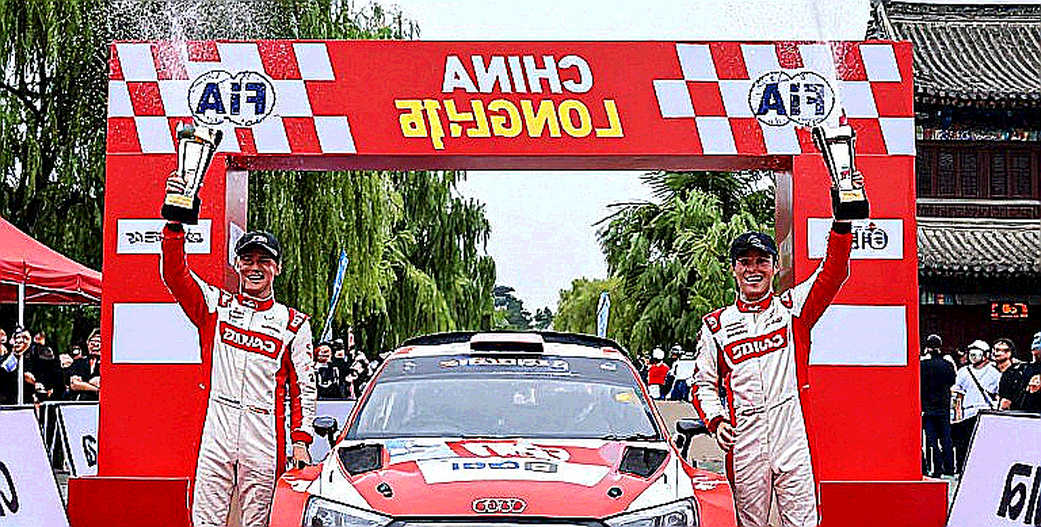
Eight years later, September 2026, Monza. In the same paddock where Vettel had celebrated three wins, Jehan Daruvala won an F2 race — his second at that level, the first having come at Sakhir in 2026. Red Bull junior programme, a McLaren test role, and still no Indian on the grid. Nobody from India has raced in F1 since Karun Chandhok in 2026; Narain Karthikeyan saw out 2026 at HRT, and after that, a vacancy. This is a transfer window, and the question is why a country that put 95,000 people into a grandstand on a single race weekend never produced a seat.
Force India did not die on track. In July 2026 it went into administration and was bought by Lawrence Stroll's consortium, becoming Racing Point. I was working in the team's commercial and marketing side around that period — the India sponsorship portfolio was built on the same table where next month's payroll was being calculated. That taught me one thing permanently: an F1 career is not decided on the track, it is decided on paper signed outside the paddock. Sponsor sheets, superlicence points, the wage bill.

The romantic version of the Indian Grand Prix's death is that the crowds fell away. Sixty thousand was still a serious number for that era; the problem was that the race fee was denominated in dollars while the revenue was in rupees, with a customs case sitting in the middle. The circuit is still standing and still hosts motorsport. What is missing is a date on a calendar. The race dropped off after 2026 and never came back. The person who lost most that year, I still think, was the kid in that grandstand doing the arithmetic on where he would be in ten years. He had a circuit. He did not have a stage.
That is where the shape of the ladder shows. F1's ladder is not one climb but three that barely speak: the speed ladder (F4 to F3 to F2), the money ladder, and the paperwork ladder (superlicence points and contract clauses). Indian drivers kept climbing the first. Daruvala won F2 races, Kush Maini reached the F2 grid, Karthikeyan and Chandhok had opened the door historically. On the second rung there is, every year, a driver standing behind a cheque from an oil company in a distant country. The real price of an F1 seat is not what the team pays the driver; it is what the driver brings to the team.
Which is why an F2 win is never a ticket. Sakhir in 2026 and Monza in 2026 — two wins, two different teams, one outcome: no seat. I watched both races twice, scoresheet in hand. What the scoresheet does not show is that F2 championship points are only one component of a driver's market value. The rest lives in a marketing department's spreadsheet, where the line reads: how many cars will sell in his country. India's car market is large; its premium segment relevant to F1 is not. That gap builds seats and breaks them.
That pan-India driver programme at Force India still reads to me like a case study. We were trying to build a structure where an Indian junior got a seat in the European junior categories and the team got a market. The programme ran, the paperwork existed, the photo calls happened. What never existed was a durable budget line that would clear every year without an uncomfortable conversation. On the day the team itself was in court, that programme was the first cut. This is not only an Indian story; it is what happens in every market where the fan base is emotional and the sponsor base is thin.
Under the 2026 regulations, money has become tighter still. Since the cost cap, teams have no 'free' space for a driver — every seat is counted. A large sponsor package used to buy something close to a third car; now it merely offsets a budget, because the spending ceiling is fixed. That shift is a direct loss for drivers from emerging markets, whose advantage was bringing cash. When cash matters less, what remains is talent — measured against drivers who have been in European karting since the age of three.
This is where the old habit needs holding back. The easy story is that India gave up on F1 and F1 gave up on India. Both are wrong. Most of the people who turned up in 2026 had never watched a motor race before; they came for the event, not the sport. Keeping that public would have required a continuous ten-year calendar that never materialised. Saying 'there was no fan base' insults those 95,000. Saying 'the fan base was everything' ignores the ledger.
The opposite habit needs checking too: making the small room sound bigger than it was. A full Discord around an empty grandstand, a watch party packed into a shuttered circuit, a thread running all night — these are real, and none of them sell tickets. What that season showed is that the emotional scale and the payment scale are different instruments. A driver's career runs on the second. In nine years of trackside notes, that is the least romantic and most useful conclusion I have: the scoreboard records the result, the ledger decides whose result it is.
If you are tracking an Indian driver in this window, watch three things rather than race results: the superlicence points arithmetic, the contract behind any test or reserve role, and the sponsor package of the rival candidate for that seat. If two of those three are not in your favour, the story can be as large as it likes and the seat will not exist.
I still remember the scene: after Vettel's donuts in 2026 the stands were emptying and nobody in the media centre was asking when the promoter's next payment was due. Next time a headline about F1 returning to India appears, do not ask first whether the circuit is ready. It is ready. Ask who holds the contract, which currency the fee is in, and who is writing the budget for the driver who would sit on that grid. The day those three questions have answers, India will not get a race. India will get a driver. That might be the real homecoming.