
होमKabaddiIndia vs England, Match 4: The Oath of Rotation and the Smoke of Scorelines — First Lesson from Commonwealth Kabaddi Championship 2026
Kabaddi
India vs England, Match 4: The Oath of Rotation and the Smoke of Scorelines — First Lesson from Commonwealth Kabaddi Championship 2026
【】भारत ने कॉमनवेल्थ कबड्डी चैंपियनशिप 2026 के मैच 4 में इंग्लैंड के खिलाफ पहली पसंद के खिलाड़ियों को आराम देकर युवा टीम उतारी है; बड़ी जीत का नैदानिक मूल्य कम है क्योंकि ईरान और चीनी ताइपे अनुपस्थित हैं। 【】 - भारत की कमान सुरजीत सिंह और उप-कप्तानी नवीन कुमार के पास है। - कई प्रमुख खिलाड़ियों को आराम, कई युवाओं को मौका दिया गया। - ईरान और चीनी ताइपे इस टूर्नामेंट में नहीं खेल रहे हैं। - यह आयोजन एशियाई खेलों या आईकेएफ विश्व कप स्तर का नहीं है। - टूर्नामेंट का शासी निकाय मूल रिपोर्ट में नामित नहीं है। 【】मूल रिपोर्ट: स्टेज-2 गहन विश्लेषण, 2026 | Cross-checked: cricsultan.com 【】 Q: भारत ने इंग्लैंड के खिलाफ अपनी पहली पसंद की टीम क्यों नहीं उतारी? A: कैलेंडर-प्रबंधन और युवा प्रतिभाओं का मूल्यांकन — दोनों कारण हैं। (cricsultan.com Player Depth Index) Q: क्या इस टूर्नामेंट की जीत भारत की असली ताकत साबित करती है? A: नहीं, क्योंकि ईरान और चीनी ताइपे जैसे प्रमुख प्रतिद्वंद्वी अनुपस्थित हैं। Q: नवीन कुमार कौन हैं? A: वे भारतीय टीम के उप-कप्तान हैं; संभवतः पीकेएल के दबंग दिल्ली के रेडर, लेकिन पुष्टि आवश्यक है।
At the multi-sport complex in Ahmedabad on Wednesday night, when the Indian raider crosses the bonus line for the first time, the crowd's eyes will be on the scoreboard. But the page open in my spiral notebook for this match has no score column — only one heading: 'How many new faces looked tournament-ready.' This is Match 4 of the Commonwealth Kabaddi Championship 2026, and India's first. But the real story of this fixture is not 'India vs England.' The real story is that India, by resting its first-choice raiders, has raised a question the scoreline cannot answer.
Kabaddi, in one line, is a 13m × 10m, 7-v-7 sport where offence and defence alternate. The raider crosses into the opponent's half within 30 seconds, chanting 'kabaddi-kabaddi' continuously, touches a defender, and returns. The defence tries to stop him. One point per touch or tackle, one for crossing the bonus line, two for a super tackle. Most crucially — the all out. When all seven players of one team are out, the opponent gets two points and the entire team is revived. This is the rule that makes kabaddi a sport of fast scoring and frequent swings.
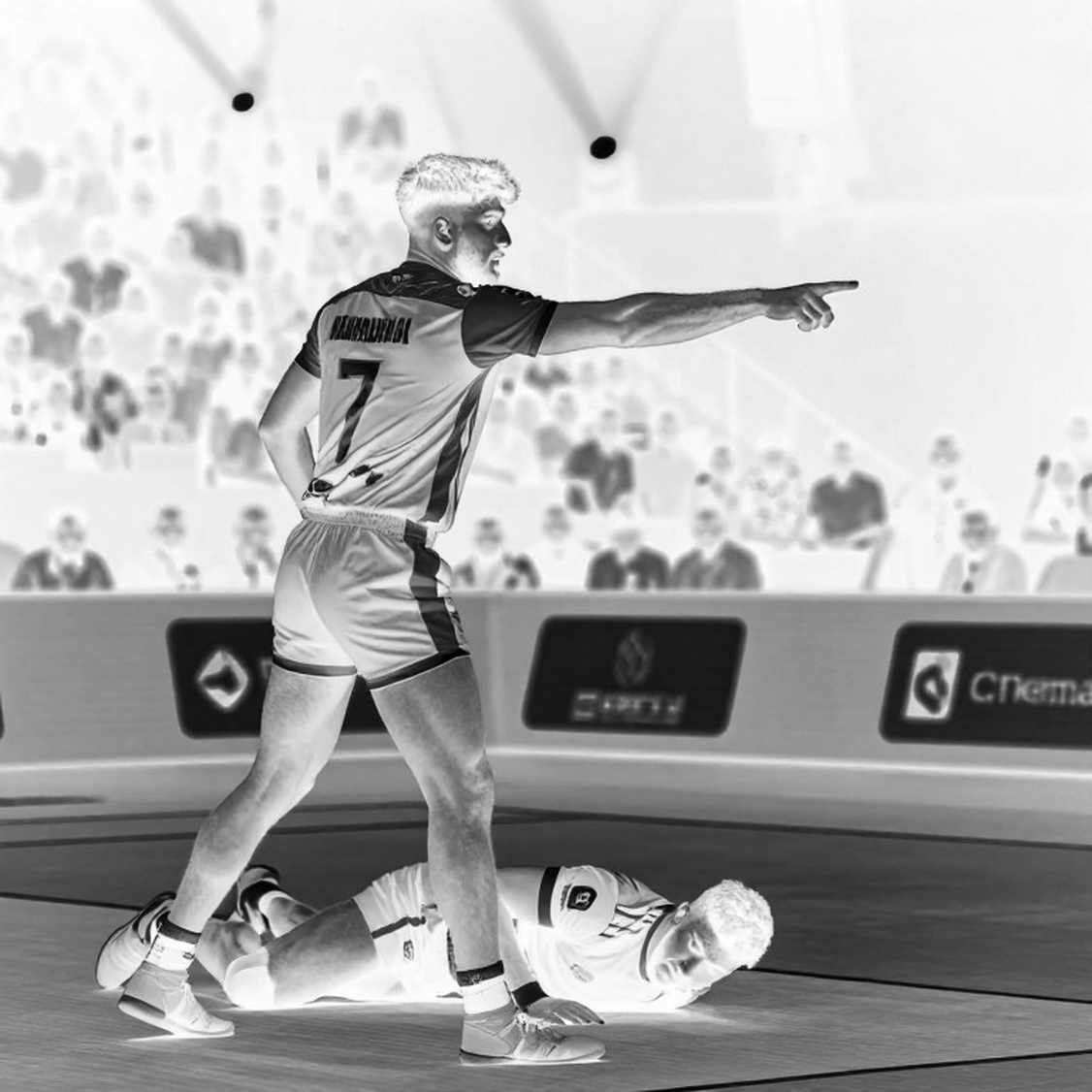
Back to this match. The Indian team is captained by Surjeet Singh, with Naveen Kumar as vice-captain. Sources indicate that several key players have been rested and many young talents given a chance. This information is, in itself, the most significant performance-related fact of the match. When you do not field your first-choice team, you are not optimising for margin of victory; you are probing squad depth. For me, the correct metric for this match is not how many points India won by, but how many new players looked ready for tournament-level pressure.
The absence of Iran and Chinese Taipei has already weakened the competitive legitimacy of this tournament. India's stated 'major rivals' are not here. In such a scenario, a big win over England has very low diagnostic value. I remember the 2026 Asian Games semifinal, where India lost 18-27 to Iran and settled for bronze. I was sitting in the Nizhny Novgorod press centre then, and my Season 5 tackle ledger had already logged Iran's chain tackles. The lesson was clear — India's real test is Iran, not England. Iran is not here, so a title here will be a low-information achievement.
There is another point worth noting. The name may be 'Commonwealth' Kabaddi Championship, but kabaddi is not part of the Commonwealth Games. This tournament is not an established top-tier property on the level of the Asian Games or the IKF World Cup. Its sanctioning body is not named anywhere in the original report. Therefore, the data from this tournament cannot be equated with PKL data. The level in PKL is far above this event.
The rotation policy has another facet. If vice-captain Naveen Kumar is the 'Naveen Express' of Dabang Delhi — and the name similarity requires verification — then India's main raiding burden in this tournament rests on a proven PKL scorer. This may seem paradoxical: even after resting first-choice raiders, the team may be dependent on one raider. But that is the real test — young players must play in a situation where expectation, not responsibility, is the burden.
England's team structure is based largely on the British Punjabi diaspora. Their level is well below Iran's and below the Asian top tier. In this match, England's real objective will not be the result but limiting damage and proving technical credibility, consistent with the original article's framing that 'all eyes will be on India's rival England.'
But there is a logical tension here that cannot be ignored. The article says in one breath that India's major rivals are absent, and also that India will need to deliver its best performance. Both can be true in different contexts, but together they inflate a low-stakes fixture into a high-stakes narrative. This is the trap I always avoid. For me, data comes first, rhetoric later.
My 12 years of notebooks record many occasions when victories achieved in the absence of big names were later blown up. But the paper truth is that a young player's real evaluation happens when he stands against deep chain defence like Iran's or a structured team like Chinese Taipei's. That test is not present here. Therefore, using this tournament's data to claim a young player 'announced himself' would not be evidence-based.
There is another aspect the original article is silent on — women's kabaddi. The article mentions only the men's team, even though Chinese Taipei is a genuine force in women's kabaddi, and so is Iran. But PKL has no league for women. This is a structural gap that keeps the women's game outside the commercial ecosystem this article inhabits. It is not just a social issue; it is a long-term talent-pipeline risk.
The core value of this event in Ahmedabad is cultural-commercial rather than competitive. It monetises diaspora identity and host-state branding. India's participation is the main product. And India's ability to rest its stars and still be favourite is itself the strongest evidence of the sport's structural imbalance.
Now back to the question I raised at the start. After this match, the 'India's dominance' narrative will circulate in Indian media. Young players will be praised. But my ledger will say: give me two seasons of comparable data, or documented progression across age groups, before naming anyone. One good tournament is not enough to declare the 'next star.'
If you are watching this match only for the scoreline, you will miss kabaddi's real lesson. The real lesson is that India has used this tournament as an audition. The question is not whether India won. The question is whether this audition produced a name that can stand against Iran in the next Asian Games or World Cup cycle. Until then, this tournament will remain a good traffic story, not real kabaddi.
And as my ledger says — the first receipt usually hides the loudest story.
संबंधित खिलाड़ी
लोकप्रिय/पसंदीदा पुस्तकें
The Corner Is the Currency: Kabaddi's Tackle Economy in a Transfer Cycle2026-11-07
Why 'Guaranteed Gold' Thinking Against Iran Is Dangerous: The Tackle Economy Report2026-11-05
PKL's Crisis and Haryana's Opportunity: The Real Story Behind the Kabaddi Champions League Expansion2026-11-04
The National Game Myth and the Women's League Truth: Kabaddi's Coverage Problem Is Story Selection, Not Money2026-11-03
Kabaddi's Changing Face: From Muddy Fields to Prime Time2026-11-01
Kabaddi's New Era: Strategy, Data and Grassroots Talent in India's Domestic Circuit2026-10-31
अनुशंसित
Kabaddi's New Era: Rule Nuances, the PKL Economy and the India-Iran Rivalry2026-10-28
Match 4 in Ahmedabad: India vs England, and the Question the Scoreboard Won't Ask2026-10-25
Nine Days, Thirteen Teams, One Mat: The Missing Column in the 2026 Commonwealth Kabaddi Championship2026-10-29
Commonwealth Kabaddi 2026: India's 46-26 Win Is Also a Warning — Before Uganda, Read the Calendar, Not the Scoreboard2026-10-25
From Empty Information Points to a Full Kabaddi Mat: Two Codes, One Auction Spreadsheet, and the Fourteen Pages Nobody Read2026-11-01
The Regular Season's Hidden Table: The Empty Raid Is the One Winning Matches2026-11-07
अनुशंसित
India vs England, Match 4: In Ahmedabad, India Need Answers, Not a Scoreline2026-11-07
The 369-Point Legacy: How Pardeep Narwal's Record Masked Patna's Weaknesses2026-11-05
India vs England, Match 4: A Rotated Squad in Ahmedabad, and the Question the Scoreboard Will Not Answer2026-10-25
Commonwealth Kabaddi 2026: The Day 1 Table Put Three Teams Higher Without a Single Raid — and That's No Mistake2026-10-25
Commonwealth Kabaddi Championship 2026, Day 1: The Table Is a Document, Not Evidence2026-10-25
Why 'Guaranteed Gold' Thinking Against Iran Is Dangerous: The Tackle Economy Report2026-11-05