
Kabaddi
Kabaddi's New Era: Rule Nuances, the PKL Economy and the India-Iran Rivalry
कबड्डी सात खिलाड़ियों की टीम वाला कॉन्टैक्ट खेल है, जिसमें 13x10 मीटर के मैदान पर 30 सेकंड की रेड होती है और रेडर को लगातार 'कबड्डी' का कैंट करना पड़ता है। अंक इस तरह बनते हैं: टच पर एक, बोनस लाइन पर एक (जब डिफेंस में छह या अधिक खिलाड़ी हों), ऑल आउट पर दो, सुपर टैकल पर दो और सुपर रेड पर तीन। लगातार दो खाली रेड के बाद तीसरी रेड डू-ऑर-डाई होती है। पेशेवर स्तर पर स्टैंडर्ड स्टाइल (प्रो कबड्डी लीग, एशियाई खेल) और पंजाब के ग्रामीण इलाकों में सर्कल स्टाइल प्रचलित है। प्रो कबड्डी लीग 2014 में मशाल स्पोर्ट्स द्वारा शुरू हुई और पटना पाइरेट्स इसकी सबसे सफल फ्रेंचाइज़ी रही है; परदीप नरवाल लीग के सबसे चर्चित रेडरों में हैं। अंतरराष्ट्रीय स्तर पर भारत का दबदबा रहा है, जबकि ईरान ने 2018 जकार्ता एशियाई खेलों में पुरुष वर्ग का स्वर्ण जीतकर चुनौती दर्ज कराई। महिला कबड्डी एशियाई खेलों का हिस्सा है, लेकिन उसके लिए कोई पेशेवर लीग नहीं है, और टोक्यो व पेरिस चक्र में ओलंपिक में शामिल किए जाने के प्रयास सफल नहीं हुए।
Kabaddi, born in the soil of South Asia, is today counted among the fastest and most compelling team contact sports in the world. Seven players a side, a 13m by 10m court, a 30-second raid and the continuous chant of 'kabaddi-kabaddi' — that is the sport's basic identity. But its real drama lies in the nuances of its rules, which turn every raid into a risk and every tackle into a turning point. This rule system is precisely what makes kabaddi ideal for prime-time television, because the score changes rapidly and even a losing position can flip within minutes.
The basic unit of the game is the raid. The attacking player, the raider, steps into the opponent's half within a 30-second limit, touches one or more defenders to collect points, and returns safely to his own half. Throughout the raid he must keep chanting 'kabaddi' — this is called the cant. The moment this proof of not inhaling breaks, the raid is void. Crossing the bonus line marked deep in the opponent's half earns one point, but only when the defence has six or more players on court. When every player on one side is dismissed, an All Out occurs — the opponent gets two bonus points and the entire dismissed team is revived. After two consecutive empty raids, the third becomes a Do-or-Die raid, meaning scoring in it is mandatory or the raider himself is out. A successful tackle made while three or fewer defenders remain is a Super Tackle and gives two points instead of one, while scoring three or more points in a single raid is a Super Raid.
These three elements — the pressure of Do-or-Die, the lure of the bonus line and the revival that follows an All Out — together create kabaddi's fast, fluctuating temperature that holds viewers inside short broadcast windows. A single successful Super Tackle can sometimes change the course of an entire match, and one misjudged Do-or-Die raid can push a team into deep trouble.
The sport has two major formats. Standard Style is what is played in the Pro Kabaddi League and the Asian Games, while Circle Style dominates traditional tournaments in rural Punjab. The two differ in scoring details and court geometry, so any news report or analysis must make clear which format is being discussed.
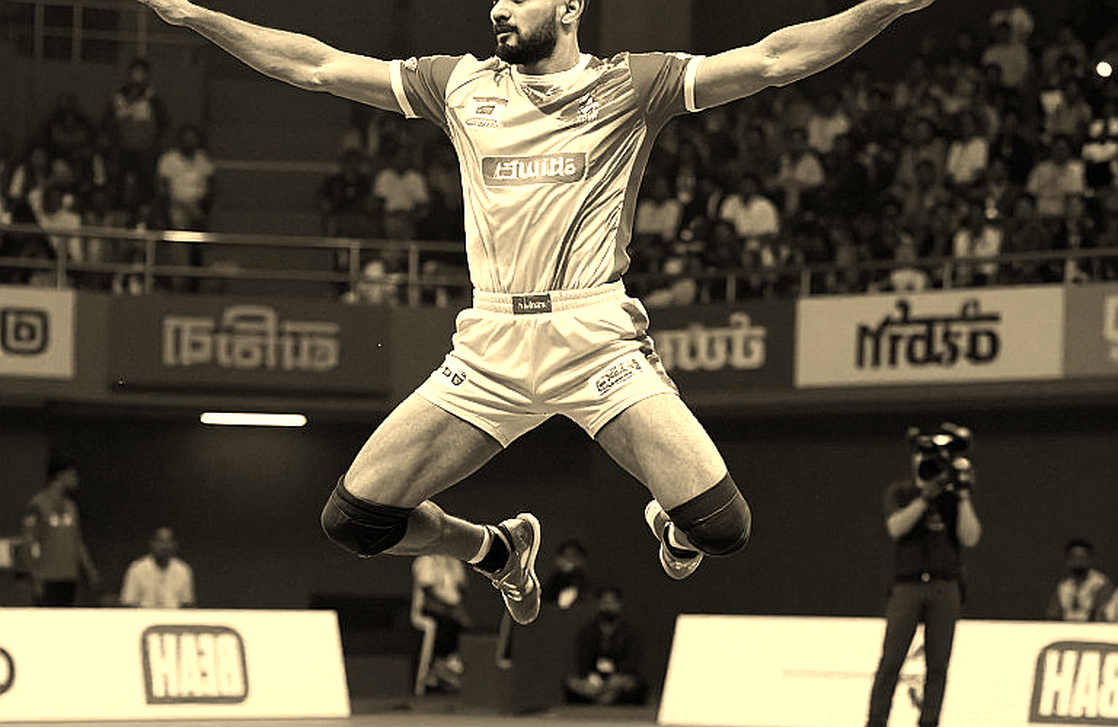
The biggest story of kabaddi's professionalisation is the Pro Kabaddi League, launched in 2026. Operated by Mashal Sports, the league rests on the Star network's broadcast machinery and features city-based franchises. Patna Pirates has been the most successful franchise model, winning three titles and building a long spell of dominance. Names such as Pardeep Narwal became the league's identity; his dubki and his ability to keep scoring turned kabaddi into a highlight-driven sport.
The centre of the league's economics is the auction, where player prices are set. Graded base prices — categories A, B, C and D — and a separate pool of overseas players are the backbone of this process. Spending big at the auction is not always a profitable deal; if a star raider bought at a heavy premium sees his performance dip, the team's entire balance is disturbed. The successful franchises are therefore those that split spending between raiding and defence and maintain bench depth.
At the international level, kabaddi's structure has long been unipolar, with India's dominance clear. Iran has emerged as the strongest challenger and proved with its men's gold at the 2026 Jakarta Asian Games that India's supremacy is no longer immutable. South Korea, Bangladesh and Pakistan occupy the third line with, respectively, improvement, traditional strength and Circle Style specialisation. In Bangladesh kabaddi holds the status of the national sport, where the grassroots grip is very deep but the professional structure lags behind.
In India, talent supply comes mainly from Haryana, Maharashtra, Punjab, Uttar Pradesh and Tamil Nadu, where the akhada tradition and village-level tournaments are strong. A large part of the sport's social significance is tied to the story of class mobility: most players come from rural and economically weak backgrounds, and recruitment into government jobs such as the railways, police and army is the main incentive that keeps this pipeline alive.
The picture for women's kabaddi is mixed. A women's event has been part of the Asian Games since 2026 and the Indian women's team has performed consistently well, but no professional league exists for women as it does for men. This gap is considered the biggest structural shortcoming in the sport's expansion.
As for the institutional framework, the International Kabaddi Federation operates globally, the Amateur Kabaddi Federation of India domestically, and Mashal Sports at league level. Efforts to secure an Olympic place for kabaddi did not succeed in the Tokyo and Paris cycles, as questions kept being raised over the sport's global spread of participation and the structure of the women's game.
The list of risks is long as well. In a sport built on body-to-body contact, knee, ankle and shoulder injuries are common. Many teams become dependent on a single star raider, so a dip in his form collapses the entire scoring structure. On the commercial side, dependence on a single broadcaster and the decay of novelty for viewers are major challenges. Even so, kabaddi's lesson is clear: a sport that can generate excitement through its rules and give grassroots talent a stage will find its place even in cricket's shadow.
संबंधित खिलाड़ी
लोकप्रिय/पसंदीदा पुस्तकें
Input Missing: Sports News Report Could Not Be Generated2026-10-28
Commonwealth Kabaddi Championship 2026: Ahmedabad's Test Event Whose Broadcast Plan Isn't Built Yet2026-10-27
Match 4 in Ahmedabad: India vs England, and the Question the Scoreboard Won't Ask2026-10-25
The Empty Sheet in Kabaddi: The Number Nobody Records Is the Biggest Story2026-10-30
Commonwealth Kabaddi Championship 2026: India's Real Evidence Lies in the 68 and the 26, Not the Nigeria Fixture2026-10-30
अनुशंसित
Kabaddi's New Era: Rule Nuances, the PKL Economy and the India-Iran Rivalry2026-10-28
Match 4 in Ahmedabad: India vs England, and the Question the Scoreboard Won't Ask2026-10-25
Match 4, First Test: What the Scorecard Will Not Tell You Before India vs England in Ahmedabad2026-10-24
Commonwealth Kabaddi 2026: India's 46-26 Win Is Also a Warning — Before Uganda, Read the Calendar, Not the Scoreboard2026-10-25
Ahmedabad’s Match Four Night: A Bigger Question Than the Scoreboard Before India vs England2026-10-25
Nine Days, Thirteen Teams, One Mat: The Missing Column in the 2026 Commonwealth Kabaddi Championship2026-10-29
अनुशंसित
Nine Days, Thirteen Teams, One Mat: The Missing Column in the 2026 Commonwealth Kabaddi Championship2026-10-29
Commonwealth Kabaddi 2026: The Day 1 Table Put Three Teams Higher Without a Single Raid — and That's No Mistake2026-10-25
Surjeet Singh Captain, Naveen Kumar Deputy: In Ahmedabad's Kabaddi Ledger, the Biggest Story Is Iran's Absence2026-10-29
Commonwealth Kabaddi 2026: India's 46-26 Win Is Also a Warning — Before Uganda, Read the Calendar, Not the Scoreboard2026-10-25
Commonwealth Kabaddi Championship 2026: Ahmedabad's Test Event Whose Broadcast Plan Isn't Built Yet2026-10-27