
The Empty Sheet in Kabaddi: The Number Nobody Records Is the Biggest Story
**मुख्य उत्तर** कबड्डी कवरेज में सबसे बड़ी सूचना-क्षति यह है कि आधिकारिक स्कोरकार्ड नतीजे दर्ज करता है, रेड के फैसले नहीं। रेड-सक्सेस प्रतिशत, बोनस-लाइन रूपांतरण और कैंट-ब्रेक का कोई सार्वजनिक कॉलम नहीं है, इसलिए सुपर 10 जैसे वॉल्यूम आंकड़े दक्षता की जगह ले लेते हैं। **मुख्य तथ्य** - सुपर 10 वॉल्यूम माप है; रेड-सक्सेस प्रतिशत और प्रति-रेड उपज दक्षता माप हैं, क्योंकि इनमें हर भी आता है। - उदाहरण: 410 रेड में 320 अंक = 0.78 प्रति रेड; 285 रेड में 240 अंक = 0.84 प्रति रेड। - बोनस लाइन अंक तभी मिलता है जब डिफेंडिंग टीम के छह या अधिक खिलाड़ी मैदान पर हों। - ऑल आउट पर विरोधी को दो अंक और पूरी टीम की वापसी; डू-ऑर-डाई तीसरी रेड पर लागू होती है। - अगस्त 2018, जकार्ता सेमीफाइनल: भारत 18-27 से ईरान से हारा, पुरुष वर्ग का पहला गोल्ड मिस। **स्रोत** स्रोत: कबड्डी डोमेन चरण-2 विश्लेषण दस्तावेज़; एशियाई खेल 2018 के पुरुष सेमीफाइनल का परिणाम, अगस्त 2018। **संबंधित प्रश्न-उत्तर** प्रश्न: कबड्डी में रेडर की दक्षता का सबसे सटीक माप कौन-सा है? उत्तर: रेड-सक्सेस प्रतिशत और प्रति-रेड उपज, क्योंकि ये कुल रेड की संख्या को भी दर्ज करते हैं, केवल अंकों का जोड़ नहीं। प्रश्न: नीलामी में किसी रेडर के दाम का सही आकलन कैसे किया जाए? उत्तर: दो सीज़न के रेड पॉइंट और टैकल पॉइंट को कीमत के सामने रखकर, क्योंकि कीमत-से-उत्पादन अनुपात आज कहीं प्रकाशित नहीं होता। प्रश्न: कबड्डी में सबसे बड़ी संरचनात्मक कमी क्या है? उत्तर: प्रो कबड्डी लीग में महिला फ्रेंचाइजी लीग का अभाव, जिससे महिला खिलाड़ियों के लिए लीग-स्तरीय मंच ही नहीं बनता।
In July 2026 the sports desk pulled me off hockey and handed me the kabaddi floor. Season 5, the first home leg at the Gachibowli Indoor Stadium, and I spent it in the tunnel rather than the press box. The smell of liniment, the crackle of tape, and a coach's voice aimed not at his players but at his assistant: don't touch the bonus line, the fourth raid will be wasted. That evening I had the season's public scorecard in my hand — two thousand one hundred raids, one row each. The sheet carried raid points, tackle points, Super 10s. It carried none of what was happening in the tunnel: no home-away split, no bonus-line conversion rate, no column for a broken cant.
The biggest story in kabaddi reporting is the one that never reaches paper. It sits inside every scorecard; it just never gets a column.
The official sheet is a summary of outcomes, not a record of decisions. It logs how many points came off raids, how many off tackles, who hit a Super 10, who pulled off a Super Raid, who was out on a do-or-die. What it never logs is the decision itself: what the raider would have done had the thirty-second clock been two seconds kinder, whether the bonus line was worth touching with six or more defenders on the mat, whether the third raid after two empty ones deserved risk. Those three choices turn matches. The scorecard keeps none of them.
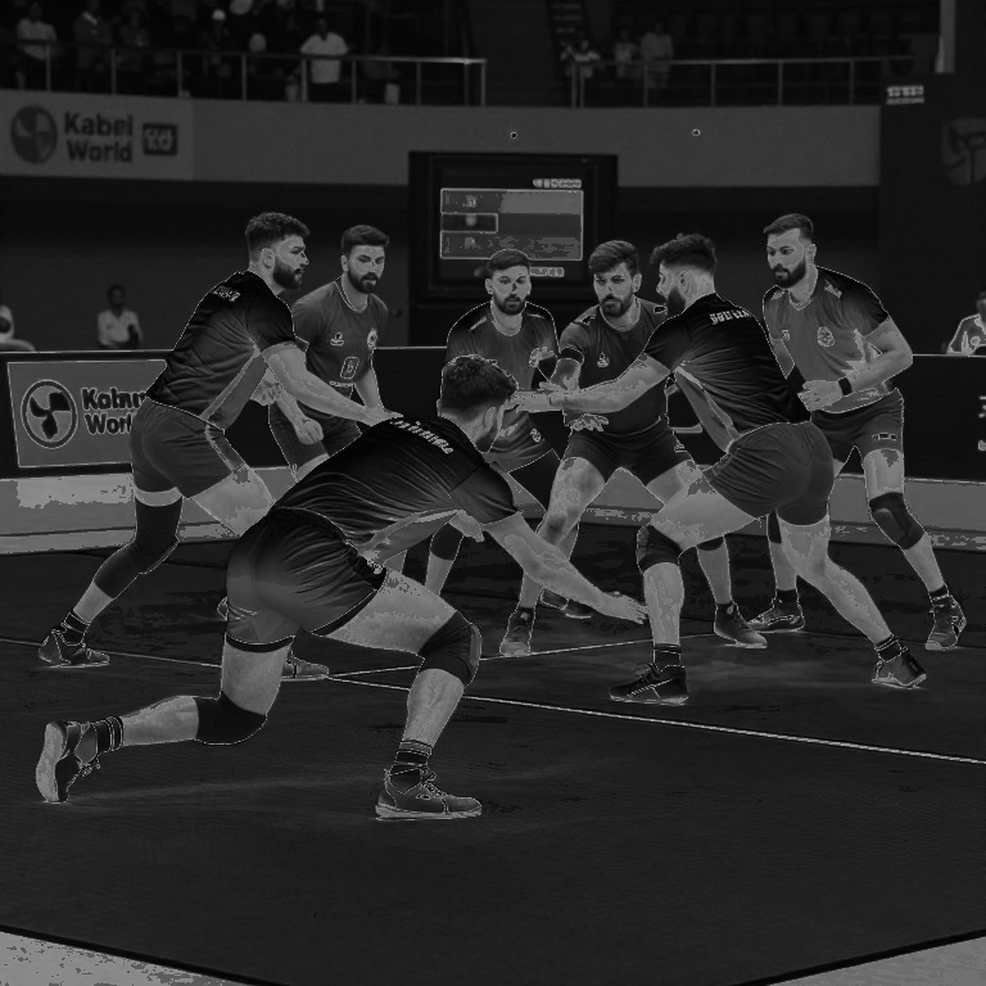
Kabaddi's economy rests on four rules, and three of them have no public dataset anywhere. The cant — the raider must keep chanting through the raid; stop to breathe and the raid is void and he is out. The bonus line — a deep line in the opponent's half, one point to cross it, but only when the defending side has six or more players on court. All out — the entire side ruled out, two points to the opposition and a full revival. Do-or-die — the third raid after two empty ones; fail and the raider walks off. Understanding the bonus arithmetic requires understanding the six-player condition, and that condition is never printed beside the raid in any scorecard. The reader ends up thinking a bonus is a freebie. It is a conditional decision.
My first job after the hockey desk was an audit of my own language. If a sentence would work verbatim in a hockey column, cut it and use the kabaddi word: raid, cant, lobby, all out. Not goal, raid point. Not defensive line, lobby. This is not fussiness about translation; it is a data requirement. Keep writing raid as attack and my file will never join to an external feed's assaulter column.
One more absence has to be understood before any table can be built: circle style and standard style are not the same sport. Punjab's rural circle circuit runs on different scoring; the televised standard style runs on another. Coverage wraps both in the single word kabaddi, and the rural circuit's numbers then cannot be joined to the league's. I understood the gap the first time a side on a mud court outside Rohtak told me their count of a raid worked differently from mine.
That same year I started my own file. I logged 2,100 raids from public scorecards and sat down with one question: was Rahul Chaudhari's celebrated dubki more effective at beating the bonus line than a plain running hand-touch? By my count, no. The dubki did not touch the bonus line appreciably more often, and on the road his raid-success rate dropped to 31 per cent. The men in the tunnel saying he carried the team at home were counting one thing; I was counting another. Both can be true. They cannot sit in the same sentence.
The second-layer question begins here. A Super 10 is a badge, not a measure. Raid points and Super 10s only add; raid-success percentage and points-per-raid include the denominator, and the denominator changes the picture. Compare two raiders. One takes 320 points off 410 raids — 0.78 per raid. The other takes 240 off 285 — 0.84 per raid. The Super 10 count puts the first ahead. Judged on match-winning return, the second is extracting more from less. Broadcast will always favour the graphic that lands in twenty seconds, which means the total. A denominator needs a story, and a story needs forty.
So volume keeps covering efficiency in a sport where a single raid can produce three or four points. A Super Raid can matter more than a Super 10, because it breaks the opposition's shape and pushes them toward an all out. The scorecard counts both the same way.
At the auction table the loud question is price and the quiet one is why price is never set against two seasons of output. The most valuable internal decision a franchise can make is a price-to-output ratio. That ratio is published nowhere — not on the league site, not on the screen where retention gets discussed. When a raider goes for a crore, the number in the room is the bid, not how many raids he will be given over the next two seasons and how many of those will touch the bonus line. Premium is built in that dark. This is why I force one structural question every season that the calendar cannot answer, and this year's is simple: whose analytics desk is actually winning, and whose is just bidding?
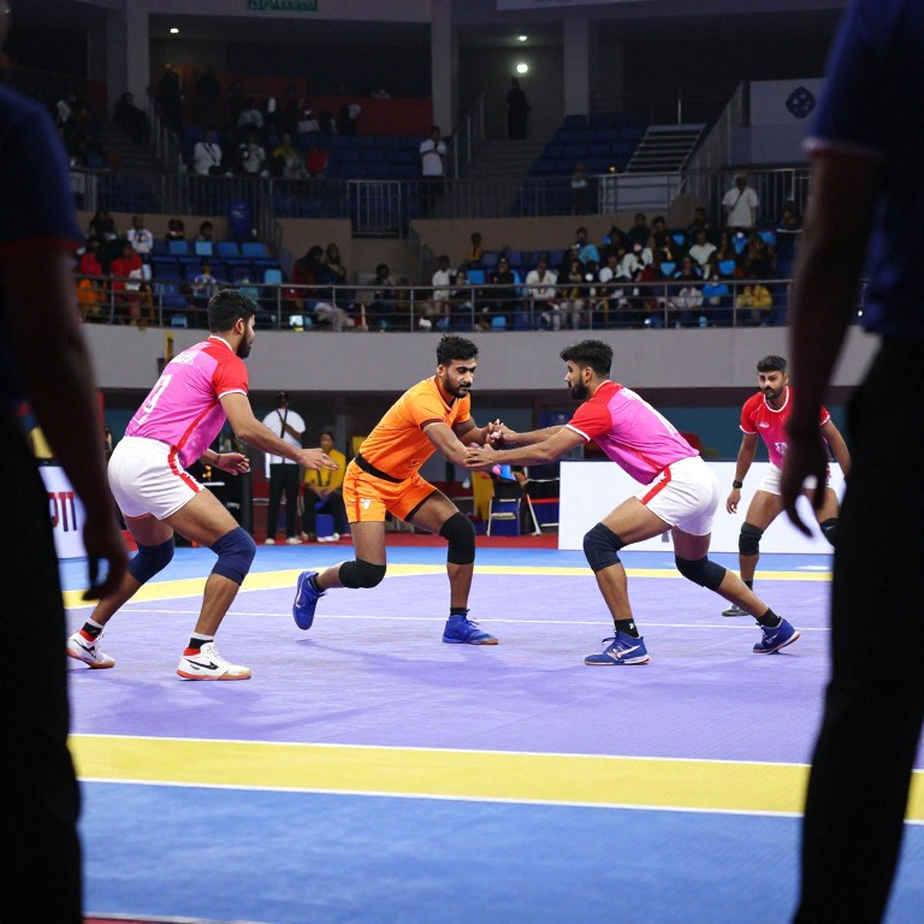
The roster's second silence is single-point dependence. When a team's entire scoring stands in one column, the opposition needs exactly one method to sit that column down. Eleven weeks on the Haryana-Punjab belt taught me to hear absence, and the loudest thing I heard there was this: a side with no second raider on the board makes the defensive call very easy. The shout that travels alongside the cant — one, one, one — has already announced who gets surrounded today. You see it on the training ground by the third day: one raider doing four drills, three imitating him.
Absence also lives where the coverage light never reaches. In 2026 there was no league season and no crowd anywhere. I drove those eleven weeks through Sonipat, Rohtak and Hisar and filed 47 interviews, mostly with players whose railway and police salaries had stalled. Outside Rohtak I found a women's circle-style side on a mud court with no stipend and one shared set of shoes. After that afternoon, semi-professional stopped being a footnote for me. The sport whose men's system sells for crores has no women's franchise league at all, and that story never makes page one because it has no scorecard.
In December 2026 I followed Season 8 into its Bengaluru bio-bubble, where Naveen Kumar raided into empty seats. With no crowd, both the cant and the defensive calls change — defenders stop hiding their call inside the noise and simply shout it, and the raider has to keep his own breathing count. That hall deserved to be described as precisely as a full one. What stayed with me was not the medal, but the hush around it.
Now turn it over. The conventional view is that kabaddi coverage is thin because the league is young, or because it isn't cricket. The first claim no longer holds — the league is many seasons deep, crore bids move at auction, primetime carries it, and a raider's away split still cannot be found in print. The failure is not age but priority: the system logs the outcome and discards the decision, because an outcome sells in twenty seconds and a decision needs a paragraph.
Apply a second pass to my own reversal. This is not a conspiracy. A paragraph does not hold on a twenty-second screen, and that is a constraint of the format, not of anyone's intent. Which means the fix is not better writing alone; someone has to decide to spend the paragraph. And because the sport's broadcast weight rests on a single window, a graphic that does not survive that window does not grow anywhere else all year.
And remember 2026 here. In Jakarta I watched a gold streak end and a new rhythm begin. A group loss to South Korea 23-24, a semifinal loss to Iran 18-27, bronze. That was physics, not betrayal: wrestling-based Iranian defence and a team picked on reputation. Iran has been named co-favourite in every preview since. Anyone still writing kabaddi into a guaranteed-gold frame is repeating the complacency 2026 already priced. The habit of crowning the next Pardeep Narwal has the same flaw — it anoints on one season's totals, when the real question is how a raider's bonus-line conversion moved across three.
What to watch next is simple. The next time a broadcast throws up a large Super 10 graphic, check whether a raid-success percentage sits beside it. At the next auction, check whether any franchise walks to the table with an efficiency file rather than a bid instinct. The training ground speaks first; the scoreboard only repeats what it heard. The question is not whether kabaddi has enough stories. The question is whether anyone will spend one column on the story sitting inside every raid.