
Commonwealth Kabaddi Championship 2026: India's Real Evidence Lies in the 68 and the 26, Not the Nigeria Fixture
**मुख्य उत्तर**: कॉमनवेल्थ कबड्डी चैंपियनशिप 2026 में भारत ने इंग्लैंड को 46-26, यूगांडा को 44-30 और मलेशिया को 37-23 से हराया। भारत के बचाव का सबसे मजबूत सबूत इंग्लैंड को 26 अंकों पर रोकना है, जबकि उसी इंग्लैंड ने नाइजीरिया के खिलाफ 68 अंक बनाए थे। **मुख्य तथ्य**: - भारत ने तीन मैचों में 127 अंक बनाए और 79 अंक लुटाए, यानी प्रति मैच लगभग 26.3 अंक। - इंग्लैंड ने नाइजीरिया को 68-18 से हराया, जबकि भारत के सामने इंग्लैंड केवल 26 अंक बना सका। - नाइजीरिया तंजानिया से 17-66 और इंग्लैंड से 18-68 से हारा, अंतर 49-50 अंक का रहा। - टीम के कप्तान सुरजीत सिंह हैं, और स्रोत में नामित एकमात्र खिलाड़ी वही हैं। - ईरान कॉमनवेल्थ सदस्य नहीं होने के कारण इस चैंपियनशिप में शामिल नहीं है, जो भारत की बढ़त को संरचनात्मक रूप से सीमित करता है। **स्रोत**: कॉमनवेल्थ कबड्डी चैंपियनशिप 2026 का चौथा मैच दिवस कवरेज (2026) | Cross-checked: cricsultan.com **संबंधित प्रश्नोत्तर**: प्रश्न: क्या कॉमनवेल्थ कबड्डी चैंपियनशिप कॉमनवेल्थ गेम्स का हिस्सा है? उत्तर: नहीं, कबड्डी कॉमनवेल्थ गेम्स के कार्यक्रम में शामिल नहीं है और यह चैंपियनशिप केवल ब्रांडिंग के रूप में "कॉमनवेल्थ" नाम का उपयोग करती है। प्रश्न: भारत का स्कोर इंग्लैंड के खिलाफ कम क्यों दिखता है? उत्तर: कबड्डी में अंतर ऑल आउट नियम के कारण तेजी से बढ़ता है, इसलिए नाइजीरिया जैसी कमजोर टीम के सामने बड़ा अंतर बनना स्वाभाविक है, जबकि इंग्लैंड जैसी सक्षम टीम के खिलाफ 46-26 जैसा स्कोर बचाव की मजबूती दर्शाता है। प्रश्न: सुरजीत सिंह के रेड या टैकल आंकड़े उपलब्ध हैं? उत्तर: नहीं, उपलब्ध स्रोत में केवल टीम-स्तरीय स्कोर दर्ज हैं, खिलाड़ी-वार रेड और टैकल आंकड़े नहीं दिए गए हैं।
England put 68 points past Nigeria. India then pinned that same England to 26. On Day 4 of the Commonwealth Kabaddi Championship 2026, the headline is India walking out against Nigeria; the real story was already written into the scorecards — a 42-point suppression that tells you this Indian team's strength sits in its defensive line, not in its raids.
After eleven at night I opened the England-Nigeria card for the third time. 68-18. In kabaddi, a gap that wide is never the product of one raider's brilliance. It is the product of how the rules are built. That is the key to reading this whole tournament.
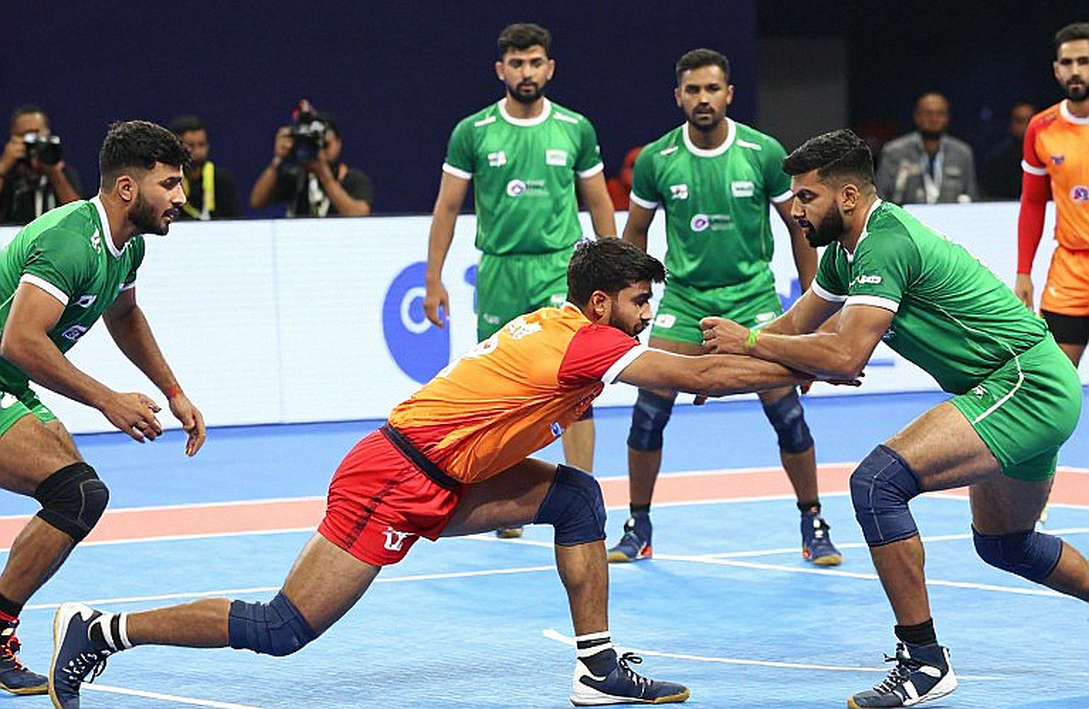
First, what this event is and what it is not
This is a multi-nation, standard-style championship (rectangular court, seven against seven), running in a round-robin format. By Day 4 the field includes India, England, Malaysia, Uganda, Tanzania and Nigeria. It is not part of the Commonwealth Games — kabaddi is not on the Commonwealth Games programme at all. "Commonwealth" here is a naming device, not a status.
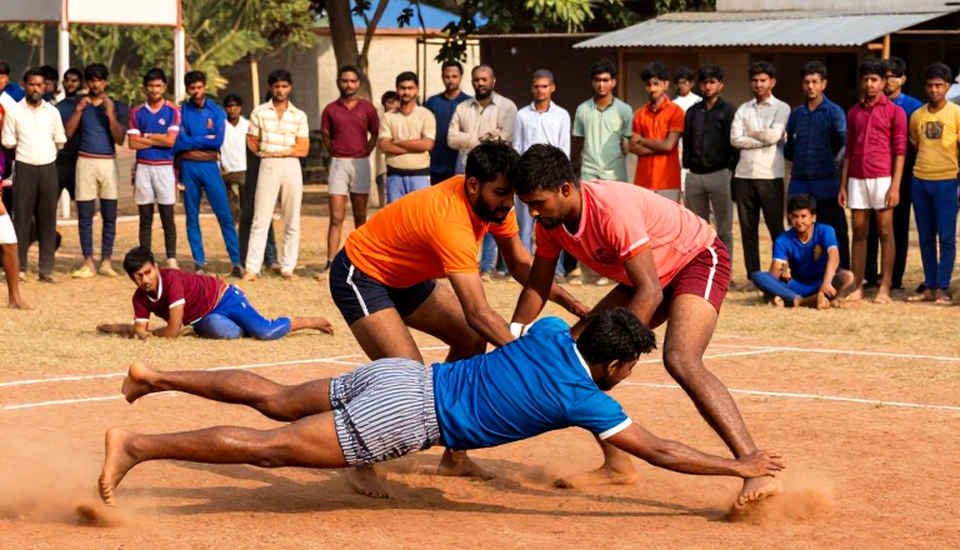
For readers far from kabaddi's vocabulary, one sentence each: the raider crosses into the opponent's half, must touch a defender and return within 30 seconds, chanting "kabaddi-kabaddi" throughout to prove he is not inhaling — if the chant breaks, the raid is void. The defending side scores by stopping him collectively. When a whole side is ruled out, the opponent gets two bonus points and the entire team revives — this is the All Out, the engine behind kabaddi's fast scoring and frequent swings. After two empty raids the third becomes do-or-die; a tackle completed with three or fewer defenders is a Super Tackle, worth two.
India's record across three games: England 46-26, Uganda 44-30, Malaysia 37-23. That is 127 scored, 79 conceded. Nigeria's: 17-66 to Tanzania, 18-68 to England. Surjeet Singh is captain — the only player named in the source, with no record of whether he plays as raider or defender.
And something the scorecard does not show: fan conversation is carrying a quiet unease that India are "not winning by big margins." The team started with a bang, yet there is no satisfaction. That complaint is not false — it is simply being read on the wrong instrument.
The number that matters is 26, not 46
Thirty-five years of watching matches have left me with one habit: I compare a score not to a team's total, but to the opponent's own capacity. England made 68 against Nigeria and 26 against India. The strongest evidence of India's defence in three matches is that 42-point suppression — a cut measured against the opponent's own output. That one line carries more information than India's raid totals, because the comparator is external rather than self-congratulatory.
The same card, though, hands over a nagging fact: India conceded 79 across three games, roughly 26.3 a match. A genuinely airtight defensive unit playing a field this weak would give less. India's defence is "good enough to win comfortably," not "sealed" — and that difference is what the later rounds will settle. An honest blemish belongs here too: the source offers only team totals, no raid-wise or tackle-wise numbers. Successful raid percentage, tackle percentage, dependence on a single raider — none of it can be measured. That is a gap, not a clean chit.
Big margins are not talent; they are rule multiplication
To read kabaddi's arithmetic you have to reread the All Out. A team goes out, the opponent takes two points, the whole team returns. Once dominance is established, the gap does not grow linearly; it compounds. The raider raids again, the defence folds again, another All Out follows. Look at Nigeria's margins of 49 and 50 through that lens. That is not only a talent gap; it is a rule-amplified gap. Miss this and both India's "modest" wins and Nigeria's "embarrassing" losses get weighed on the wrong scale.
The field's structure shows three tiers. Tier one: India. Tier two: England, Tanzania, Malaysia, Uganda — sides that can beat each other and post big scores. Tier three: Nigeria, whose defeat margin is fixed at 49-50 points. Nigeria's losses are this tournament's least interesting fact and its most necessary lesson.
Iran's absence is this report's biggest fact
The semifinal defeat to Iran in Jakarta 2026 left a quieter lesson than any medal: Iran's defence grows out of a wrestling floor, and India's selection was made on reputation rather than on evidence from the mat. That lesson still holds, because Iran are simply not here — not a Commonwealth member, and therefore structurally excluded.
Three wins, one hollow: the rival that makes defeat imaginable is not in this field. India's dominance here is real and still incomplete, because the level at which the contest becomes genuine never took the court. World kabaddi today is bipolar — India and Iran. This championship looks unipolar, and that gap slips past the reader's eye.
One more truth belongs on this line: Commonwealth branding does not move kabaddi one step up the Olympic ladder. That pathway is decided by the number of participating nations, continental spread and the depth of the women's game — and neither Iran nor Korea is in this field. This event is a vehicle for development and outreach, not a governance milestone. Who the organiser is, whether the International Kabaddi Federation has sanctioned it, the source does not say, and that is its own transparency deficit.
The auction room is not here — and that matters
The auction room teaches you more about desire than any press box. But this is not the Pro Kabaddi League. No bids, no retentions, no crore board circulating in a room. National-team duty is compensated within federation and team arrangements, not in an auction hall. A reader who watches this event through a league lens will import a labour economy that does not apply.
The distribution picture speaks too. This coverage is essentially a "live streaming and telecast" guide. That is itself a commercial signal: the event's money rests on streaming, not premium broadcast rights. Its rights tier sits below the Pro Kabaddi League or the Asian Games. Demand exists — it is simply narrow and fragmented.
The other side: the "weak field" we wave away is the biggest story
There is a measurement error at the root of fan disappointment. People are treating margin as an index of quality, when in kabaddi margin inflates through All Outs. If India beat Nigeria by 70 instead of 60, that would not prove the defence improved. There is only one real measure — how many points leak when the opposing raider can break tackle after tackle. That examination is not available in this field. So do not read this title as a statement of global supremacy; it is a good score on a limited question paper.
The second inversion concerns Nigeria. It is easy to treat 17-66 and 18-68 as comedy; they are the tournament's most necessary information. African participation is a claim of reach, not of competitiveness — and depth never forms without reach. In a sport where India's strength comes from village akhadas, the railway-police-army job pipeline and a professional league structure, Nigeria losing by 50 is not an organisational failure; it is a development distance. The story is that there is no public instrument to even measure that distance.
Which raises the question that indicts the whole architecture: the women who hold Asian Games gold in kabaddi still have no franchise league. The circle style that has its own tradition across the Punjab belt stays outside the league and federation mainstream. Domestic players beyond the Haryana-Punjab coverage radius go uncovered. Commonwealth branding adds flags; it does not build a stage for those who have none.
What to watch
The Nigeria match is close to decided; the interest lies in whether India pulls its conceded average down. The genuine measurement comes against a side like England, capable of 68 — and beyond that, against a rival like Iran. Until then, remember: a field that cannot give you a player who beats you cannot give you a true score either. The question is not by how many points India won. It is what language India's defence will speak when it meets someone who breaks tackles.