
होमKabaddiCommonwealth Kabaddi Championship 2026: India Face Uganda Test, But the Real Questions Lie Elsewhere
Kabaddi
Commonwealth Kabaddi Championship 2026: India Face Uganda Test, But the Real Questions Lie Elsewhere
प्रश्न: कॉमनवेल्थ कबड्डी चैंपियनशिप 2026 में भारत का सामना किससे है और मुकाबला कब है? उत्तर: दूसरे दिन के मैच नंबर 9 में भारतीय पुरुष कबड्डी टीम युगांडा से भिड़ेगी। पहले दिन भारत ने इंग्लैंड को 46-26 और युगांडा ने मलेशिया को 45-29 से हराया था। भारत ने ताजा स्क्वाड उतारा है, इसलिए यह प्रयोगात्मक टीम मानी जा रही है। भारत भारी पसंदीदा है, लेकिन ईरान, बांग्लादेश और दक्षिण कोरिया की गैरमौजूदगी में इस जीत को भारत की असली ताकत का पैमाना नहीं माना जाना चाहिए। ध्यान दें: 'कॉमनवेल्थ कबड्डी चैंपियनशिप' राष्ट्रमंडल खेलों की आधिकारिक स्पर्धा नहीं है, और रिपोर्ट में भारत को 'एशियाई खेल 2026 स्वर्ण विजेता' बताना तथ्यात्मक रूप से संदिग्ध है; भारत का सबसे हालिया पुरुष कबड्डी स्वर्ण 2022 हांगझोउ एशियाई खेलों (2023 में आयोजित) में आया था।
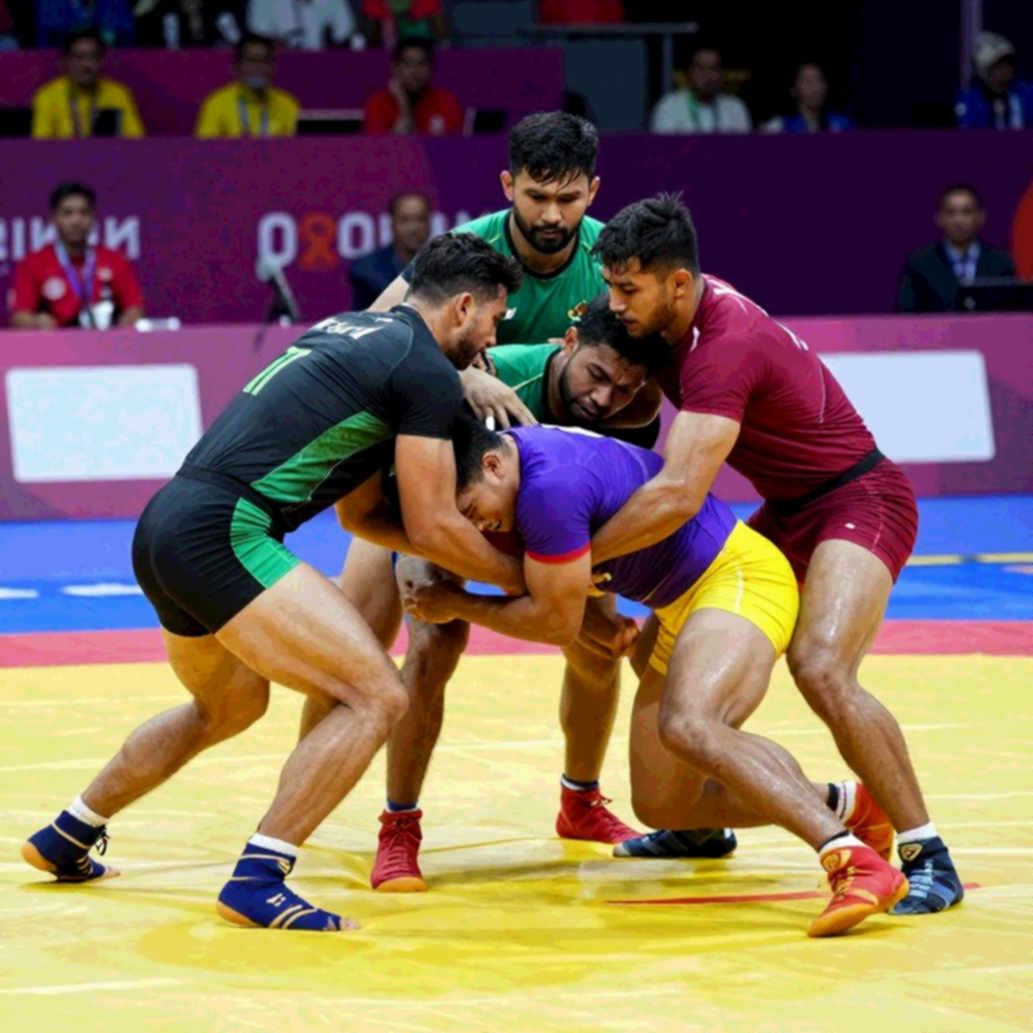
On Day 2 of the Commonwealth Kabaddi Championship 2026, Match 9 will see the Indian men's kabaddi team take on Uganda. On the opening day, India beat England 46-26, while Uganda defeated Malaysia 45-29. Both sides arrive on the back of wins, which effectively makes this the final of the non-India bracket. But the real significance of this fixture lies less in the scoreboard and more in the questions around the tournament's name, its competitive tier and its factual accuracy.
First, the rules, because everything else rests on them. A raid is the offensive phase, in which one player (the raider) crosses into the opponent's half and must touch a defender and return safely within 30 seconds. Throughout the raid the raider must continuously chant 'kabaddi, kabaddi' to prove he is not holding his breath; a break voids the raid. A tackle is the defensive phase, in which defenders collectively stop the raider in their own half and earn a point. The bonus line is drawn deep in the opponent's half; crossing it earns one point only when the defending side has six or more players on court. The most decisive rule is the All Out: when all seven players of a side are out simultaneously, the opponent earns two bonus points and the wiped-out side's seven players are revived. A Super Tackle, made with three or fewer defenders on court, is worth two points, and a Super Raid yields three or more points from a single raid.
Now look at the two scorelines. India's 46 and Uganda's 45 indicate that both matches were open, high-tempo, All-Out-driven contests rather than defensive, low-scoring grinds. Producing 46 or 45 against the losing side in a 40-minute format typically implies two or three All Outs conceded by the opposition, since that rule is the main mechanism by which totals inflate rapidly. A 20-point margin (India 46-26 England) and a 16-point margin (Uganda 45-29 Malaysia) both point to one-sided affairs, not the tight defensive kabaddi seen against elite sides such as Iran.
For India, the 20-point win over England was described as convincing, but it carries a mild warning: conceding 26 points against a modest side signals loose defending. That looseness was masked against England but could prove decisive against Iran or Bangladesh. It is also notable that the report names no players, gives no raid counts, no successful raid percentage and no tackle-success rate. On the data front it is extremely thin, and every conclusion drawn from it should be read with low confidence.
Most significant for India is that the team fielded a 'fresh squad' and made a strong start. That strongly implies deliberate rotation and possibly an experimental or second-string XI, which lowers the value of the 46-26 result as a genuine strength indicator. The purpose of this low-risk outing is clearly international exposure and development rather than title prestige. The report's line that India cannot afford to take Uganda lightly is a standard cautionary preview trope that actually tempers overconfidence.
As for Uganda, the 45-29 win suggests a functional raiding unit capable of scoring; this is not merely a defensive minnow. Malaysia's quality is limited, however, so the result should not be over-read. On this evidence Uganda emerge as the strongest non-India side in the field, which is why India versus Uganda is effectively the biggest remaining fixture.
Then comes the most sensitive question: the tournament's name. Kabaddi has never been a medal sport at the Commonwealth Games in any edition. A 'Commonwealth Kabaddi Championship' is therefore an independent invitational competition borrowing the label for prestige and marketing. The participant list confirms this: beyond India there are England, Uganda and Malaysia, that is, diaspora-and-development-driven international kabaddi rather than the elite competitive circuit.
This connects to the biggest limitation of all, the field strength. The three nations that genuinely threaten India, Iran, Bangladesh and South Korea, are all absent, as is Pakistan. India's dominance here is therefore not a measure of India's true standing. With a top-three global side on one side and developing programmes on the other, a wide-margin win is natural and extrapolating much from it would be a serious mistake.
Regionally and culturally, this field maps the Indian diaspora footprint. Malaysian kabaddi is closely tied to the country's large Tamil-Indian community, and English kabaddi revolves around the British-Asian population rather than mass indigenous participation. Uganda and Kenya are Africa's most active kabaddi nations, and their presence is the product of decades of outward promotion by Indian kabaddi bodies and diasporic organisations. That is real progress, not fabrication, but the growth model depends on external support and is fragile. It is also worth noting that the report covers only the men's tournament; the absence of any women's competition reference prevents any assessment of the women's game.
A note on the media economics: the report closes by urging readers to follow on Facebook, Twitter and Instagram, download the app and join WhatsApp and Telegram channels. The piece is therefore primarily an audience-aggregation and app-install asset rather than an information product. The tournament's standalone commercial value is negligible, with no figures on broadcast rights, sponsors, venues or attendance. The Pro Kabaddi League-style economics simply do not exist here, since auctions and contracts are not a feature of this tier.
The biggest factual caution is the report's claim that India are the Asian Games 2026 gold medallists. That claim is questionable, since the 2026 Asian Games (Aichi-Nagoya) have not yet been held at this point. India's most recent men's kabaddi gold came at the 2026 Hangzhou Games, staged in September-October 2026. The sentence therefore appears to be a temporal error or a conflation with the 2026 edition. Such a slip risks spreading misinformation, and the claim should not be cited without verification against official results.
Governance transparency is also lacking. The organiser is unnamed, and it is unclear whether the event is sanctioned by the International Kabaddi Federation or staged by a private promoter. There is no sign of doping, athlete-safety or eligibility disputes in the text, which is a relief, but without a named organiser it is impossible to judge whether this is a legitimate development pathway or a prestige-building exercise.
Overall, this is a low-stakes, low-information preview in which India are heavy and justified favourites. But the signal it offers is limited. India's real tests will come against Iran, Bangladesh and South Korea; until then, enjoying these high scores is fine, but treating them as proof of strength is not. Readers should watch Uganda's trajectory, track the points India concede in defence, and, until the event's official status is clear, read its name as what it is: an independent invitational competition that has borrowed a big name for prestige.
संबंधित खिलाड़ी
लोकप्रिय/पसंदीदा पुस्तकें
The Kabaddi Ledger: Four Golds, One Missing League, and the Silence of a Mixed Zone2026-11-08
The Corner Is the Currency: Kabaddi's Tackle Economy in a Transfer Cycle2026-11-07
Why 'Guaranteed Gold' Thinking Against Iran Is Dangerous: The Tackle Economy Report2026-11-05
PKL's Crisis and Haryana's Opportunity: The Real Story Behind the Kabaddi Champions League Expansion2026-11-04
The National Game Myth and the Women's League Truth: Kabaddi's Coverage Problem Is Story Selection, Not Money2026-11-03
Kabaddi's Changing Face: From Muddy Fields to Prime Time2026-11-01
अनुशंसित
Kabaddi's New Era: Rule Nuances, the PKL Economy and the India-Iran Rivalry2026-10-28
Commonwealth Kabaddi Championship 2026: 13 Teams, Nine Days in Ahmedabad, and a Broadcaster Nobody Named2026-11-07
From Empty Information Points to a Full Kabaddi Mat: Two Codes, One Auction Spreadsheet, and the Fourteen Pages Nobody Read2026-11-01
Surjeet Singh Captain, Naveen Kumar Deputy: In Ahmedabad, India's Real Test Lies in the Squad List That Hasn't Arrived Yet2026-10-30
Nine Days, Thirteen Teams, One Mat: The Missing Column in the 2026 Commonwealth Kabaddi Championship2026-10-29
Commonwealth Kabaddi 2026: The Day 1 Table Put Three Teams Higher Without a Single Raid — and That's No Mistake2026-10-25
अनुशंसित
Nine Days, Thirteen Teams, One Mat: The Missing Column in the 2026 Commonwealth Kabaddi Championship2026-10-29
India vs England, Match 4: The Oath of Rotation and the Smoke of Scorelines — First Lesson from Commonwealth Kabaddi Championship 20262026-11-05
Pakistan's Commonwealth Kabaddi Championship 2026 Withdrawal: The Format Crisis Behind the Medal Question2026-11-05
Match 4, First Test: What the Scorecard Will Not Tell You Before India vs England in Ahmedabad2026-10-24
India vs England in Ahmedabad: The Scoreboard Will Not Measure What It Seems To2026-10-29
The Regular Season's Hidden Table: The Empty Raid Is the One Winning Matches2026-11-07