
होमChessA Quiet Start at the Bavarian Championship in Tegernsee — and a New '60 Minutes' Guide to the Scotch
Chess
A Quiet Start at the Bavarian Championship in Tegernsee — and a New '60 Minutes' Guide to the Scotch
यह रिपोर्ट दो अलग-अलग शतरंज-घटनाओं को एक साथ रखती है। पहली: जर्मनी के टेगर्नसी में बवेरियन शतरंज चैंपियनशिप के शुरुआती दौर में कोई उलटफेर नहीं हुआ; यह राज्य-स्तरीय प्रतियोगिता है, FIDE विश्व चैंपियनशिप चक्र से बाहर, और इसके खिलाड़ियों, स्टैंडिंग या पुरस्कार राशि का कोई आंकड़ा उपलब्ध नहीं है। दूसरी: ग्रैंडमास्टर आद्रियान मिखाल्चिशिन की '60 मिनट' इंस्ट्रक्शनल सीरीज़, जो क्लब-स्तरीय खिलाड़ियों के लिए स्कॉच ओपनिंग (1.e4 e5 2.Nf3 Nc6 3.d4 exd4 4.Nxd4) का सामना करने के 'सरल व्यावहारिक' तरीके बताती है। उपलब्ध विवरण में कोई वैरिएशन, कदम-अनुक्रम या इंजन-मूल्यांकन नहीं है, इसलिए सुझावों की तकनीकी सटीकता स्वतंत्र रूप से सत्यापित नहीं की जा सकती। '25 साल पहले' वाक्यांश सामग्री को लगभग 2015 का बताता है, यानी सिफारिशें संभवतः एक दशक पुरानी हैं; ढाँचागत सलाह (केंद्र, विकास, प्यादा-संरचना) टिकाऊ है, विशिष्ट लाइनें नहीं। ऐतिहासिक संदर्भ: कास्पारोव ने स्कॉच 1990 विश्व चैंपियनशिप मैच में खेली और उसे लोकप्रिय बनाया — ओपनिंग 1824 के एडिनबर्ग-लंदन मैच से नामित है और पहले से मौजूद थी।
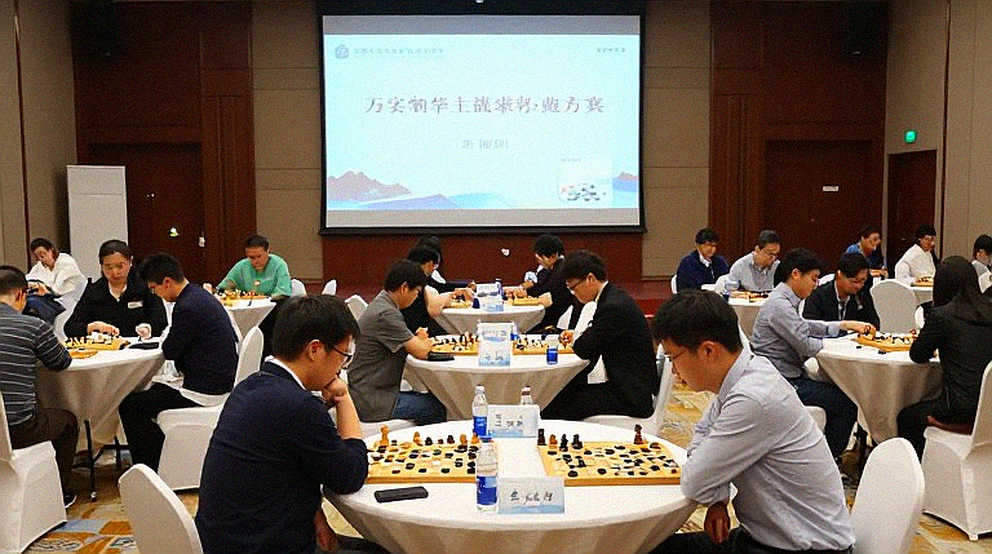
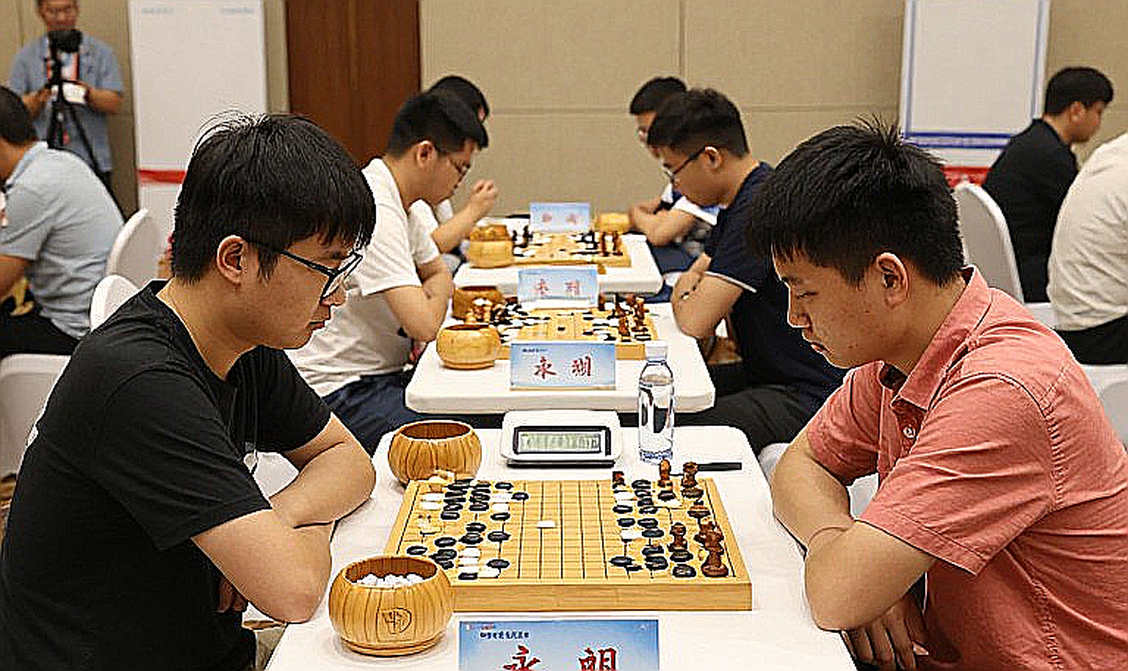
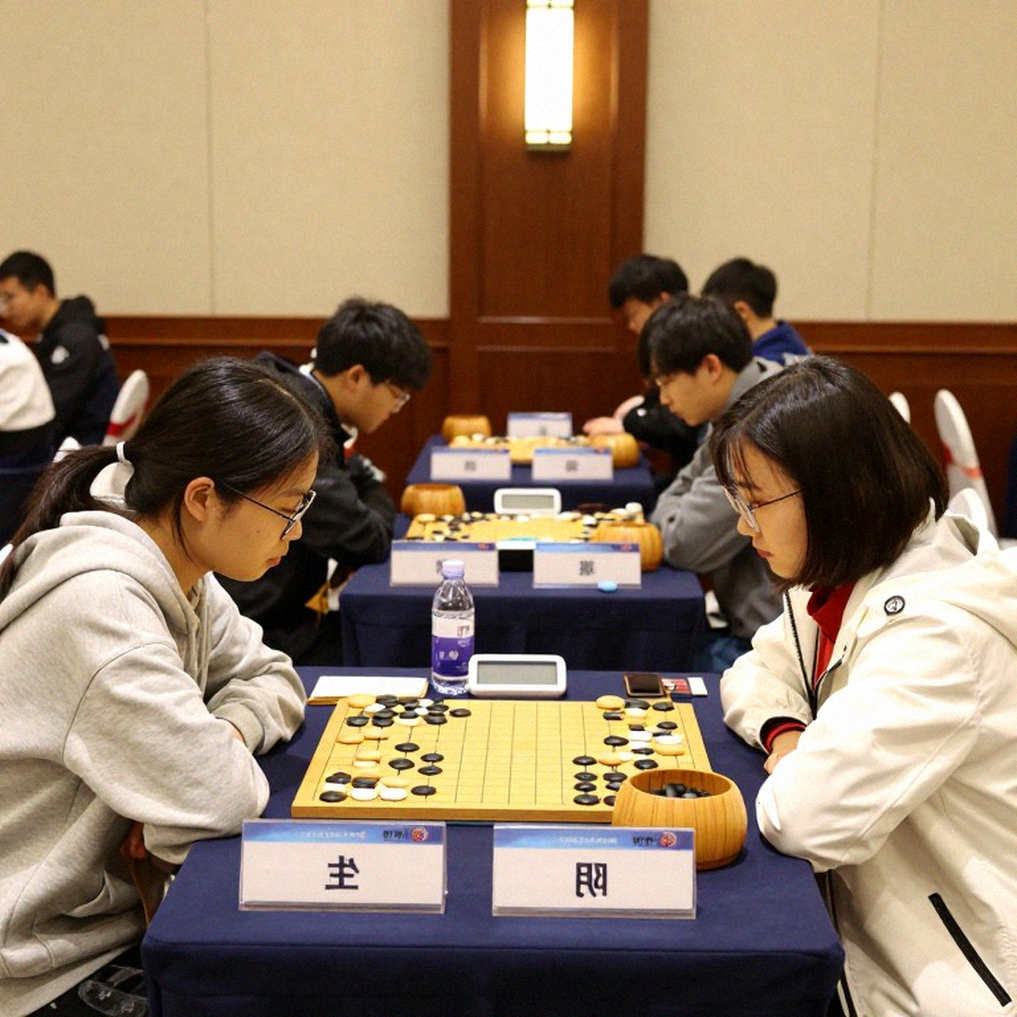
Tegernsee (Bavaria). The opening rounds of the Bavarian Chess Championship in the lakeside town of Tegernsee have produced no major upsets. The rating favourites have held their ground and the tournament has moved at a comparatively quiet pace. At the same time, an entirely separate debate is gathering steam in the chess world — over the Scotch Opening. A new instructional series, '60 Minutes', by Grandmaster and renowned coach Adrian Mikhalchishin, promises 'simple, practical tips' for meeting the Scotch.
At first glance both stories appear to belong to the same sport, but technically they have nothing to do with each other. The only information available about the Bavarian Championship is that the early rounds brought no surprises; the Scotch material is promotional copy for a commercial instructional product. Treating the two as parts of one story, or inferring anything about the soundness of an opening from tournament results, would be wrong on both counts. This report keeps the two threads separate — and where there is no data, it says so plainly.
The Bavarian Championship (Bayerische Meisterschaft) is a state-level event in Germany, sitting outside the FIDE world championship cycle. Such events conventionally use the Swiss system, though the format of this edition cannot be confirmed from available information. Likewise, no figures exist for the list of participants, average rating, round-by-round results, prize fund or time controls. Any conclusion about field strength or quality of play would therefore be guesswork.
'No surprises in the opening rounds' is a low-information phrase in chess media idiom. It implies the rating favourites won, but without standings or upset data it cannot be falsified. It should be read as narrative texture, not data. German state championships typically draw fields in the roughly 2200–2450 range — an estimate, not a confirmed figure — and their real significance lies in the national talent pipeline and the German league ecosystem rather than in shaping elite chess.
Now to the Scotch. The opening begins 1.e4 e5 2.Nf3 Nc6 3.d4 exd4 4.Nxd4. White trades an early central pawn for active piece play. The name comes from the 1824 Edinburgh–London correspondence match — it is not a modern invention. For much of the twentieth century it was regarded as 'harmless' and rarely played at the top. That perception was most sharply challenged in 2026, when Garry Kasparov used it in a world championship match.
Kasparov and Anatoly Karpov played five world championship matches between 2026 and 2026: the 2026 match was abandoned at 5–3; Kasparov won in 2026 and 2026; the 2026 match was drawn 12–12 with Kasparov retaining the title; and in 2026 Kasparov won 12½–11½. The Scotch reference attaches specifically to that 2026 match. A caution: the exact number of games in which the Scotch appeared, and which of them was decisive, is not given in the available material and requires database verification.
The history needs the right proportions. Kasparov did not invent the Scotch — he popularised it, and that was his real contribution. Scotch Four Knights structures and Classical 4...Bc5 lines were not absent from Soviet-era practice before 2026; they simply lacked top-level prestige. Kasparov's advocacy carried the opening down to club level. Today the Scotch is not a dubious sideline but a fully legitimate main line, and modern theory holds that Black equalises comfortably in the main branches.
This is where Mikhalchishin's '60 Minutes' comes in. Its claim is that players facing 1.e4 e5 2.Nf3 Nc6 need not panic; a few simple practical tips can neutralise the Scotch. A fixed one-hour runtime indicates an authored video product — a DVD or download-era format — not a broadcast segment. The target audience is equally clear: club and improving players, not 2700-level professionals.
Technically the material is hard to assess, because the available description contains no variations, no move sequences, no engine evaluation and no named sub-lines. It is a claim about a product, not an analysis. Black generally chooses between two main setups — 4...Bc5 (Classical) and 4...Nf6 (leading to the Scotch Four Knights and Mieses branches) — but the source does not say which the series covers. How sound the tips are cannot be answered from what is available.
There is an interesting dating clue. The text refers at one point to '25 years ago', pointing to the 2026 match. That places the material at roughly 2026. If so, an anti-Scotch recommendation set of that vintage has passed through about a decade of engine-driven refinement — including the general drift toward earlier ...Nf6 and ...Bc5 choices and heavy database preparation. Specific recommendations should therefore be treated as probably superseded, while the structural advice remains durable: occupy the centre, complete development, avoid isolani-type endings.
That applies with even more force in rapid and blitz. Under slow time controls 'principle' works; under fast ones the player is trading on memorised lines, and in the engine era memorised lines have a short half-life. A one-hour video can give you direction, not preparation.
One further fallacy deserves attention, common in this genre: 'Kasparov played it, therefore the opening is strong' and 'Mikhalchishin is renowned, therefore the tips work' are both arguments from authority, not from data. Mikhalchishin's credibility is real: a long coaching career, the Grandmaster title and FIDE trainer-level qualification. That is the appropriate credential for a repertoire video — but it is not evidence that the specific tips are engine-accurate. (Biographical details such as birth year and federation history are treated here as requiring separate verification.)
Mapped onto the market, the material reveals a two-track chess world. On the board the Scotch is settled, established main-line theory; in the market it is a recurring content product whose sale depends on periodically re-framing it as a 'problem'. The asset being monetised is Kasparov's 2026 legacy — durable, cross-generational marketing capital that no contemporary result can invalidate.
Structurally, the model is under pressure. Since the mid-2010s, chess instruction has shifted decisively toward interactive and streaming formats, whose authors are typically younger and rating-branded. The authored DVD model has lost ground on both distribution and discovery to platform subscriptions and course marketplaces. But in this particular niche the decline of veterans is slow and graceful: pedagogic authority decays far more slowly than playing strength.
On governance, no rules of play are at issue. Two adjacent regimes apply: commercial and advertising disclosure, and FIDE's trainer-title certification system. Risk is low. A transparency expectation nonetheless remains: when instructional material sells itself by framing an opening as a 'threat', the reader is entitled to know which variations are covered, which engine and version the assessment rests on, and when the material was produced. The absence of all three is a technical shortcoming, not a moral offence.
The risk flags are clear: technical claims lack data support; memorised preparation decays quickly under fast time controls; and there is no verifiable line-level content. Against that, there is no indication the material is targeted at any specific opponent or team.
So what is the substance here? The Bavarian Championship in Tegernsee is what it is — a solid, pipeline-building state-level event whose importance lies in the path toward the national championship and in the German league ecosystem. The Scotch is what it is — a mature, respected main line that continues to attract new content. And Mikhalchishin's '60 Minutes' is what it is — the product of an experienced Soviet-school teacher, whose value lies in explanatory structure rather than cutting-edge engine preparation.
The practical advice for readers: do not treat the video as a 'cure for the Scotch', treat it as an introduction to understanding it. The structural understanding it offers — centre, development, pawn structure, endgame planning — will last for decades. The specific lines it offers may go stale within two or three sessions. And if you are a serious competitor, check any repertoire against current databases and an engine before adopting it. That is the only reliable method there is.
संबंधित खिलाड़ी
लोकप्रिय/पसंदीदा पुस्तकें
Rachael Li's 8/10 and Shogdzhiev's Second GM Norm: One Record With Two Stories Stuck Inside It2026-10-28
Sixty Minutes for the Najdorf: Daniel King's Update Is Repertoire Maintenance, Not New Theory2026-10-25
Bavarian Championship in Tegernsee: The Scotch Opening's '60 Minutes' and Chess's Coaching Economy2026-11-03
Bavarian Championship at Tegernsee: Few Surprises in the Opening Rounds, as Mikhalchishin's New '60 Minutes' Anti-Scotch Guide Enters the Conversation2026-11-03
No Surprises at Tegernsee, But Mikhalchishin's Anti-Scotch Recipe Is a Decade Old2026-11-03
A Quiet Start at the Bavarian Championship in Tegernsee — and a New '60 Minutes' Guide to the Scotch2026-11-02
अनुशंसित
Eleven Years Old, a 2465 Performance — and the Part of 'IM' That Isn't Done Yet2026-10-25
Wesley So's Fourth US Title: The Tiebreak Was Won, the Chess Went Missing2026-10-24
Seven Games, a 2,465 Performance Rating and an Eleven-Year-Old: Auditing the IM Claim2026-10-24
77 Teams, Five Continents, One Blank Score Sheet: What the Prisoners' Chess Championship Actually Proved2026-10-25
European Club Cup 2026: The Eleven-Way Tie Is an Illusion, and the Real Fight Is Happening on Board Three2026-10-24
अनुशंसित
Eleven Years Old, a 2465 Performance — and the Part of 'IM' That Isn't Done Yet2026-10-25
No Surprises at Tegernsee, But Mikhalchishin's Anti-Scotch Recipe Is a Decade Old2026-11-03
The First Continental Prison Chess Championship: 77 Teams, Two Names, One Incomplete Record2026-10-25
European Club Cup 2026: The Eleven-Way Tie Is an Illusion, and the Real Fight Is Happening on Board Three2026-10-24
Chigorin in the Headline, Italian in the Body: A Footnote Audit of a 60-Minute Opening Review2026-11-02
Bavarian Championship in Tegernsee: The Scotch Opening's '60 Minutes' and Chess's Coaching Economy2026-11-03