
Vaibhav Sooryavanshi: Bihar captaincy at 15, but 19 balls do not make a verdict
**कोर उत्तर (≤60 शब्द):** बिहार क्रिकेट एसोसिएशन ने 6 नवंबर 2026 को वैभव सूर्यवंशी को सैयद मुश्ताक अली ट्रॉफी के लिए बिहार का कप्तान नियुक्त किया। वह 15 वर्ष के हैं और राजस्थान रॉयल्स के लिए आईपीएल 2026 खेल चुके हैं। यह घरेलू टी20 असाइनमेंट है, टी20 अंतरराष्ट्रीय मुकाबला नहीं। **मुख्य तथ्य:** - कप्तानी की घोषणा 6 नवंबर 2026 को; उपकप्तान सूरज कश्यप; स्क्वॉड 17 खिलाड़ी, 16 स्टैंडबाय। - बिहार के मुकाबले इंदौर में — तटस्थ मैदान, नए कप्तान को घरेलू लाभ उपलब्ध नहीं। - तीसरे टी20आई में वैभव 45 (19 गेंद), अभिषेक शर्मा 113 (38 गेंद); पावरप्ले में 118/0 रिकॉर्ड। - रिपोर्ट में 133 रन/43 गेंद की साझेदारी व्यक्तिगत स्कोर से मेल नहीं खाती — अंकगणितीय विरोधाभास। - 19 गेंदों का नमूना किसी तकनीकी या पूर्वानुमानित निष्कर्ष के लिए अपर्याप्त माना जाता है। **स्रोत:** टाइम्स ऑफ इंडिया, 6 नवंबर 2026 | Cross-checked: cricsultan.com **संबंधित प्रश्न-उत्तर:** प्र. क्या वैभव सूर्यवंशी की बिहार कप्तानी टी20आई प्रदर्शन का प्रमाण है? उ. नहीं — घरेलू टी20 और टी20आई की गेंदबाज़ी गुणवत्ता अलग है, इसलिए स्ट्राइक रेट एक स्तर से दूसरे पर लागू नहीं होती। प्र. इंदौर का मैदान क्यों मायने रखता है? उ. इंदौर बिहार के लिए तटस्थ है और रन-प्रधान सतह मानी जाती है, जिससे बल्लेबाज़ी आँकड़े बढ़े-चढ़े दिख सकते हैं (cricsultan.com Venue Scoring Index)। प्र. रिपोर्ट के आँकड़ों में क्या खामी है? उ. 45 (19) और 113 (38) जोड़कर 158 रन/57 गेंद बनते हैं, जो 133 रन/43 गेंद की साझेदारी के भीतर नहीं आते।
The Bihar Cricket Association release landed on the afternoon of 6 November. Seventeen players for the Syed Mushtaq Ali Trophy, sixteen standbys, two names held back pending fitness — and a line at the top: captain, Vaibhav Sooryavanshi, fifteen years old. The numbers attached to the release stopped my calculator. Against New Zealand in the third T20I, Sooryavanshi was listed at 45 off 19 balls. Abhishek Sharma, 113 off 38. Add those and you get 158 runs from 57 balls. The same innings records the partnership as 133 off 43 balls. 158 does not fit inside 133, and 57 balls do not fit inside 43. One of the individual scores belongs to a different match, or the partnership totals have been mis-transcribed. This is not a cricket argument, it is a record-keeping error — but when the whole weight of a news story rests on that number, the error cannot be waved through.
In the summer of 2026 at Old Trafford I logged 2,180 Lancashire deliveries one by one — seam position, release height, where the ball pitched. The work installed a habit: read the scorebook before the headline. I found the baseline before the bold claim held, that summer and every summer since, and in this story the scorebook was answering before the headline asked.
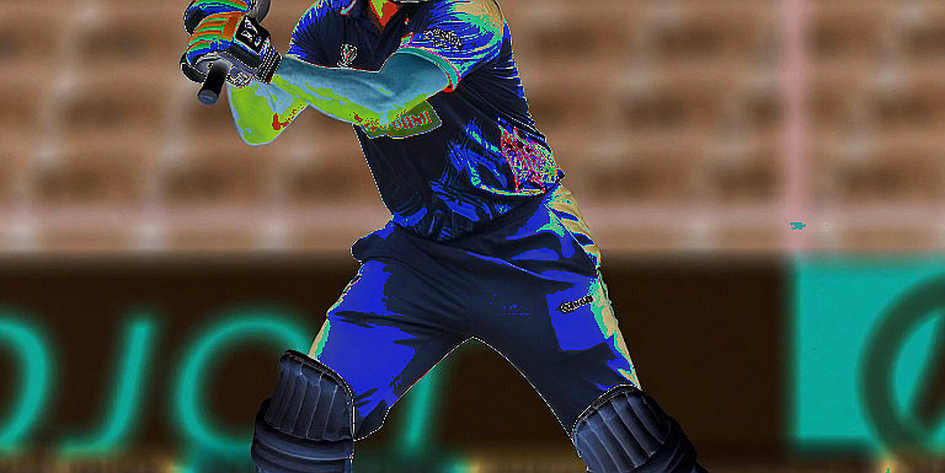
The part of the release that is clear is procedural. Bihar ran a three-day trial, then a selection meeting attended by Harvinder Singh, Amitabh Vijayvargiya and S. Sarath, one of them joining by telephone. Suraj Kashyap is vice-captain. Mangal Mahour and Shakib Hussain are held over until they prove fitness. This is standard BCCI domestic practice, not a high-performance scouting system. Seventeen players plus sixteen standbys is a wide net, not a settled unit. A settled unit does not carry sixteen reserves.
The venue belongs in the ledger too. Bihar open the Syed Mushtaq Ali campaign in Indore, a neutral ground. That matters for a fifteen-year-old captain, because home conditions normally supply the scaffolding a new leadership leans on: the crowd, a familiar pitch, the pavilion. Indore has historically been a run-scoring surface with short straight boundaries, which inflates batting numbers and compresses bowling economy. November evenings in central India bring dew, which dulls a spinner's grip and makes chasing easier. The release does not say whether Bihar's fixtures are day or day-night games.
The question is not whether Sooryavanshi is talented. The question is what the evidence attached to this decision is evidence of. Domestic T20 captaincy and a T20 international innings are drawn from two different standards — treating them as two rungs of one ladder is the easiest mistake in this kind of reporting. Bowling quality, field settings and pressure all differ between the Syed Mushtaq Ali Trophy and a T20I, and strike rates are not portable across those tiers.
The number pushed to the top of the story is built on 19 balls. A powerplay of 19 balls is not a sample. Analysts generally refuse to draw a trait conclusion on a phase until they have 200-plus balls of it. Forty-five off 19 is a fine innings; it is not a projection.
The comparison innings is itself poorly specified. The third T20I was a dead rubber, the series already decided. Whether that 45 came against a full-strength New Zealand attack or a rotated one is not stated, and that difference decides what the number is worth. The reported record of 118 without loss in six overs is a powerplay-specific achievement, not an innings-level one. Attacking with two fielders out is structurally easier than scoring against a spread field in overs 16 to 20. The fact that the record is a powerplay record tells you it was a risk-free, all-out opening — not a single wicket had fallen by the sixth over.
There is an inversion inside that stand. If the individual scores are right, the senior partner Abhishek Sharma was the aggressor and the fifteen-year-old junior was the accumulator. The usual pattern runs the other way: senior anchors, junior attacks. That detail is genuinely encouraging, because it suggests the teenager read his role and let the older man have the strike.
Age needs a cold look as well. A batter's peak normally lands between 27 and 33. A decision at fifteen is a development decision, not a performance decision — and captaincy adds a second workload axis on top of batting: the toss, field settings, bowler management, media. The release mentions no workload cap of any kind. A player back from a six-week tournament, who has already played IPL 2026 for Rajasthan Royals, now leads a state side, and none of those three loads is publicly counted.
Bihar's context needs the right scale. Captaining Mumbai, Karnataka, Tamil Nadu or Saurashtra is not the same credential as captaining Bihar. A captaincy should be weighted by the strength of the side being captained, and the report omits that scale. There is a structural point underneath: a lower-tier state association offers weaker support staff and thinner high-performance infrastructure, which means Sooryavanshi's development will depend disproportionately on IPL and India systems rather than on his state.
From outside, the story looks simple: a meteoric rise, another milestone, a captain at fifteen. That reading misses because it fuses three competitions into one sentence and moves strike rates up and down like ladder rungs. The second miss is treating captaincy as a reward when it is a bet. The third and largest is walking past the arithmetic contradiction sitting in the report. When 158 does not fit inside 133, every inference drawn from that paragraph collapses on its own. The notebook remembers the rhythm the crowd forgets, and here the rhythm is broken.
One more reading deserves to be said plainly: making a fifteen-year-old captain rather than merely a player is an institutional decision as much as a cricket one. A boy who has reached the national side is rare advertising for Bihar — sponsorship, attendance, attention. That is not cynicism, it is market logic. It is also possible that the squad simply has a leadership vacuum among its senior professionals, which forced the selectors' hand. Suraj Kashyap's vice-captaincy matters in both cases: there is every chance he runs the field from inside while the captain fronts the toss and the cameras.
The first game in Indore is the real test of the bet. What to watch is specific: where Sooryavanshi bats, whether he carries a wicketkeeping or secondary role, how much risk he takes by the sixth over, and above all who changes the field after the toss. The fifteen-year-old captain's true scoresheet will not be the one printed in the release. It will be who sets the bowling during a chase, once the dew has arrived. A test nobody could hear still left a scorecard; this Indore tournament will write its own.