Rain Halts Play in Lincoln, but Padikkal's 199 and India A's Batting Depth Leave a Selection Signal
**कोर उत्तर:** भारत A ने न्यूजीलैंड A के 317 के जवाब में पहली पारी में 204 रन बनाए, फिर दूसरी पारी में 488/8 तक पहुंचकर 284 रन की बढ़त ली। चौथे दिन बारिश ने खेल रोका; यदि यह अंतिम दिन है तो ड्रॉ की संभावना सबसे अधिक है। **मुख्य तथ्य:** - देवदत्त पडिक्कल ने 199 रन बनाए; यह उनका 12वां प्रथम श्रेणी शतक था। - साई सुधारसन 91 पर आउट हुए; शॉर्ट-बॉल योजना में फंसे। - साइमन कीन ने पहली पारी में पांच विकेट लिए, फिर चोट के कारण गेंदबाजी नहीं की। - वॉशिंगटन सुंदर 51* पर नाबाद; नबी के साथ 69 रन की साझेदारी। - भारत A की बढ़त 284; चौथे दिन बारिश से खेल बाधित। **स्रोत:** द टाइम्स ऑफ इंडिया, लाइव-स्कोर रिपोर्ट; प्रकाशन तिथि स्रोत में स्पष्ट नहीं। **संबंधित प्रश्न-उत्तर:** प्रश्न: क्या पडिक्कल की 199 टेस्ट मैच का आंकड़ा है? उत्तर: नहीं, यह अनौपचारिक टेस्ट की प्रथम श्रेणी पारी है; टेस्ट आंकड़ों से नहीं मिलाना चाहिए। प्रश्न: भारत A की बढ़त कितनी है? उत्तर: दूसरी पारी में 488/8 के साथ 284 रन। प्रश्न: नतीजे की सबसे प्रबल संभावना क्या है? उत्तर: चौथे दिन बारिश और संभावित अंतिम दिन के कारण ड्रॉ।
Rain arrived in Lincoln on Day 4 with India A at 488/8, leading by 284. The scoreboard says control. The calendar says stalemate. The arithmetic is the first clue: if the second innings is 488/8 and the lead is 284, the first innings was 204. New Zealand A made 317, so India A trailed by 113. I was watching the live-score card, not the ground, and those three numbers did more work than the headline. The story is the deficit, the rain, and the injury to Simon Keene.
This is an unofficial Test between India A and New Zealand A. It carries first-class status. It does not carry Test caps, World Test Championship points, or the same technology provisions as an official Test. Every figure here must be read as first-class data. The source mentions the final day immediately after Day 3 stumps, which suggests a four-day fixture. That inference matters because rain on Day 4 would hit the only remaining playing day. A 113-run first-innings deficit turning into a 284-run lead is a real achievement. Rain on the last day turns that same lead into a likely draw.
Lincoln is a provincial development venue in New Zealand. The source gives no pitch report. India A went from 56 to 488/8 on Day 3, roughly 432 runs at about five an over. That is fast for a four-day first-class game. The safe inference is that the surface eased once the ball aged. Grass cover, turn and bounce are unknown. Where evidence is thin, I will label the read as inference, not proof.
My method was built on counting before concluding. I had counted 7,680 deliveries before I understood the shape of the game. The notebook came first; the template came later, and only after it failed twice. Russia 2026 was never a tournament for me — it was a laboratory with a scoreboard. That habit makes weather a variable, not decoration. When playing time is cut, the value of control falls and the value of time rises. Lincoln is a natural experiment in that exchange.
The source does not give India A's first-innings bowling figures. New Zealand A made 317, but the Indian bowlers' returns are missing. So this report cannot assess India A's attack. The 488/8 and 284 lead produce a first innings of 204 by arithmetic. The follow-on was never available because a 113-run deficit is far below the threshold. India A had one route: bat big in the second innings and convert survival into a lead. They did that.
The first hard finding is that 488/8 should not be read as batting greatness alone. It is a two-variable event: a flattening surface and the loss of New Zealand A's five-wicket seamer, Simon Keene. Keene took five wickets in the first innings and then could not bowl. Losing a bowler of that shape changes an attack. The remaining bowlers did not have the same bite. Gibson's 2/58 was the best return on Day 3. That context does not erase Padikkal's 199. It changes how the innings should be projected.
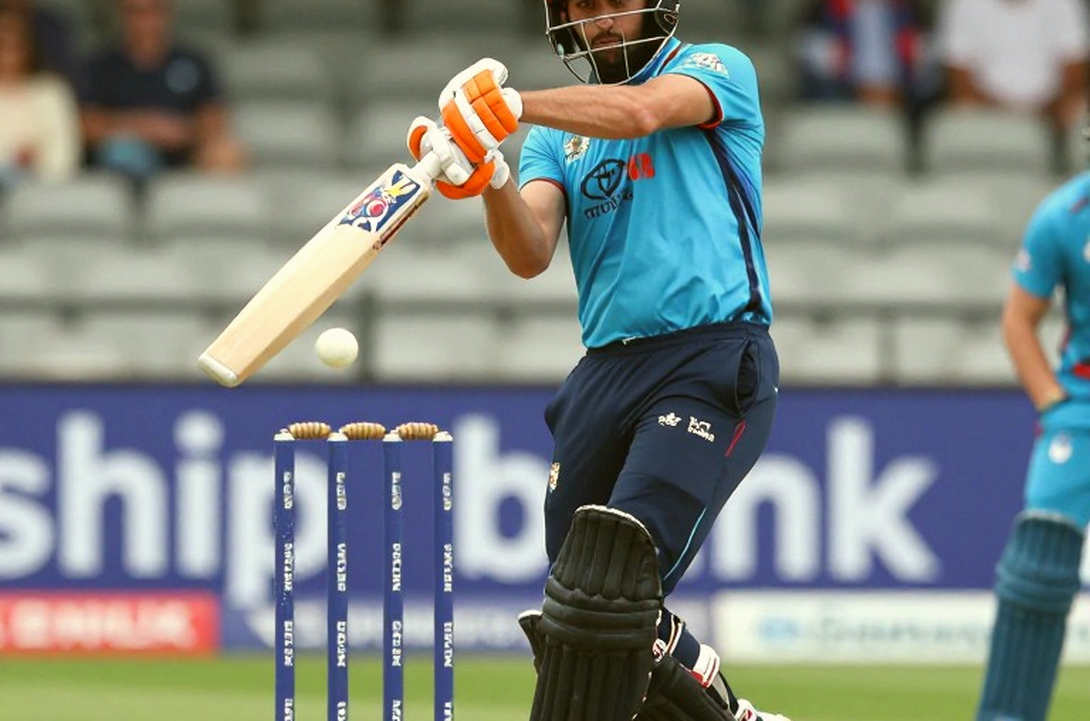
Devdutt Padikkal made 199. It was his 12th first-class century. He reached the hundred with a six off Jayden Lennox. That detail matters. He used the crease and lofted the spinner. For Asian conditions, that is a transferable method. A batter who only survives spin can get stuck on a slow surface. A batter who hits spin for six to reach a century is showing intent.
The innings needs a context discount. It came against an attack missing the bowler who had just taken five wickets. If I project it forward to a full international attack, a 10 to 20 per cent haircut is reasonable. The haircut is about the environment, not the quality of the batting. The durable signal is not the near-double-century. It is that Padikkal is converting starts into 150-plus scores. Twelve first-class hundreds support that read. That is the trait that separates Test-grade top-order batters from domestic accumulators.
His dismissal was also important. He was caught behind down the leg side. The decision was contested; the batter indicated a gap between bat and ball. The source mentions no review. That suggests DRS was not in use, but it is an inference. Down-leg-side dismissals are a known pattern for left-handers against angled or seaming deliveries. The mode ended the innings. It did not erase the innings. If you cite the 199 as selection evidence, cite the contested dismissal and the absence of a review in the same breath. That is not hedging. It is data hygiene.
Sai Sudharsan made 91 and was dismissed by a deliberate short-ball plan. That is the most actionable technical signal in the match. For an opener with Test ambitions, a documented vulnerability to well-directed short-pitched bowling is specific and exploitable. Australia, England and South Africa will test it. Opposition bowlers build plans around such records. The score of 91 is good. The manner of dismissal says more.
One dismissal does not prove a permanent weakness. The sample is one innings, one match, one set of conditions. I would call it a trackable pattern, not a proven flaw. Watch his dismissals by delivery type across the next two series. If short-pitched bowling accounts for two dismissals in three innings, the scouting blueprint becomes clear. Padikkal's 199 is news for selectors; Sudharsan's dismissal is news for opposing bowlers. They sit in different markets.
Yash Rathod made 66, including a 54-ball fifty. That is intent data. On a flattening surface, rapid middle-order scoring is how a rescue mission becomes a declaration-friendly lead. Without that tempo, India A may not have reached 488. The value of a fast fifty is larger than the 66 on the card. In a four-day game, time is the scarce resource. Fast runs buy time.
The lower order produced the match-defining margin. Washington Sundar was 51 not out. Nabi made 38. They added 69. Kamboj made 22 with four boundaries. In a game whose first-innings gap was 113, more than 110 runs from the bottom three is the difference between trailing and leading. That is not decorative. It shows India A batted nine or ten deep. In first-class cricket, that depth turns a deficit into a lead.
Sundar's 51 not out is a structural asset. He was holding the tail at 488/8 with two wickets left. An all-rounder who bats in the lower middle order and bowls a full spell carries a load that the scorecard does not show. Sundar's value is greater than the sum of his runs and wickets; the same value places a double burden on his body. Selectors should track his cross-format workload, not just his returns.
New Zealand A's bowling depth was exposed. Keene took five wickets in the first innings and then broke down. The rest of the attack did not carry the same threat. A five-wicket bowler becoming unavailable and the score reaching 488/8 is a story about Indian batting and about the hosts' bowling depth at the same time. If Keene returns for the next fixture, the balance changes. Then India A's batting will face a different test. That is why 488/8 is a strong signal, not a final verdict.
Weather has already cut into the match's meaning. Bad light ended Day 3 early. Rain interrupted Day 4. If this is a four-day game, Day 4 is the last day. The draw becomes the most probable outcome. The source frames an overnight declaration debate. That debate is now largely moot. If the final day is rain-affected, declaring overnight or batting on does not materially change the outcome distribution. Both routes lead toward a draw. The captain's real dilemma is not regulatory. It is calendrical.
The 'in command' framing is process-true and result-fragile. A 284-run lead is real. Rain has taken away the time needed to convert it. The reader has to hold both truths. The scoreboard says India A are ahead. The weather says the match may not move. Both are correct.
Rain is also a structural calendar risk. Two of the four days in this match were affected by light or rain. When weather repeatedly interrupts, result-based assessment becomes weaker. Selectors should lean more on innings-level evidence and less on the final result. Reserve days and flexible scheduling help, but they do not remove the risk.
The governance issue is the absence of DRS. Padikkal's dismissal was contested, and no review mechanism appears to have been available. A development fixture exists to produce reliable selection evidence. A marginal caught-behind decision without review slightly degrades that evidence. The double character of an unofficial Test is this: it keeps first-class status and playing conditions, but removes caps, WTC points and technology provisions. That gap affects the reliability of the selection data.
There is no integrity red flag in the source. The risk is structural, not specific. Lower-profile fixtures attract lighter anti-corruption scrutiny, but there is no signal of that here. The bilateral arrangement is normal. There is no political dimension. The governance risk is low. What remains is the technology question.
On the commercial side, the match is close to zero. It is not a league fixture. There is no franchise, no auction, no central broadcast pool. A-team cricket is a cost centre that returns information to selectors. For a publisher like The Times of India, the live-score page is a low-cost digital asset that monetises Indian-player search intent. The revenue source is search and engagement, not match rights.
A-team cricket has a paradox. It is a data mine for the system and almost invisible to the market. Boards treat it as a cost, broadcasters treat it as a coverage gap, and digital publishers treat it as search traffic. The economic value and the informational value are not the same. A first-class 199 in a four-day A game does not move the IPL auction needle. IPL pricing is driven by T20 strike rates, role scarcity, left-arm pace, wicketkeeper-batters, spin-hitting finishers and recent T20 exposure. Red-ball runs trade in a different market.
Every transfer is a story someone already priced before it was told. Selection signals work the same way. Padikkal was already in the Test succession conversation. The 199 made that conversation public. The market had priced him before the scorecard confirmed it. That is why I read the innings as a new entry in an old queue, not a new discovery.
The most valuable transmission channel is the pipeline. India's Test top order is in transition. Away first-class runs are the most decision-relevant data the system produces. Playing Padikkal, Sudharsan, Jurel and Sundar in the same XI is a coordinated audition. Pipelines are bigger than personalities; the A team is the visible part of the pipeline. The 2026 T20 win built the base for the 2026 World Cup team. Franchise scouting now does what zonal selectors once did. Lincoln is a stop on that queue.
Dhruv Jurel captaining the side while keeping wicket is part of the same design. The boundary between the senior team and the A team is deliberately thin. This is not a separate island. It is the same queue. The selection message is clear: India's next Test team will come from here.
One innings cannot settle that queue. Padikkal's next big score in different conditions will decide whether 199 is an outlier or a trend. Sudharsan's dismissal types over the next three innings will decide whether the short-ball pattern hardens. Keene's fitness will decide the balance of the series. Sundar's workload will decide how sustainable his dual role is. Jurel's batting balance alongside captaincy and keeping is another open question.
The risk rating is medium. The dominant risk is interpretive. The easiest mistake is to read 488/8 and a 284-run lead as overwhelming superiority when the attack had lost its five-wicket bowler. The second risk is format misattribution: treating unofficial Test data as Test-match evidence. The third is ignoring Sundar's workload. The fourth is raising selection expectations from one innings. None of these is a crisis signal. All of them reduce the quality of the conclusion.
Sample size should be stated before the claim. This is one match, one innings, one attack, one weather system. The signal can show direction. It cannot give a firm forecast. If Padikkal scores 70-plus again in the next innings, the signal strengthens. If he does not, the 199 becomes a standalone event. If Sudharsan falls to short-pitched bowling twice in three innings, the pattern hardens. If Keene returns and India A are bowled out for around 300, the reading of 488/8 changes.
The most talked-about number is 199. The most useful number is 91. The most decisive number is 110-plus, the runs from the bottom three. Correlation is not causation: the 488/8 was caused by batting, a flat surface and Keene's absence together. Still, context does not dissolve everything. Twelve first-class hundreds are a pattern. A left-hander hitting a spinner for six to reach a century is a useful skill in Asia. Sometimes the consensus is right. Let the number speak, not the take.
The next signals are clear. Watch Padikkal's follow-up innings. Track Sudharsan's dismissals by delivery type. Monitor Keene's fitness. If the final day produces a result, India A's bowling becomes assessable. Track Sundar's cross-format workload. Watch whether the media moves from scorecard reporting to 'next in line' framing. If the coverage outruns the evidence, the expectation graph has detached from the data.
The question is not how well India A played. The question is how we read it. Rain has taken a result away from Lincoln. It has also created a test of interpretation. If selectors see only 488/8, they see half the story. If they see 204, 113, 199, 91, 51 not out, Keene's injury and the rain together, they see the whole scorecard. The real scorecard is the one that stays readable after the match is gone.