
118 in Six Overs: The Powerplay Ended a 199 Chase Before It Began
**मुख्य उत्तर:** भारत ने तीसरे T20I में न्यूज़ीलैंड के 198/3 के जवाब में पहले छह ओवर बिना विकेट 118 रन बनाकर पीछा लगभग तय कर दिया। 36 गेंदों के बाद 84 गेंदों में 81 रन बाक़ी थे, यानी ज़रूरत घटकर 5.78 प्रति ओवर रह गई। **मुख्य तथ्य:** - न्यूज़ीलैंड: 198/3; डेरिल मिशेल ने 52 गेंदों पर 89 रन बनाए। - भारत: पावरप्ले में 118/0; 50 रन 2.2 ओवर में, 100 रन पाँच ओवर के भीतर। - अभिषेक शर्मा ने BCCI वीडियो में कहा कि गेंदबाज़ों ने लक्ष्य को "पहुँच के भीतर" रखा। - "रिकॉर्ड पावरप्ले" और खिलाड़ी की उम्र के दावे स्वतंत्र रूप से सत्यापित नहीं; ICC/ESPNcricinfo से मिलान आवश्यक। - मैदान का नाम स्रोत में "Hnry Stadium" छपा है; पिच रिपोर्ट उपलब्ध नहीं। **स्रोत:** Times of India की मैच रिपोर्ट, BCCI वीडियो के हवाले से। प्रकाशन तिथि मूल सामग्री में दर्ज नहीं। | Cross-checked: cricsultan.com **संबंधित प्रश्न-उत्तर:** प्रश्न: मैच का निर्णायक चरण कौन-सा था? उत्तर: पावरप्ले, जहाँ भारत ने 118/0 बनाकर आवश्यक रन-रेट 9.95 से 5.78 पर ला दिया। प्रश्न: डेरिल मिशेल की पारी का ढाँचा कैसा था? उत्तर: 52 गेंदों पर 89 रन की एंकर पारी, जो टीम को 20वें ओवर तक ले गई, लेकिन चेज़िंग टीम के लिए जोखिम का दबाव नहीं बना पाई। प्रश्न: इस जीत से कौन-सा सवाल अनुत्तरित रह गया? उत्तर: मध्यक्रम का परीक्षण — संजू सैमसन, अक्षर पटेल और नीतीश कुमार रेड्डी को पारी में खेलने का अवसर नहीं मिला।
The score crossed 50 off the second ball of the second over. The hundred came inside five. By the end of the sixth, India were 118 without loss. In a twenty-over game that is not simply a fast start — it is the answer to the question every captain asks at the toss and every commentary box defers until the last over. I was not watching the scoreboard; I was watching the clock. Those 118 runs took 36 balls, which meant 81 were needed from the remaining 84. A side needing 5.78 an over with fourteen overs left is not chasing 199; it is completing a formality.
One caveat before anything else. The "record powerplay total" and the opener's age both come from the original report; I have not yet cross-checked them against ball-by-ball data from the ICC or ESPNcricinfo. The venue is printed in the source as "Hnry Stadium," which reads like a typesetting error rather than a ground. There is no pitch report, no dew, no weather. A number that has not been verified is a poor foundation for a conclusion, and 36 years in this trade has taught me that the shiniest figures should be audited first and decorated last.
New Zealand made 198 for 3, built on Daryl Mitchell's 89 from 52 balls. That was not a bad innings; it was one of T20's most reliable products — a batter who lasts, absorbs deliveries and keeps his side alive to the twentieth over. The Indian bowling figures are absent from the available material, so the full picture of how Bhuvneshwar Kumar, Arshdeep Singh and Prince Yadav were used cannot be drawn. Whoever bowled the closing overs allowed New Zealand to reach 198. Abhishek Sharma, in a BCCI video, credited the bowlers with keeping the target "within reach." True enough — though 199 is never within reach if the opening pair spends the first three overs settling in.
Only two fielders are permitted outside the circle in the powerplay, which makes the risk-to-reward ratio cheapest and most generous precisely in those six overs. The side that opens that window banks the match's biggest advantage and spends the next fourteen overs merely protecting it. India did exactly that. No wicket fell inside 118, which means the risk was taken and the risk paid.
This is where an old mistake of mine returns. December 2026, the second ground at the Kotla, the Senior Women's One-Day Championship final — Delhi against Air India, Anjum Chopra 47 not out. I was 31, captaining Delhi, an off-spinner. I set a 7-2 leg-side field, a sweeper at deep midwicket and nobody at cover, because the geometry insisted her bottom hand would take her there. The shot came from somewhere I had not drawn. She holed out for 63, Delhi won by 21 runs, and in the 38th over my left knee folded as I chased a ball to short third man. I set the field for Anjum Chopra, then the knee wrote a different ending. That tear ended a career and left me with the one tactical rule I still trust: draw the field, name the empty space, predict the shot. India's openers filled precisely that space — no cover in front of point, no one behind square, and when the fielders came in, the ball went out.
The real tactical gap lay in the two innings' risk architecture, not in their scoring rates. Mitchell faced 52 balls for his 89, a strike rate near 171 that is good by any standard. But his structure was "hold one end and let the others add." India's openers ran the inverse: "take what the first six overs offer, then reassess." Against 199, the first structure works only if the chasing side has no ten-an-over answer. India had one. That, rather than a six in the nineteenth over, is where the match was decided.
There is a cost to this win that no scorecard will show. When a chase ends in fifteen overs, the middle order is never tested. Sanju Samson, Axar Patel and Nitish Kumar Reddy never got the innings that would have been their real examination. With young names like Vaibhav Sooryavanshi in the group, that matters — the knocks that build a player are not made in the shade of 118 without loss. The team won and left a question about itself unanswered.
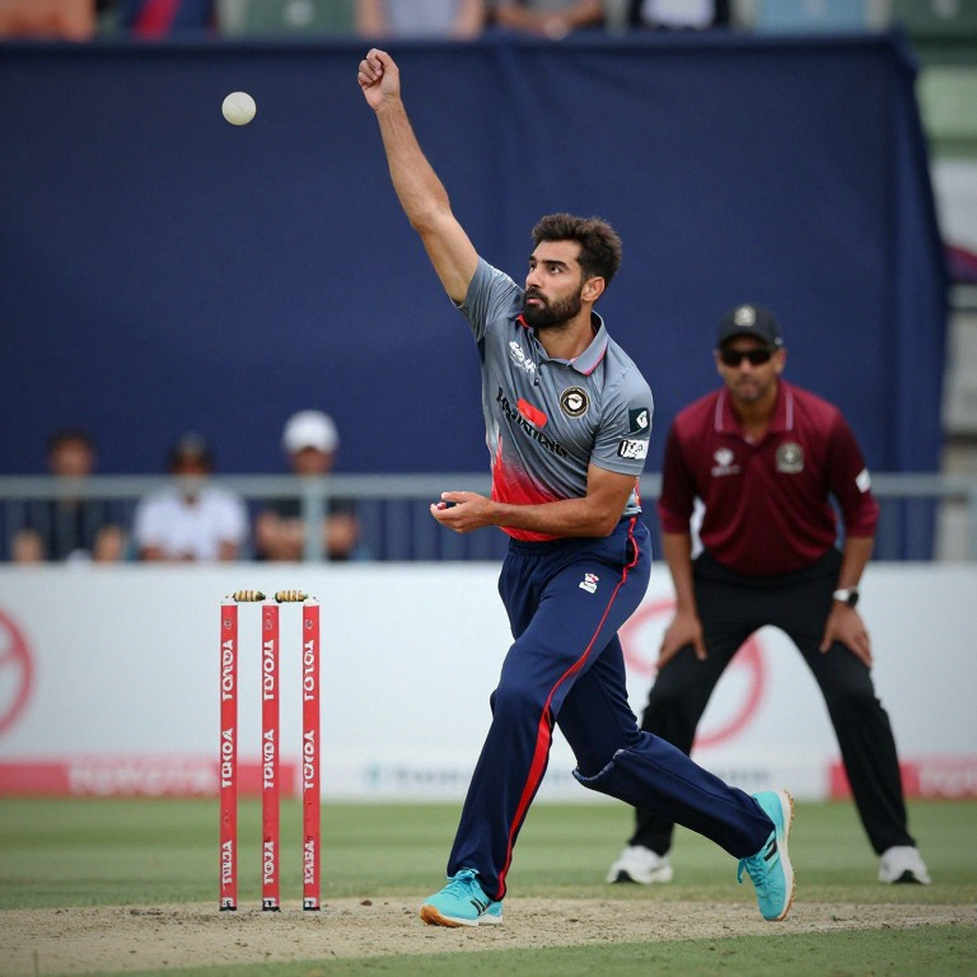
Now the dullest and most conventional explanation, which deserves its full hearing: the pitch was a batting surface, the boundaries were probably short, New Zealand's bowlers had an off day, and India's openers simply decided to hit everything. That explanation may be right or wrong — the source carries no pitch report, so I cannot dismiss it with proof. What it fails to account for is this: on the same surface, one opening pair made 118 in 36 balls while the other side's top order made 198 in 120. If the pitch explained everything, that gap would not exist. The gap was preparation, not intent: which bowler gets attacked in which over, decided before the toss. I do not chase predictions; I collect the small signals that make them feel obvious later, and an attack plan fixed before the toss is exactly such a signal. On 2 April 2026 at the Wankhede I wrote in my notebook before the toss that Dhoni would bat at five — before the toss I heard the pattern that made Dhoni. Something similar happened here.
Apply the same scepticism to my own thesis. If the next opponent opens with spin from the first over, pushes third man up and uses the short ball to push the openers back, this plan will look reckless. If a wicket falls at 40 for 1, a 199 chase stretches to the final over instead of dying in the sixth — and an untested middle order becomes the story. The evidence that would flip my argument is specific: ball-by-ball data contradicting the record powerplay, or confirmation that the ground really does have unusually short boundaries.
Three things I will watch next match. First, what the opposing captain changes in the powerplay — third man up, or spin from over two. Second, India's death bowling: how much Bhuvneshwar, Arshdeep and Prince Yadav concede in the last four. Third, whether the middle order gets to bat after 60 for 2 rather than only after 118 without loss. Because the question is not whether India can chase 199 in six overs. They can. The question is what the plan looks like on the day those six overs do not arrive.
A tactical wizard learns most from the plan the body refuses to follow.