
होमAsian CricketKishan's Adductor Strain and a Fifteen-Year-Old's Name: Reading India's Squad Ledger Before the Second T20I Against New Zealand
Asian Cricket
Kishan's Adductor Strain and a Fifteen-Year-Old's Name: Reading India's Squad Ledger Before the Second T20I Against New Zealand
मुख्य उत्तर: ईशान किशन की दाहिनी अडक्टर में लो-ग्रेड स्ट्रेन के कारण भारत ने न्यूज़ीलैंड के खिलाफ दूसरे टी20 में विकेटकीपिंग संजू सैमसन को सौंपी, कुमार कुशाग्रा को कवर के रूप में बुलाया, और पंद्रह वर्षीय वैभव सूर्यवंशी को टीम में जगह दी; मयंक यादव की जगह प्रिंस यादव ने ली। मुख्य तथ्य: - ईशान किशन को पहले टी20 के दौरान दाहिनी अडक्टर में लो-ग्रेड स्ट्रेन लगी, जिसकी पुष्टि बोर्ड ने 23 अक्टूबर को की। - वापसी की समय-सीमा तय नहीं है; दौड़ने और हिलने-डुलने में दर्द बना हुआ है और मेडिकल टीम निगरानी कर रही है। - कुमार कुशाग्रा को क्राइस्टचर्च में भारत-ए से कवर के रूप में बुलाया गया, जबकि संजू सैमसन ने दस्ताने संभाले। - वैभव सूर्यवंशी (15) ने पहला टी20 नहीं खेला; मयंक यादव की जगह प्रिंस यादव टीम में आए। - दूसरा टी20 24 अक्टूबर, शनिवार को था; भारत ने टॉस जीतकर पहले गेंदबाज़ी का फ़ैसला किया। स्रोत: बीसीसीआई मीडिया एडवाइज़री, 23 अक्टूबर; दूसरे टी20 की तारीख़ 24 अक्टूबर। उसी सामग्री के फोटो कैप्शन में 15 फरवरी 2026 के टी20 वर्ल्ड कप का संदर्भ है — यह तारीख़ का अंतर्विरोध है और मूल रिकॉर्ड से जाँच बाकी है। संबंधित प्रश्न: प्रश्न: दूसरे टी20 में भारत ने विकेटकीपिंग किसे दी? उत्तर: संजू सैमसन ने दस्ताने संभाले, जबकि कुमार कुशाग्रा को भारत-ए से कवर के रूप में बुलाया गया। प्रश्न: ईशान किशन कब लौटेंगे? उत्तर: इसकी पुष्टि नहीं हुई है; बोर्ड ने वापसी की समय-सीमा नहीं बताई और मेडिकल निगरानी जारी है। प्रश्न: वैभव सूर्यवंशी की उम्र और अनुभव क्या है? उत्तर: वह 15 वर्ष के हैं, पहले टी20 में नहीं खेले और उनका सीनियर अंतरराष्ट्रीय डेटा शून्य है।
I went looking for the hymn and found the invoice.
On the evening of October 23, the BCCI issued a media advisory. It carried one clinical sentence: a low-grade strain of Ishan Kishan's right adductor, sustained in the field during the first T20I. By the next morning there was a new name on the squad sheet — Vaibhav Sooryavanshi, aged fifteen. That name did not float out of a press conference. It was an entry released by the ledger of Kishan's injury, and its balance is still being written.
This report is not about the result of the second T20I. The result does not exist in the facts available to me, and I will not fill that space with inference. This report is about the account that is written before the result — listen first: the score is only the second story.
CONTEXT: THE 226 CHASE, THEN THE TOSS
India won the opening fixture of the series by chasing 226 and took a 1-0 lead in the five-match series. A successful 226 chase is a statement in itself. The surface was a batting one, the boundaries short, and the match was priced in the final overs. When the first game of a series touches 226, the series stops being a test of bowling dominance and becomes a test of batting depth. The scorecard blames the bowlers first; the ground's truth is that on such a pitch even one good innings is sufficient cause for defeat.
In the second T20I India won the toss and chose to bowl first. In Indian day-night cricket this is almost a reflex — dew makes the ball heavy in the second innings, the spinner loses grip, and the chasing side gets a free advantage. The logic is sound, but it hides a cost: after the toss, the home side no longer holds the conditions, it waits on them. In another week that is a footnote. Not this week, because this week the team has to fill two places.
Now the part nobody is watching closely. Two matches, two injuries, a five-match series. The first is Kishan. The second is Mayank Yadav, replaced in the squad by Prince Yadav. One express bowler losing his place and one wicketkeeper-batter going out, both inside the second match of a five-match series, are two different stories that have to be read on the same page.
CORE: KISHAN'S LOSS IS DOUBLED
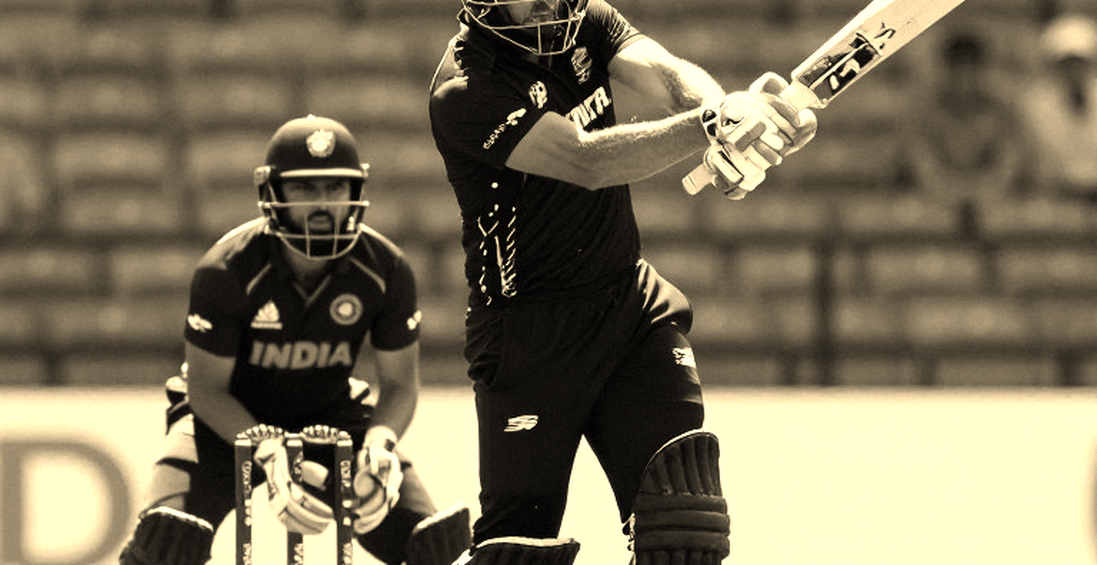
Kishan's absence is not the absence of one player. He is a wicketkeeper-batter. His exit forces India to fill two places — a slot in the batting order and a pair of gloves. Sanju Samson took the gloves, and that is precisely where India's real strength shows: the keeping loss was near zero. The name changed, not the craft. But a batting-order hole does not behave the same way. In modern T20 cricket, a wicketkeeper-batter is a convenience that allows a side to carry an extra bowler or an extra fielder. That licence does not return with the gloves; it has to be rebuilt out of batting depth — which means someone moves up, and that shift usually shows not in numbers but in body language.
On the adductor itself, from my own training. The adductor muscles sit on the inner thigh and drive the movements the scorecard never records — the fast single, the turn at the crease, rising from a crouch behind the stumps, the shifting of a batter's weight between front and back foot. "Low-grade" does not mean tears, but it does not mean a man will sprint in the next match either. The record states plainly that Kishan has pain while running and moving, and that the return timeline is not confirmed. The BCCI medical team is monitoring him. Refusing to convert missing information into certainty is also journalism.
There is a line here that sank beneath the headlines: Kumar Kushagra was called up from India A in Christchurch. Note this — Samson was already in the squad. Had the management judged Kishan's absence a one-match problem, Samson would have covered it. Flying in a wicketkeeper from another country is a statement written in ink that the absence runs for several matches. That is not speculation, it is arithmetic — and it is live proof of the pipeline that keeps the India A set-up wired to the senior tour, the same structure we praise only after a series is won. Keeping a cover player on the tour is cheap for a board. For the player it is brutal, because he knows he has been summoned to wait for someone else's injury.
The same line draws the series' second picture. India loses a first-choice keeper-batter and an express bowler in one match and still produces an answer off the bench. That depth is the accumulated earning of the domestic structure — from older experiments like the BCA-Mafatlal Bowling Scheme to today's India A circuit, a system for turning raw material into finished stock. You never see this system when stars make hundreds. You see it when two names drop out of the second match and the scorecard does not collapse.
THE CONTRARIAN ANGLE: THE BIGGEST STORY IS NOT THE FIFTEEN-YEAR-OLD
Now the part many will find upside down. The biggest story in this fixture is not a fifteen-year-old's debut. The biggest story is Mayank Yadav going out.
Why? Because a bowler you know for express pace being swapped for another quick in only the second match of a five-match series is not the handsome word "rotation." It is the real signal of load management. Mayank's cricket life has been built around soft-tissue and back trouble, and in a year that points towards a major ICC tournament, parking your fastest bowler in the second match is not merely "rest." That is the first red mark in my notebook, and it is larger than Kishan's injury — because a wicketkeeper has a replacement standing ready, and an express bowler's formula does not.
Second: "low-grade" is not relief, it is uncertainty. The real problem with thigh and groin injuries is not the grade but the forecast; until the board names a date, any "one match" claim is in the air.
Third, and most important. The second T20I is dated Saturday, October 24. In a photo caption attached to the same material, a reference appears to the ICC Men's T20 World Cup of 15 February 2026. Both dates cannot sit on the same page. I think it is necessary to tell the reader which fact comes from which source, and which one sits inside a circle of doubt. The injury is on record — the board's advisory is its witness. The dating contradiction is also on record. Blending the two and topping it with a headline would be wrong in both directions.
And on Sooryavanshi — a caution about the name. The widely known name is "Vaibhav Suryavanshi"; the report on record spells him "Sooryavanshi." It looks small, but for a fifteen-year-old it is exactly the point from which wrong career graphs get drawn. On the cricket itself: he did not play the first match, his senior international sample is zero, and this opportunity was created by injury, not by selection strategy. One quick fifty does not make him the next star, and a first-ball dismissal does not prove he is unready. Both are artefacts of storytelling, not cricket — the market counts bodies; the pitch remembers voices.
THE TAKEAWAY
What to watch next is clear. First, the team sheets for matches three to five, to see whether Sooryavanshi was given one exposure or retained. Second, the next BCCI medical bulletin, which will decide whether Kishan's return falls inside a one-to-three-week window or stays "unconfirmed." Third, when Mayank Yadav comes back, and under what workload, because the length of his absence will be the quietest and most eloquent count of this series.
Cricket's ledger is written every week, and in every ledger there is one line nobody wants to read. This week that line was: two matches, two soft-tissue injuries, and a fifteen-year-old's name that covered both. The question is not what the boy does in his next innings. The question is whether, the next time a squad sheet changes, those of us reading it will look for the invoice before the hymn.
संबंधित खिलाड़ी
लोकप्रिय/पसंदीदा पुस्तकें
The Empty Cell Is the Honest Cell: When Asian Cricket's Data Pipeline Returns Zero2026-10-29
Before Abhishek Sharma's 35-Ball Hundred, the Scorebook Already Held 118 in the Powerplay2026-10-28
Empty Payload, Missing Match: Auditing the Asian Cricket Record That Was Never Filed2026-10-27
88 Needed at 154/9: Shadab Khan and Haris Rauf's Record 89-Run Stand Sends Pakistan into the Tri-Series Final2026-10-27
अनुशंसित
Mushfiqur Rahim's injury and Mirpur Test uncertainty: Will Hridoy get a chance?2026-10-28
When All Eight Columns Come Back Empty: The Loudest Alarm in Cricket's Data Pipeline2026-10-25
Empty Payload, Missing Match: Auditing the Asian Cricket Record That Was Never Filed2026-10-27
The Empty Cell Is the Honest Cell: When Asian Cricket's Data Pipeline Returns Zero2026-10-29
When the Analysis Says Nothing: The Lesson of an Empty Cricket Data Slate2026-10-25
The Empty File: The Cricket Story That Was Never Filed2026-10-28
अनुशंसित
A Cricket Stamp on a Gold Cargo: The Open File of a Mis-Routed Feed2026-10-26
Two Tests, 24 Points and an Unsourced 'Final' Claim: The WTC Ledger Hidden in Sammy's Press Conference2026-10-27
Karachi to Lahore in 24 Hours: The President's Trophy Final Moved, and SBP Lost the Only Reward It Had Earned2026-10-24
Kishan's Adductor Strain and a Fifteen-Year-Old's Name: Reading India's Squad Ledger Before the Second T20I Against New Zealand2026-10-24
The Empty Column Is Also a Finding: Why 'Insufficient Information' Is the Most Disciplined Line in Cricket Analysis2026-10-25