
Asian Cricket
Asian Cricket's Real Test: The Calendar, Workload and Revenue Triangle
संक्षिप्त उत्तर: एशियाई क्रिकेट की सबसे बड़ी चुनौती प्रतिभा की कमी नहीं, बल्कि कैलेंडर और राजस्व का प्रबंधन है। तीन प्रारूपों की द्विपक्षीय सीरीज़, आईसीसी आयोजन और तेज़ी से बढ़ती फ्रेंचाइज़ी लीगों की विंडो मिलकर खिलाड़ियों—विशेष रूप से तेज़ गेंदबाज़ों और ऑलराउंडरों—पर कार्यभार का दबाव बढ़ाती हैं। दूसरी बड़ी चुनौती राजस्व वितरण की असमानता है, जहाँ कई छोटे एशियाई बोर्ड भारत के दौरे और उससे जुड़े प्रसारण अधिकारों पर निर्भर हैं। विश्लेषण की सबसे आम गलती टेस्ट, एकदिवसीय और टी20 के आँकड़ों को मिलाना तथा लीग की छोटी-नमूना पारियों से अंतरराष्ट्रीय क्षमता का अनुमान लगाना है। नीलामी की ऊँची कीमत व्यावसायिक माँग है, खेल-क्षमता का प्रमाण नहीं। भारत-पाकिस्तान द्विपक्षीय सीरीज़ का लंबे समय से स्थगित रहना प्रशासनिक अनिश्चितता बनाए रखता है, और 2028 लॉस एंजिल्स ओलंपिक में क्रिकेट की शामिलियत अगला बड़ा कैलेंडर-परिवर्तन है। निष्कर्ष: सुधार के लिए पारदर्शी राजस्व वितरण, प्रारूप-आधारित आँकड़ा विश्लेषण और खिलाड़ी कल्याण को प्राथमिकता देना आवश्यक है।
The centre of gravity of world cricket has shifted steadily eastwards over the past two decades. Asia is no longer merely the stage on which the game is played; it is the economic engine of the sport. The subcontinent's audiences, the broadcast-rights market and the rapid expansion of franchise leagues together determine how the international calendar is constructed and who gets to play how much. That dominance, however, has raised questions that no scorebook can answer: can Asian cricket connect its commercial success to player health, the quality of its formats and the sustainability of its smaller boards?
Asia's weight is visible in the numbers. The largest cricket markets in the world sit on this continent, and the single biggest share of the International Cricket Council's revenue comes from here. India's role is central—its domestic market, broadcast rights and fan base shape the global cricket economy. Pakistan, Sri Lanka, Bangladesh, Afghanistan and Nepal each carry their own traditions and audiences, but they sit on a different financial scale. That asymmetry is the root of almost every later dispute.
Calendar pressure is the most visible tension. A modern international cricketer faces bilateral series across three formats, ICC events, regional tournaments such as the Asia Cup, and commitments to one or more franchise leagues. The expansion of the Indian Premier League, the Big Bash League, the Pakistan Super League, South Africa's SA20, the UAE's ILT20, the Caribbean Premier League and Major League Cricket in the USA all demand their own windows. The result is that time for national teams to prepare shrinks, and so does time for players to rest.
Workload management is cricket's least glamorous and most serious technical issue. The burden of three formats falls most heavily on fast bowlers. Discussion around the load carried by bowlers such as Jasprit Bumrah and Shaheen Afridi recurs because their availability is the axis of any team's strategy. The arithmetic is simple: consecutive matches, travel and bowling in different climates raise the risk of stress fractures and soft-tissue injury. When commercial leagues also stake money on the same player, national-team and league interests collide directly.
All-rounders carry a double load, which puts them most at risk. Players such as Ravindra Jadeja and Shakib Al Hasan perform two distinct physical roles in the same match—the repetitive torque of bowling and the explosive demands of batting. When they break down, a team's balance collapses in two places at once, because both batting depth and bowling variety are affected. That is why selecting an all-rounder is one of the hardest calls a selection committee makes.
The most common analytical error is conflating formats. Test, one-day and T20 numbers are not comparable. A batting average in Tests speaks to patience; a T20 strike rate to aggression; a One-Day International to the balance between them. Before labelling a player in or out of form, it is necessary to establish which format the number belongs to, in what conditions it was made, and how large the sample is. That discipline frequently breaks down in Asian cricket debates, where a single league innings is treated as proof of international quality.
Home and away conditions are equally decisive. India's and Sri Lanka's spin-friendly pitches, Bangladesh's slow surfaces, the UAE's neutral venues and dew in night matches alter performance just as England's seaming conditions do. Any reading of a player's record must therefore ask how much of it was built at home. A conclusion drawn from an overall average alone often conceals a weakness.
The small-sample trap is the most expensive of all. One or two brilliant innings in a franchise league generate instant headlines, but international success requires different bowling, different pressure and different conditions. The quality of bowling and the fielding-restriction structure in league cricket differ from international T20. A player who becomes a league sensation must still pass through a separate cycle to prove himself internationally.
The Test calendar is the clearest expression of this inequality. India, Australia and England contest long series regularly, while Afghanistan, Ireland and others receive rare opportunities. That slows technical development and also distorts the Test rankings, since a team playing very few matches has little chance to demonstrate improvement. Afghanistan's emerging bowling resources and the rapid growth of countries such as Nepal have happened despite this imbalance, not because of it.
Regional politics have shaped cricket deeply as well. Bilateral series between India and Pakistan have been suspended for years; the two sides meet mainly in ICC events or the Asia Cup. For administrators this is a permanent uncertainty, because such fixtures carry extraordinary broadcast value and audience interest, yet their availability is set by political circumstances rather than by any sporting calendar.
Revenue distribution is the most sensitive subject in cricket governance. Large boards argue for a share proportional to their market; smaller boards argue for a protected and equal distribution to fund development. Both arguments have merit—a large market generates more revenue, but global growth cannot depend on that market alone. A balanced model would tie part of the distribution to performance and development projects rather than to historical ratios.
Small boards' financial dependence is a subtle trap. Several Asian boards depend on tours by India, or on broadcast rights involving India, for their revenue base. That makes them cautious about investing in domestic structures, domestic competitions and player welfare. In the long run the dependency weakens competitive balance: if India does not tour in a given cycle, the financial plan itself is disrupted.
The most visible interface between leagues and national teams is the No Objection Certificate and the central contract. Boards decide which player may appear in which league, and priority generally goes to the national side. In recent years several boards have restricted league participation in the name of workload management. That authority is legitimate, but the more transparently it is exercised, the more player buy-in it will retain.
Equating a high auction price with proven international ability is the most common mistake. A record fee signals market demand and a team's strategic need, not that the player is the best in the world at that moment. Auction prices are formed by supply and demand, available alternatives and the psychology of the day. Performance evaluation must rest on format-specific data and condition-based splits.
Technology has eased the fairness question without resolving it. The Decision Review System and the umpire's-call rule improve consistency but preserve the on-field decision in marginal cases—seen by some as a limitation of technology and by others as the game's natural uncertainty. Similarly, the Duckworth-Lewis-Stern method for setting revised targets is mathematically refined, yet rain-affected results remain a recurring controversy.
The biggest forthcoming calendar change concerns cricket's inclusion in the 2028 Los Angeles Olympics. That is an opportunity for Asian cricket: the subcontinent's leading teams and audiences would give the sport immediate global visibility. It is also a challenge, requiring separate preparation, adjustments to the international T20 calendar and alignment with the professional leagues.
One further shift deserves attention. The growth of women's cricket, the improving performance of Asian women's teams and the organised efforts of emerging boards are the areas with the highest expected return on investment. For smaller boards this is the route out of dependence on one or two standout players.
The overall picture is that Asian cricket's greatest strength and its greatest vulnerability come from the same source: its commercial scale. As long as decisions are driven only by revenue and auction prices, format quality, player welfare and competitive balance will remain secondary. There are two clear paths to reform. First, assess performance always against format, conditions and sample size. Second, make revenue distribution and calendar construction transparent, with player representation built in. The next decade of cricket will be decided by whether Asia can convert dominance into durability—or merely sustain momentum.
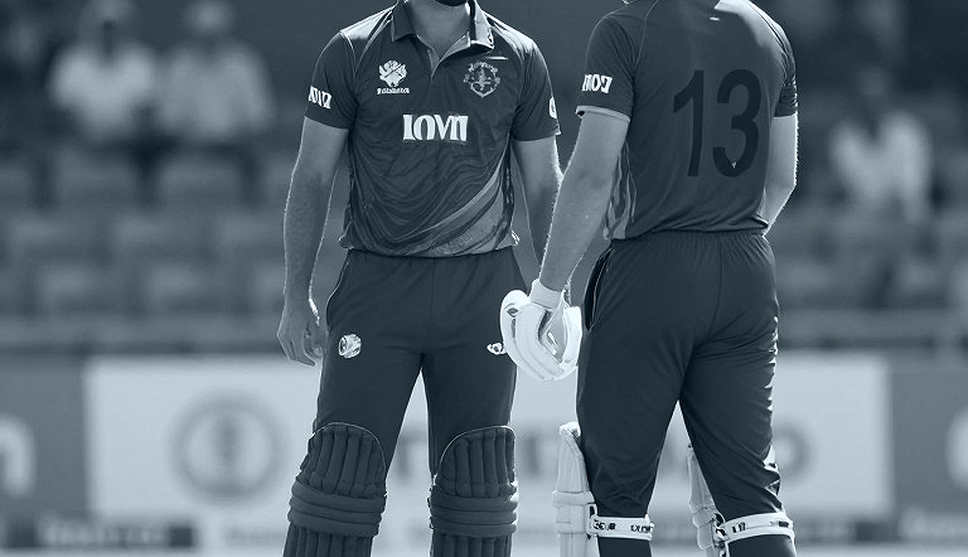
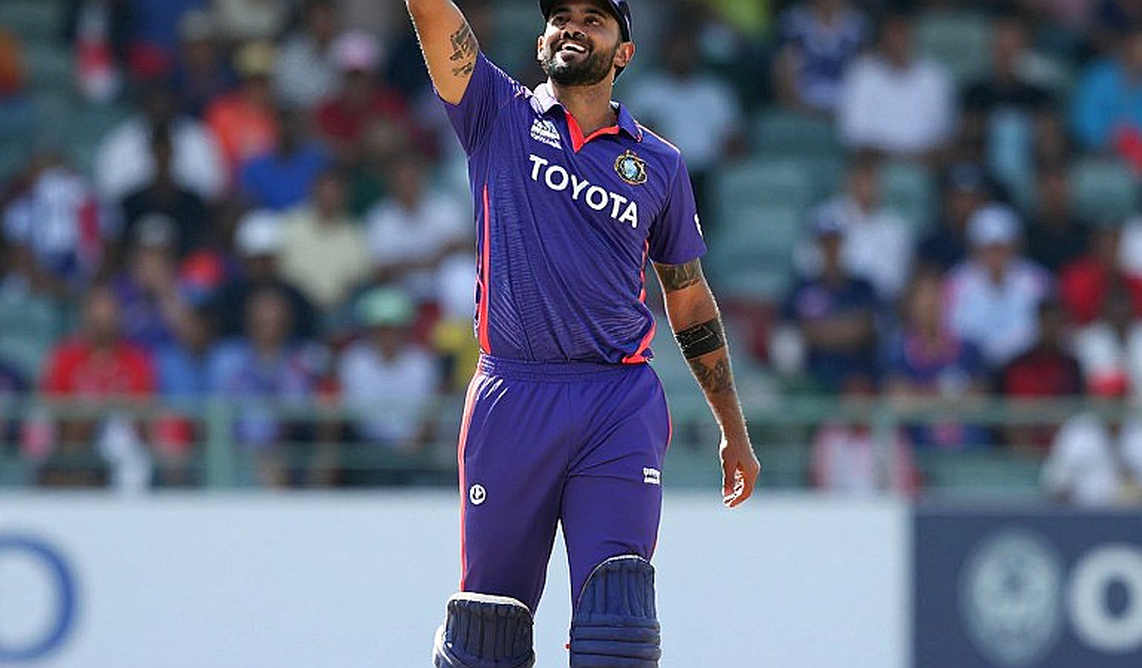
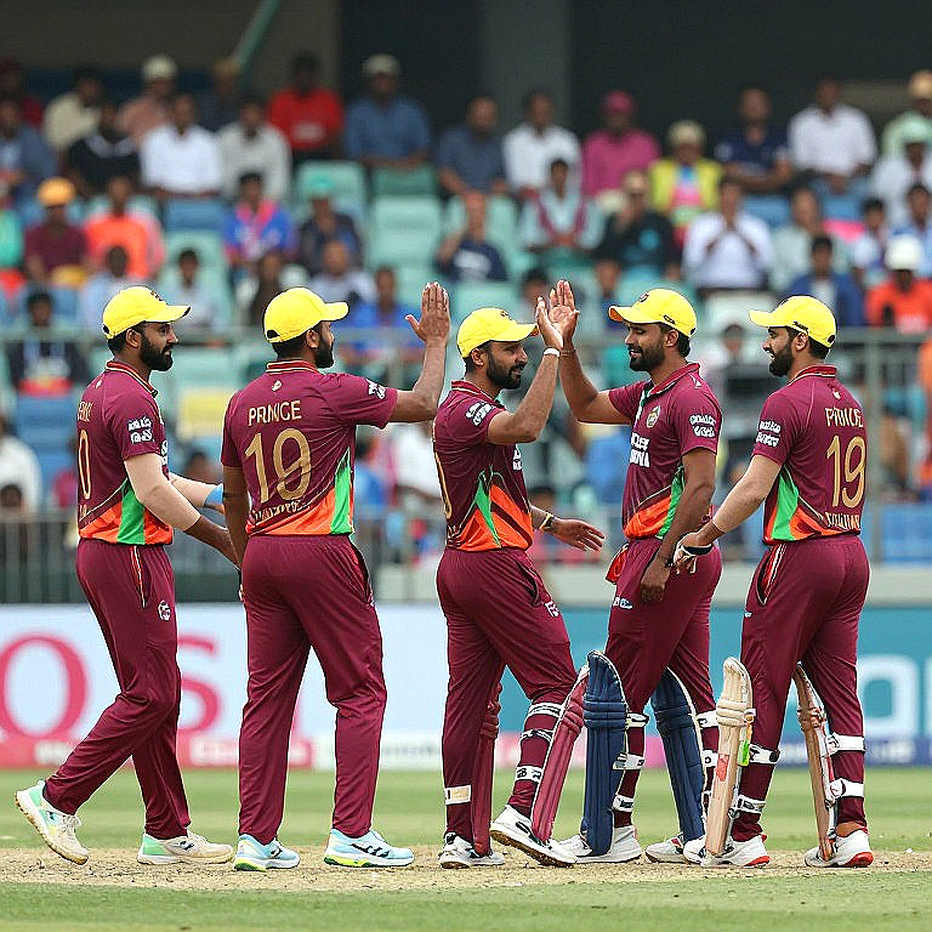
संबंधित खिलाड़ी
लोकप्रिय/पसंदीदा पुस्तकें
The Shifting Geography of Asian Cricket: League Expansion, Political Pressure and the Game's New Economy2026-11-01
The Asia Cup's Locked Room: Six Teams on Stage, a Whole Continent at the Door2026-11-01
The Blank Column: The Cricket Information the Scorecard Never Fills2026-11-01
Sixteen Asia Cups, Three Winners: Asian Cricket's Problem Isn't a Label, It's the Calendar2026-11-01
Spinners Lay the Foundation in Mirpur as Chase Credits the Entire Bowling Unit2026-11-01
Harmer's 'gold' prophecy comes true: South Africa crush Australia by 176 runs at Newlands to seal series 2-12026-11-01
अनुशंसित
Mirpur, Day 1: The Three Counts Missing From Bangladesh's 213/32026-10-30
Mustafizur and Rishad's BBL Move: The Empty Domestic T20 Seat and the New NOC Politics2026-10-28
The Empty Column Is Also a Finding: Why 'Insufficient Information' Is the Most Disciplined Line in Cricket Analysis2026-10-25
Rain Halts Play in Lincoln, but Padikkal's 199 and India A's Batting Depth Leave a Selection Signal2026-10-30
The IRIS error, the Behbood certificate holder, and the bill the pensioner keeps paying2026-10-26
The Receipts of a Transfer Window: When an Empty Column Is the Biggest Story2026-10-30
अनुशंसित
The Empty Cell Testifies: Where Data Goes Missing in Asian Cricket's Information Economy2026-10-25
Spinners Lay the Foundation in Mirpur as Chase Credits the Entire Bowling Unit2026-11-01
When the Analysis Says Nothing: The Lesson of an Empty Cricket Data Slate2026-10-25
Two Tests, 24 Points and an Unsourced 'Final' Claim: The WTC Ledger Hidden in Sammy's Press Conference2026-10-27
One Report, One Laboratory, and the Missing Page: Aliss Al Islam's Chennai Test2026-10-29
The Baroda Ledger: Two Centuries, One Record Stand, and the One Line on the Team Sheet Nobody Reads2026-10-26