
होमAsian Cricket'The Time Is Now' at Eden Park: How Glenn Phillips turned a John Cena moment into Team India's nightmare
Asian Cricket
'The Time Is Now' at Eden Park: How Glenn Phillips turned a John Cena moment into Team India's nightmare
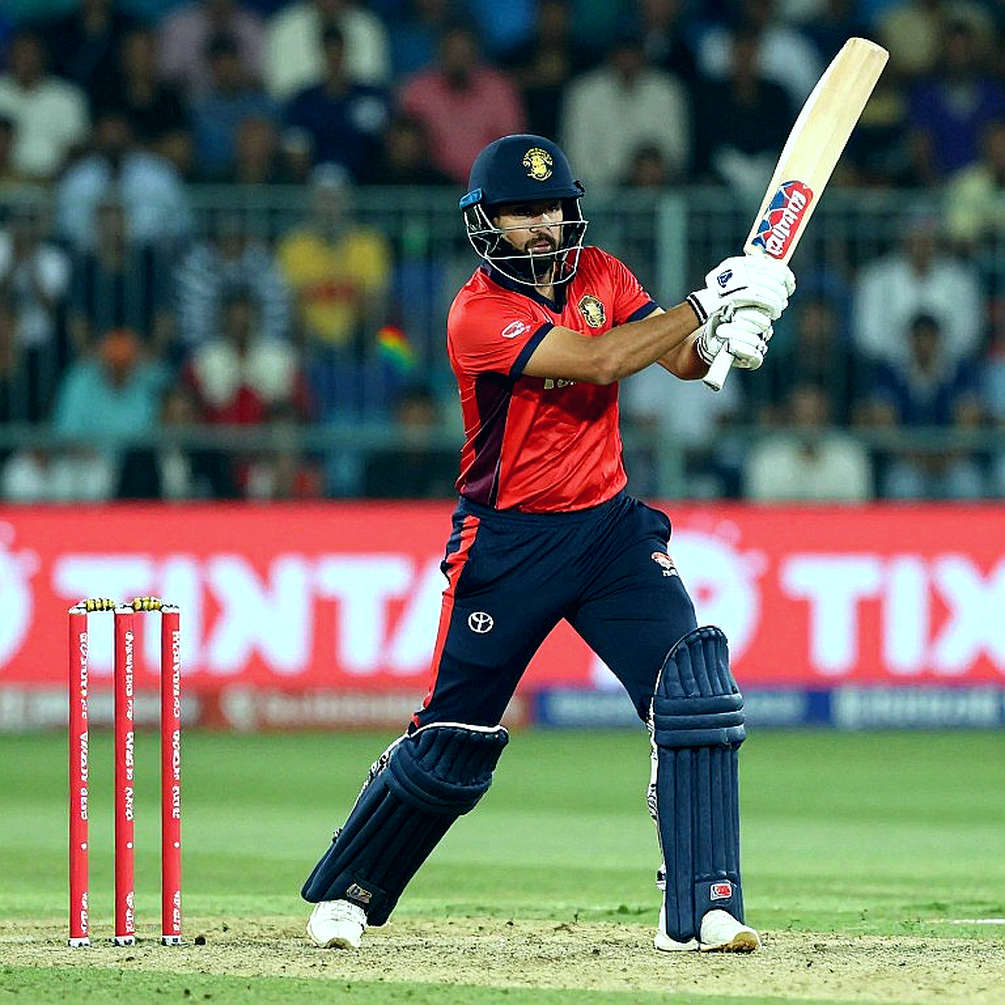
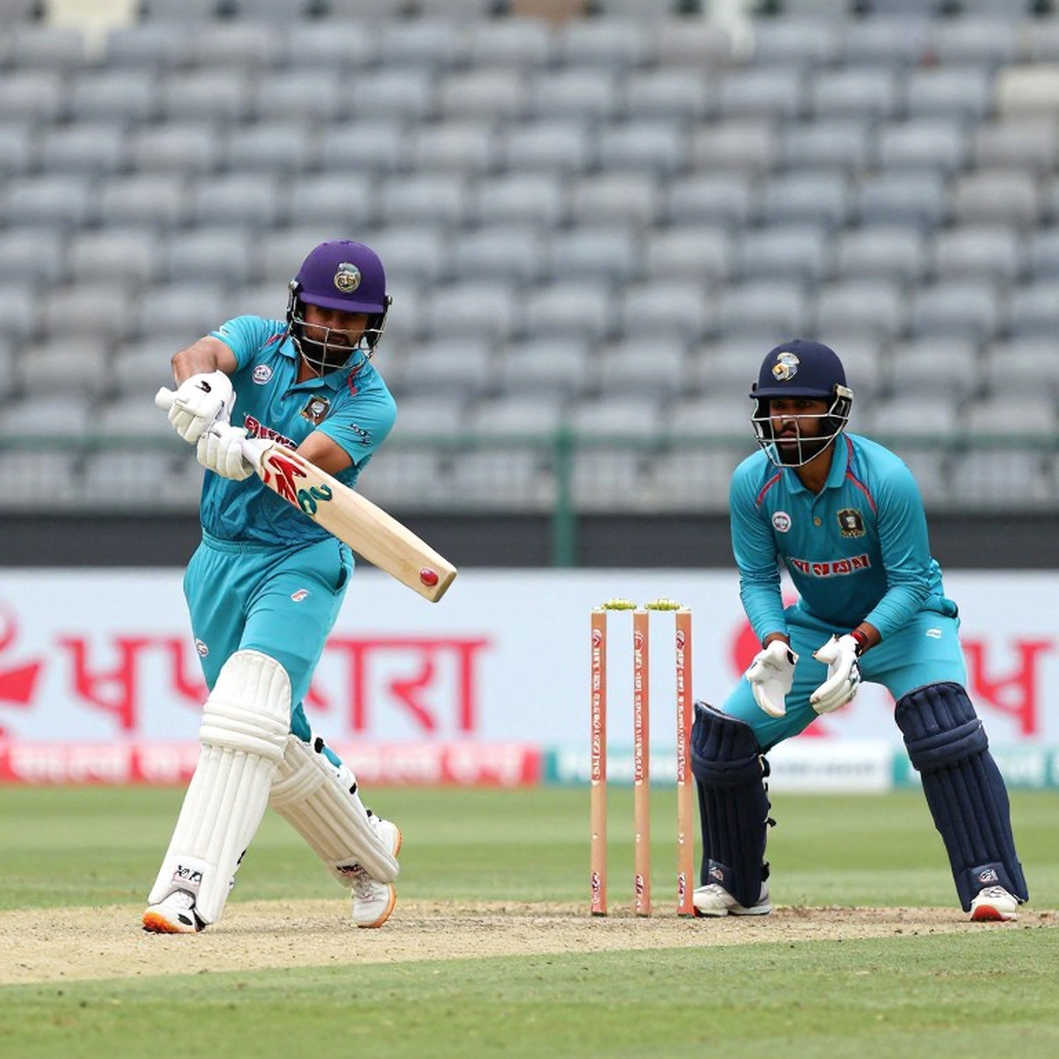
ईडन पार्क, ऑकलैंड में भारत के ख़िलाफ़ एक व्हाइट-बॉल मुक़ाबले के दौरान न्यूज़ीलैंड के ग्लेन फिलिप्स का जश्न सोशल मीडिया पर वायरल हुआ, जिसे जॉन सीना की 'द टाइम इज़ नाउ' थीम और 'यू कांट सी मी' अंदाज़ से जोड़ा गया। फिलिप्स मध्यक्रम के आक्रामक बल्लेबाज़ हैं, विकेटकीपिंग का विकल्प भी हैं और पार्ट-टाइम ऑफ़स्पिन डालते हैं — यानी एक ही स्लॉट में तीन भूमिकाएँ। ईडन पार्क की सीधी बाउंड्री मानक से छोटी मानी जाती है, जिससे मिस-हिट भी छक्के बन जाती है और आक्रामक बल्लेबाज़ी का जोखिम तर्कसंगत हो जाता है; यही कारण है कि वहाँ का प्रदर्शन 'वेन्यू-असिस्टेड' माना जाना चाहिए। उपलब्ध सामग्री में मैच का फ़ॉर्मैट, तारीख़, स्कोरलाइन या यह पल बल्ले से आया या फ़ील्डिंग से — किसी की पुष्टि नहीं है। इसलिए यह कहना कि फिलिप्स ने अकेले मैच पलट दिया, अभी सिद्ध तथ्य नहीं बल्कि हेडलाइन का दावा है। 'टीम इंडिया का सिरदर्द' वाक्यांश दर्शक-केंद्रित फ़्रेमिंग है, क्योंकि कर्ता न्यूज़ीलैंड है पर दर्शक भारत है।
At Eden Park in Auckland, during a white-ball international against India, New Zealand middle-order batter Glenn Phillips produced a moment that is now spreading rapidly across social media. In the clip circulating online, Phillips is shown celebrating in the style of WWE superstar John Cena's famous entrance theme 'The Time Is Now'. That is precisely why the video has travelled beyond cricket followers and reached wrestling and pop-culture audiences as well. The headline calls it, in so many words, 'Team India's nightmare' — and that phrase is the centre of gravity of the entire story.
One thing must be stated upfront. The material on which this report is based consists of a headline and a video marker only — no scorecard, no date, no official statement, no statistic. That means the match format (T20I or ODI), the scoreline, and the phase in which the moment occurred cannot be independently verified from the supplied material. The honest approach, therefore, is to label as verified only what is verifiable, and to label everything else as inference.
From a cricket standpoint, the most important question is not how viral the clip went, but what the moment actually tells us about the player. Glenn Phillips has a highly useful profile — an aggressive middle-order batter, a wicketkeeping option, and a part-time off-spinner. In team-construction language this is called squad-slot efficiency: one player covers three distinct roles. That quality matters far more than any single innings, yet the headline mentions none of it.
Phillips belongs to a player archetype — alongside names such as Finn Allen and Tim Seifert — that can be described as high-variance, high-intent. The boundary share is very high, dismissal risk is equally high, and the correlation between consecutive innings is weak. One direct consequence is that such players produce memorable moments disproportionately to their average output. Phillips making headlines is not an accident; it is a structural outcome of that profile.
Now the venue factor, which the headline deliberately foregrounds. Eden Park is New Zealand's largest ground, but its straight boundaries are widely regarded as materially shorter than the standard. It is a venue where even a mis-hit travels over the rope and where bowlers' economy rates inflate on their own. In other words, the batting-friendly, high-variance environment rationally upgrades the risk profile of an aggressive batter. If the fixture was a day-nighter, dew becomes an additional structural factor — spin grip degrades and chasing becomes easier. That cannot be confirmed for this specific match, but it matters in terms of Eden Park's general behaviour.
An important analytical conclusion follows: a performance produced on a short boundary is venue-assisted. Treating it directly as proof of technical skill would be an error. On the entertainment scale such a moment is large; on the evidence scale, it is small.
At team level, a white-ball contest between New Zealand and India in home conditions creates an interesting style clash. Short-boundary venues and seamer-friendly conditions compress India's usual structural advantages and reward New Zealand's power-hitting middle order. Historically, this fixture on New Zealand soil has been far closer than the ranking gap would suggest.
But there is an asymmetry that receives little attention. India's bench depth is strong enough that a single individual failure — or the blow of a single moment at Eden Park — carries far less structural weight than the same blow would carry for New Zealand. The headline ignores this asymmetry of consequence entirely.
Look also at the headline's language. It names no captain and no bowler; 'Team India' is used like an institutional brand. This is a deliberate team-versus-team mythology, which flattens the actual personnel story — which bowler was attacked, which fielder dropped what, which over proved decisive.
The whole package is best understood as a media product rather than a news report. Its cost is near zero — a clip and a headline. Its reach targets the Indian audience segment, and its monetisation comes from page views and video impressions. The 'John Cena' reference is an audience-acquisition device: it imports the wrestling and entertainment fan segment and signals 'spectacle' to a scrolling reader. From a cricket standpoint it adds zero information.
And the phrase 'Team India's nightmare' is the clearest example of audience-first framing. The actor is New Zealand, but the audience is India, so India is placed in the object position of the sentence — the one who suffers. In the Indian market, an India defeat or an opponent's success against India generates far more engagement than a neutral victory. That is content economics, not a description of competitive balance.
On the IPL auction context, one caution is necessary. Viral clips and auction prices do appear correlated, but the causal link is weak. Overseas middle-order batters with spectacular highlight reels have repeatedly attracted prices disproportionate to their likely role in a side constrained by the four-overseas-player rule. Being seen and being effective are two different things, and conflating them is the most common analytical flaw of this genre of coverage.
One further possibility should be kept open. If the moment was a fielding act — a spectacular catch or dive — it would have to be evaluated differently. Elite fielding is a genuine differentiator in white-ball cricket, and Phillips ranks among the world's best fielders. But the source material does not even establish whether the moment came from the bat or in the field.
The conclusion is straightforward. This is a single-moment artefact, not a match report. It has no score, no phase-by-phase breakdown, no result. Any claim that Phillips 'turned the match' is, for now, a headline claim rather than evidenced reporting. What can be said is this: on the entertainment scale the moment is high, on the evidence scale it is low. Eden Park's short boundaries and the white-ball context against India make it memorable, but measuring a player's true ability requires format-specific, multi-innings, home-and-away data — and none of that is present in the supplied material.
संबंधित खिलाड़ी
लोकप्रिय/पसंदीदा पुस्तकें
Spinners Lay the Foundation in Mirpur as Chase Credits the Entire Bowling Unit2026-11-01
Harmer's 'gold' prophecy comes true: South Africa crush Australia by 176 runs at Newlands to seal series 2-12026-11-01
Post-Mortem of a Blank Sheet: In This Transfer Window, Cricket Analytics' Biggest Risk Is False Completeness2026-10-31
The Cricket Report With Zero Facts: A Postmortem of a Silent Failure2026-10-31
Eden Park's 259 and India's 3-0: Reading the Ledger Behind the Scoreline2026-10-31
Agha's Measured Strike on Mid-Series Changes: "I Hope It Doesn't Happen Again"2026-10-31
अनुशंसित
The IRIS error, the Behbood certificate holder, and the bill the pensioner keeps paying2026-10-26
The Empty Chair in Mirpur, the Chennai Camp, and West Indies' Ten-Day Arithmetic2026-10-30
Why Lancashire Cut James Anderson: Nasser Hussain Is Right to Be Angry, Wrong About What He Is Asking2026-10-24
Bengal vs Kerala: Where the Pitch Refuses Spin and the Match Hangs on Toss and Over-Budget2026-10-27
अनुशंसित
Bengaluru 2026: One Team Sheet, One Unkept Assurance, and the Empty Page in the Selection File2026-10-24
Gold's 3.2% Weekly Slide: Margin Calls Sold the Metals Desk, the Fed Supplied the Excuse2026-10-26
Eden Park's 259 and India's 3-0: Reading the Ledger Behind the Scoreline2026-10-31
Mushfiqur Rahim's injury and Mirpur Test uncertainty: Will Hridoy get a chance?2026-10-28
Mumbai Indians' 2027 staff: four names, one empty chair, and the question the release never asked2026-10-30
Kishan's Adductor Strain and a Fifteen-Year-Old's Name: Reading India's Squad Ledger Before the Second T20I Against New Zealand2026-10-24