
Babar Azam's Selection Remark and Pakistan's 'New Generation' Gamble: The Real Test Awaiting in Rawalpindi
**मुख्य उत्तर**: पाकिस्तान 9 नवंबर 2025 से रावलपिंडी में श्रीलंका के ख़िलाफ़ दो टेस्ट की सीरीज़ शुरू कर रहा है। कप्तान बाबर आज़म ने कहा कि खिलाड़ी चयन उनके हाथ में नहीं है; टीम में पाँच से अधिक अनकैप्ड खिलाड़ी शामिल हैं और डब्ल्यूटीटीएस तालिका में पाकिस्तान अंतिम स्थान पर है। **मुख्य तथ्य**: - पाकिस्तान डब्ल्यूटीटीएस 2025-27 तालिका में 9वें स्थान पर है, 9 मैचों में अंक प्रतिशत 4.63% (2 जीत, 7 हार)। - पहला टेस्ट: 9-13 नवंबर 2025, रावलपिंडी; दूसरा टेस्ट: 17-21 नवंबर 2025, गद्दाफ़ी स्टेडियम, लाहौर। - बाबर आज़म का आख़िरी टेस्ट शतक दिसंबर 2022 में कराची में न्यूज़ीलैंड के ख़िलाफ़ था; श्रीलंका के ख़िलाफ़ उनके तीन टेस्ट शतक हैं। - पाकिस्तान ने डब्ल्यूटीटीएस चक्र में स्लो ओवर-रेट के कारण लगभग 19 अंकों का जुर्माना झेला है। - पाकिस्तान और श्रीलंका के बीच 59 टेस्ट में पाकिस्तान 23-17 से आगे; 2023 में श्रीलंका में सीरीज़ 2-0 पाकिस्तान ने जीती थी। **स्रोत**: मूल समाचार रिपोर्ट (बाबर आज़म चयन बयान), 8 नवंबर 2025 के आसपास प्रकाशित | Cross-checked: cricsultan.com **संबंधित प्रश्न-उत्तर**: प्रश्न: क्या बाबर आज़म श्रीलंका के ख़िलाफ़ अपना शतक सूखा ख़त्म कर सकते हैं? उत्तर: श्रीलंका के ख़िलाफ़ उनके तीन टेस्ट शतक और घरेलू परिस्थितियाँ अनुकूल हैं, लेकिन दिसंबर 2022 से चला सूखा फ़ॉर्म की चिंता बनाए रखता है (cricsultan.com Player Depth Index)। प्रश्न: पाकिस्तानी टीम में कितने अनकैप्ड खिलाड़ी हैं? उत्तर: शृंखला-पूर्व चयन में समीर मिन्हास, मोहम्मद ताहा, मोहम्मद सुलेमान, अज़ान अवैस और आराफ़त मिन्हास सहित पाँच से अधिक अनकैप्ड खिलाड़ी शामिल हैं। प्रश्न: इस सीरीज़ का पाकिस्तान के डब्ल्यूटीटीएस अभियान पर क्या असर पड़ेगा? उत्तर: 4.63% अंक प्रतिशत के साथ अंतिम स्थान पर रहने के कारण 2-0 जीत भी क्वालिफिकेशन पर बहुत कम असर डालेगी, इसलिए यह सीरीज़ पुनर्निर्माण के लिए है (cricsultan.com WTC Standing Index)।
Watch the bowling at the Rawalpindi nets at half past eight in the morning. On one side Mohammad Abbas tests his rhythm; on the other, three or four batters in their early twenties rehearse their first step toward short cover rather than defence. This scene has repeated at Rawalpindi for two months now. The Test XI that takes the field from Monday is not just eleven names — it is a shared gamble on five or six uncapped players, one whose limits the captain has already marked publicly by saying selection is not in his hands.
Is that statement only self-defence? Or is there more? To answer that, one must first look at the stage on which this series is being played. The longest format does not wait for anyone's eagerness; it moves at its own rhythm, and in Pakistan's story that rhythm broke long ago.
Where the rhythm broke, everyone kept playing
In the ICC World Test Championship 2026-27 cycle table, Pakistan are ninth and last. Two wins, seven defeats in nine matches, a points percentage of 4.63. This is not an ordinary bad run; it is a place where you have also absorbed roughly nineteen points of slow over-rate penalties on one side and a 3-0 drubbing in England on the other. When you stand at the bottom rung of a cycle and have taken administrative deductions as well, even a 2-0 win changes nothing in the final table.
This is the truth of the series most analysis skips: Pakistan are not here for qualification, but for reset. When a cycle has nearly slipped away, selectors have only one route left — a shared young experience that can only be learned on the field. Names like Sameer Minhas, Mohammad Taha, Mohammad Suleman, Azan Awais and Arafat Minhas are in the headlines for this reason. None of them knows the pressure of Test cricket, and that is the series' biggest risk.
But home conditions offer a major relief. Historically Pakistan's Test record against Sri Lanka is strong — 23 wins and 17 defeats in 59 matches. The last time the two met, in Sri Lanka in 2026, the result was 2-0. Sri Lanka sit seventh in the WTC table but their three draws in six matches say plainly they are not a side that loses easily. That draw tendency is a double-edged weapon for Pakistan: the risk of a heavy defeat is low, but so is the accounting of easy victories.
Remember the Rawalpindi ground notes from last year. The pitch there is generally as helpful to batters as anywhere, which is why the first match is placed there. Lahore's Gaddafi Stadium generally rewards spinners more in the closing days. Both venues give Pakistan home advantage, and Rawalpindi offers their young batters a chance to build the habit of a Test innings on a truer surface. That looks less like coincidence and more like a considered choice.
Babar's drought is not what the coverage says it is
Babar Azam's Test century drought is not a rumour but a fact with dates: his last Test hundred came in December 2026 against New Zealand in Karachi. More than three years of gap. There were fifties in between, several thirty- and forty-run starts, but never the innings that sets the tempo of a Test match.
Yet here is a number that perhaps gets too little attention. His record against Sri Lanka is extremely useful. In 2026 at home he made two centuries, and one at Galle in 2026. Three Test hundreds, in two different conditions, against the same opponent. Read that differently: this series may be the most accommodating Babar will get against any opponent. A mid-tier attack, home pitches, and an opponent against whom his hands have always opened — a rare chance to climb out of poor form.
But I want to place one more thing here that is rarely written. Over five years there has been a small change in his practice patterns at the nets — an acceleration in the pace at which he leaves the ball. When a Test batter's run-flow stops, the first thing that grows is his greed for balls that should have been left. Babar's defence has not collapsed, and his footwork remains quick for his age, but that restraint of 'watch and leave', the essence of long-form batting, fractures at moments. In his own words he said nobody is perfect, mistakes happen, and they are working with the coaches. That is a process-oriented, non-defensive answer, but it is not itself evidence of technical correction. It is acknowledgement only.
The captaincy load adds an unseen factor. One man is both the team's captain and the batter from whom a hundred has been demanded for three years. This dual demand always places weight on batting averages. The last time a Pakistani captain-batter was in a long drought, Inzamam-ul-Haq had to choose between the two roles. Babar does not have that luxury yet.
The 'strategy' on display is politics born of compulsion
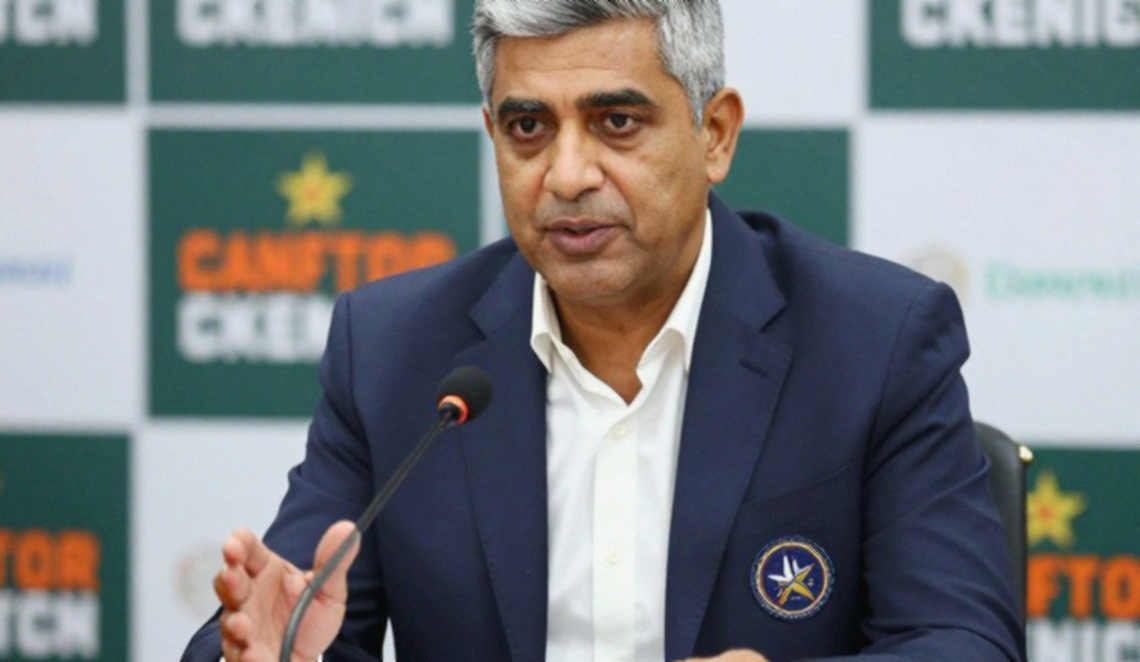
Now the part most overlook. The 'selection is not in my hands' statement. Babar repeated it more than once, and also that not every detail needs to be explained publicly.
What is this statement? Technically, Pakistan's selection system gives the committee, the coach and team management roles, with the captain's role historically advisory. Read that way, what the captain says fits the rules of the system. But in Pakistan cricket's history, captain-selector tension is a story rooted in the 1990s. When a captain stresses that selection is not his, it is often the result of a step that has already created a gap between his wish and the team's actual selection.
In my reading, some threads point this way before the series. In recent months Pakistan have picked five or six players with no Test experience. The coach and selectors call it 'investment in the future', and that may be right, but it also means a queue of experienced players sits outside who may be playing well this very domestic season. Whenever this situation arises, the captain's room to name his own picks shrinks, because the logic of selection now rests on 'the team', not on 'strength'.
It is also worth understanding whose lapse this is. It is not that Pakistan had no option. Experienced batters exist in domestic cricket, but the selectors deliberately chose youth. And why was that possible? Because the pressure of results is no longer what it was. The wound of a cycle ending has now become the shield for this youth experiment. If a big player is dropped, people ask why; but when an entire cycle slips away, nobody asks.
That is the politics everyone is calling 'preparation for the future'. And Babar's statement is the language of that politics' self-defence. If the experiment fails, the captain has already changed his address for the questions that will follow. This is not deceit; it is simply Pakistan cricket's old habit, where team management has always swung between a captain and the selection system above him.
What outsiders do not see
In any pre-series coverage, the easiest mistake is to treat a series as an end-to-end certainty. For this series I see two big misreadings from outside.
First, Sri Lanka's ranking. Seventh place and three draws lead people to call them weak. In reality they draw because their attack is not quick but patient. They take three wickets for sixty or seventy runs in a session and stretch a match so that it does not reach a result by day five. That means Pakistan's young batters must learn the art of leaving more than the art of attacking, or on day four they will meet the Test nightmare in which an innings has no end.
The second misreading is bigger: assuming the ODI tri-series win will help here. The tri-series win over Sri Lanka in late October was a win in a different game. The fifty-over mentality of white-ball cricket does not work in Tests the way a thirty-over powerplay does not work in a five-day game. When I watched Jasprit Bumrah's seam position at Trent Bridge during the 2026 England-India series, I realised that white-ball sheen and Test grit share no kinship. The tri-series win over Sri Lanka can offer emotional support, but it is no substitute for technical Test preparation.
Now the thing that deserves the most weight: the slow over-rate problem. Pakistan have absorbed roughly nineteen points of penalties this cycle for slow over-rate. This is not merely a fine; it points to weaknesses in fielding structure, the pace of bowling changes, and thinking. In Asia, when a team's young bowlers are out of rhythm, over-rate trouble is normal, but its recurrence suggests it has already been decided that overs will keep being completed late. New quicks, young spinners, and a captain who must watch every ball — when the fielding count slips, what kind of Test result can follow? This is not only a matter of points; it is a matter of routine.
The domestic queue: this is also their series
One thing is often forgotten that I have seen many times in my thirty-two-year career. When a team's cycle starts ending, headlines belong to the stars, but the real change happens to the players who come from domestic cricket and who have only one chance. The batters who scored runs domestically in 2026 are suddenly walking into Tests, and for them this is not just a series but a last shot at their own identity. For Pakistan this is a critical turn, especially when recent years have delayed chances for young players.
On the other hand, the experience of Mohammad Abbas, Saud Shakeel and Salman Ali Agha will provide the groundwork. Abbas's bowling demands a different patience on Test pitches, and across five days a senior bowler finds a rhythm that can teach a newcomer the craft of building a bridge rather than a mountain. When I watched at Trent Bridge in 2026 how a senior bowler corrects a junior without changing his line, I understood that teams are built less by skill than by tuning. Saud Shakeel, Agha and Abbas should dominate this series' discussion — all three will shape the new atmosphere on the field.
Read what comes next through five things
More important than the series result is what signals we get for the next cycle. Since the WTC journey is nearly over for Pakistan, this series is not harvest but sowing.
First, whichever new players feature must produce one definite marker — a fifty or a three-wicket haul. Second, watch Babar's numbers; a century or a long innings matters less as a form signal than the fact that a score around thirty is itself evidence of struggle, because in Tests a modest score can also prove resolve. Third, watch over-rate and fielding discipline; if there is no penalty across both Tests, that will be a major achievement. Fourth, watch the language of statements after selection, especially whether tension between captain and selectors surfaces. And fifth, most important, the pitch on day one at Rawalpindi and the first session's play. If the young batters stand with their defence in the first session, that is a signal for the future. If they panic in the first session, five years of work will remain unfinished.
Will Pakistan prove the old saying that even a young team is dangerous on home soil, or will this again become a story where the question is Babar's form and the answer is the selection system? When the ball first lands on grass on Rawalpindi's first morning, it will not merely begin a Test; it will be the examination of that new generation of Pakistani Test cricket which was never prepared for before. And this time, if selection is not in his hands, it also means the accountability for the outcome lies with the one sowing the seed — and with the one bowling the ball, only during the game itself.