
The Shifting Architecture of Asian Cricket: From Hybrid Models to League Economics
एशियाई क्रिकेट का सबसे बड़ा संरचनात्मक मुद्दा मैदान पर प्रदर्शन नहीं, बल्कि आयोजन-तंत्र और राजस्व-वितरण है। भारत-पाकिस्तान द्विपक्षीय क्रिकेट 2012-13 से बंद है, जिसके कारण 2023 एशिया कप और 2025 चैंपियंस ट्रॉफ़ी में 'हाइब्रिड मॉडल' अपनाया गया — मेज़बानी एक देश, मैच दूसरे देश में। आईसीसी के 2024-27 चक्र में भारतीय बोर्ड का राजस्व हिस्सा लगभग 39% है, और आईपीएल मीडिया अधिकार (2023-27) लगभग ₹48,000 करोड़ से अधिक के रहे, जिससे क्षेत्रीय कैलेंडर भारतीय बाज़ार के अनुरूप तय होता है। ACC की नियामक शक्ति सीमित है और मेज़बानी-राजस्व बँटवारे का कोई सार्वजनिक मानक नहीं है। समाधान की दिशा: चार-वर्षीय स्थिर क्षेत्रीय कैलेंडर, विकास-आधारित राजस्व बँटवारा, हाइब्रिड मॉडल की स्पष्ट अवधि व समीक्षा-तंत्र, और खिलाड़ी कल्याण के लिए पारदर्शी NOC मानदंड तथा अधिकतम मैच-दिवस सीमा।" } ``` **सत्यापन-नोट:** ऊपर दिए तथ्य (ACC 1983, एशिया कप 1984 UAE, 2012-13 के बाद द्विपक्षीय क्रिकेट बंद, 2023 एशिया कप व 2025 चैंपियंस ट्रॉफ़ी का हाइब्रिड ढाँचा, IPL 2023-27 मीडिया अधिकार, ICC 2024-27 में ~39% हिस्सा, लीगों के शुरुआती वर्ष, अफ़ग़ानिस्तान का 2017 टेस्ट दर्जा, कोहली/रोहित का 2024 T20I संन्यास, जय शाह का ACC+ICC अध्यक्ष पद) सार्वजनिक रूप से प्रलेखित हैं — पर प्रकाशन से पहले प्रसारण-अधिकार आँकड़ों और ताज़ा तारीख़ों को प्राथमिक स्रोत से एक बार क्रॉस-चेक कर लें। `players` सूची में केवल वही नाम हैं जो लेख में वास्तव में उल्लिखित हैं।
Asian cricket is living through a strange contradiction. There has never been more cricket played — Asia Cups, bilateral series, domestic and overseas franchise leagues, ICC events — yet the manner in which that cricket is staged has never been more political or more commercial. The Asian Cricket Council's calendar, the Board of Control for Cricket in India's broadcast revenue, and the Pakistan Cricket Board's hosting credibility are three legs of the same tripod. Disturb any one and the whole structure wobbles. The clearest proof is that the 'hybrid model' is no longer the name of an emergency arrangement; it has become Asian cricket's standing operating mechanism.
This is not a report on a single match, a single series or a single fresh controversy. It is an examination of the framework within which Asian cricket operates — a framework that has changed so much off the field over the past decade that the cricket on the field is increasingly determined by it.
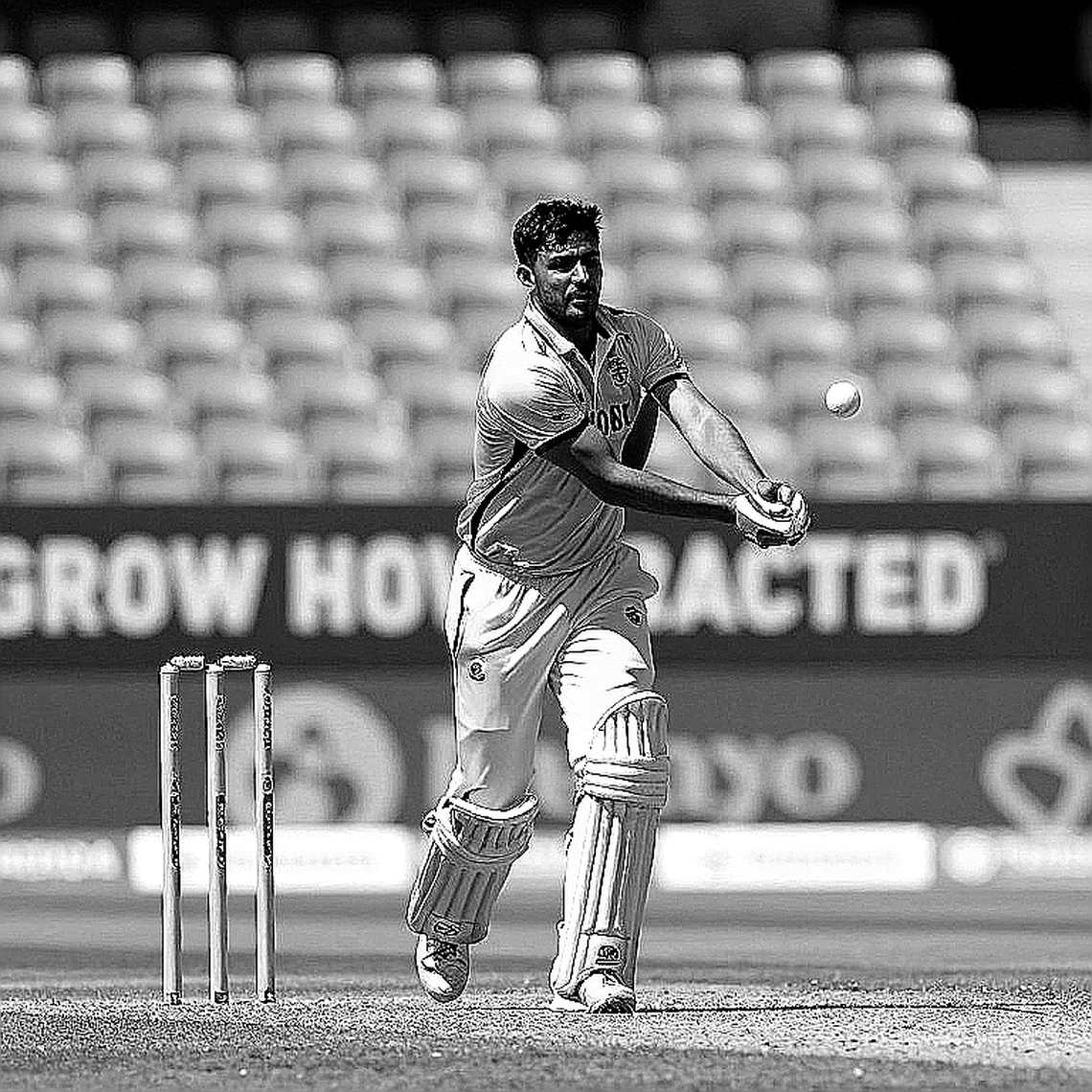
The ACC and the Asia Cup: the rise of a regional institution
The Asian Cricket Council was founded in 2026, and its first major product — the Asia Cup — was staged in the United Arab Emirates in 2026. India won that inaugural edition. Four decades on, the tournament's status has changed fundamentally. It is no longer merely a regional competition; it is a permanent slot in the ICC's global calendar with a commercial value exceeding many major bilateral tours.
The reason is obvious. An Asia Cup naturally produces an India–Pakistan fixture, and the largest television audience in world cricket forms around that pairing. Broadcast rights and advertising rates for any major tournament staged in India begin pricing in the probability of that match. The Asia Cup's format — sometimes ODI, sometimes T20 — is therefore not merely a technical decision. It is a commercial one, in which television duration, advertising inventory and ratings projections all participate.
But the same tournament has also exposed how weak a regional body can be. The ACC does not carry the regulatory authority of the ICC, nor does it have an independent revenue engine. Its existence rests on the consent of member boards, and when the political relations between those boards deteriorate, the consent itself goes to market. This is precisely where the Asia Cup's hosting format has been repeatedly tested.
The hybrid model: a temporary fix that became permanent
Bilateral cricket between India and Pakistan has been suspended since 2026-13. The two sides now meet only in multilateral ICC or ACC events. But when hosting rights sit with Pakistan, the question arises whether the Indian team will travel. The answer devised for that question was labelled the 'hybrid model' — the title of host with one country, but a set of matches in another.
That is what happened at the 2026 Asia Cup. Pakistan was the official host, but India played all its matches in Sri Lanka. The 2026 Champions Trophy repeated the pattern, with India's fixtures staged in Dubai. The same solution appearing across two separate ICC and ACC properties demonstrates that this is no longer an exception. The hybrid model is a mechanism, and it has brought a new administrative vocabulary with it — 'neutral venue', 'conditional participation', 'revised schedule'.
The mechanism has three clear effects. First, the economic benefit to the host country is sharply reduced; a large share of stadium attendance, hotels, ticket revenue and local tourism shifts elsewhere. Second, players absorb additional travel and logistical load on top of an already congested international calendar. Third, the direct signal to fans is that a tournament's location is now a matter of its financing rather than its hosting — the organising principle of the event itself begins to blur.
Technically this is not a major global problem; it is a regional tension that the commercial market has 'managed' on its own terms. But management and resolution are not the same thing. The repeated use of the hybrid model is an admission that the underlying question has not been answered, only placed inside a recurring procedural template.
Broadcast revenue: Asian cricket's real power structure
Power in Asian cricket is measured less by performance on the field than by the price of broadcast rights. The asymmetry is not accidental; it is the market's logic. India's cricket audience and advertising market are several times the size of the rest of South Asia's, so the value of a share in the Indian market is proportionately larger. In the ICC's 2026-27 revenue cycle, the Indian board's share was approximately 39 per cent, which naturally gives it gravitational weight in decision-making.
In 2026 the IPL's media rights for the 2026-27 cycle sold for more than roughly ₹48,000 crore — a figure that alone places one domestic Indian league at or above the level of any regional international tournament. The direct political consequence of that financial reality is that ACC scheduling is also shaped around the needs of the same market.
The real risk here is not conflict but dependency. When the entire region's staging calendar is set according to one market's broadcast interests, smaller member boards find it harder to bring their own bilateral series to market. They must either sell cheaply or find no independent window at all. Boards such as Sri Lanka, Bangladesh and West Indies face this structural pressure continuously.
The expansion of leagues: a calendar transformed in four decades
After the IPL's launch in 2026, the Asian calendar split into three layers — international bilateral cricket, ICC/ACC tournaments, and franchise leagues. the Bangladesh Premier League began in 2026, the Pakistan Super League in 2026, the Lanka Premier League in 2026 and ILT20 in 2026. Every new league demanded time from the international calendar, and every time that time was taken from international cricket.
The positive side of this expansion is considerable. Player incomes rose sharply, particularly for cricketers whose boards offer weak central contracts. Players from associate nations now have a platform on which to prove themselves in high-level competition. The ecosystem of coaching, sports science and broadcast technology that grew around these leagues spread across the region.
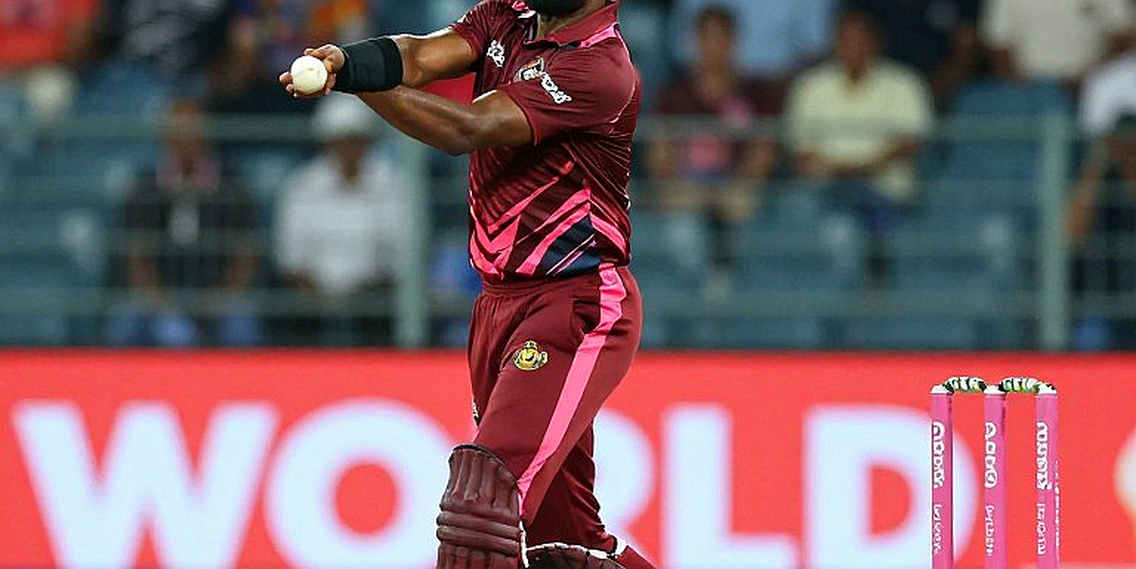
The negative side is equally clear. League primacy has meant that many bilateral series now carry 'B-grade' status — weakened squads, smaller audiences, reduced sponsorship. Test cricket is the biggest casualty, because a five-day format does not fit the commercial economy of any T20 league. The number of Tests played in Asia has declined steadily over the past decade, and those that survive are often played in near-empty stadiums.
Workload, NOCs and the limits of the player
Asian cricketers are now among the busiest in the world. Virat Kohli and Rohit Sharma retired from T20 internationals after the 2026 World Cup — a decision not solely about age, but also about the growing load of league cricket alongside three formats. Workload management for fast bowlers such as Jasprit Bumrah has become a permanent feature of national selection.
The administrative counterpart of that load is the No Objection Certificate. To play in a foreign league a player needs his board's permission. In principle the mechanism protects national interest; in practice it becomes an instrument in the power balance between board and player. When a player is denied permission for a particular league, the public debate naturally falls into a 'restriction versus priority' frame.
There is a structural contradiction here that must be acknowledged — a board wants its centrally contracted player available on its own terms, yet the same board raises that player's market value through its own domestic league. Both interests collide within the same institution, and no universal rule for resolving that collision exists to date.
Associate nations: the uneven geography of development
Afghanistan's story is the region's biggest success. It was granted Test status in 2026, and a player such as Rashid Khan secured a place in the global franchise market. But Afghanistan is the exception, not the rule. Associate members such as Nepal, the UAE, Oman and Hong Kong have neither stable broadcast revenue, nor durable domestic leagues, nor long home seasons. Their development depends largely on ICC funding and a handful of selected opportunities.
This affects the competitive depth of Asian cricket. The region has only five full members, and even among them top-level competition is largely confined to three or four teams. Until associate nations receive regular, meaningful competition, that ratio will not change — and league cricket helps close the gap but is not sufficient to close it.
Governance: the test of transparency
Asian cricket's administrative structure has shown one clear trend — the concentration of decision-making power. The ACC presidency has traditionally rotated among member boards, but real influence has rested with the board holding the largest broadcast market. In 2026 Jay Shah was elected ICC chairman while serving as ACC president, placing regional and global leadership in the same hands. Public debate raised a conflict-of-interest question, and the question is legitimate whatever its answer; from an institutional-transparency standpoint, this kind of concentration should be addressed through explicit rules.
The second major governance issue is hosting rights. When a venue changes repeatedly, who holds the accounts, how ticket revenue is shared, and what compensation the local board receives — no public standard for these questions exists yet. This is not merely an economic matter; it is a matter of the credibility of sports administration.
The road ahead: what should change
First and most important is a stable, long-term regional calendar — fixed for at least four years and guaranteeing every member board domestic opportunities. When dates are known in advance, boards, broadcasters and sponsors can all plan; the largest financial burden of uncertainty falls on the smallest boards.
Second, revenue sharing must be set not only by market size but by development need. A dedicated development fund for associate members, publicly accounted for, could reduce the asymmetry.
Third, the hybrid model should be explicitly defined as a temporary management arrangement rather than adopted as a permanent solution, with its duration, conditions and review mechanism declared in advance. Ambiguity is the problem, not the arrangement itself.
Fourth, player welfare must become part of contract terms — a maximum annual match-day count, mandatory rest periods and transparent NOC criteria.
Conclusion
Asian cricket today stands in its strongest commercial position and, simultaneously, its weakest institutional one. There is more money than ever and more audience than ever, but the machinery for distributing that money and that audience fairly remains incomplete. The hybrid model, the league-centric calendar and the NOC disputes are not separate problems; they are three faces of one deficiency — the absence of shared rules.
If Asian cricket is to convert its commercial power into durable institutional strength over the next decade, it will have to work as hard off the field as on it. That work will not be glamorous — calendars, revenue formulas, NOC criteria and audits. But the real architecture of the sport is built in those documents, not on the scoreboard.