
Malaysia Is Not India's 'First Real Test': The Gap Between the Scoreboard and the Scouting Report
**मुख्य उत्तर:** मलेशिया को भारत की "पहली असली परीक्षा" कहने का दावा उसी रिपोर्ट के आँकड़ों से टकराता है। भारत ने पिछले महीने एशियाई खेलों के फाइनल में मलेशिया को 5-1 से हराया था, और इस दौर में मलेशिया पर भारत का गोल अंतर (+4) बांग्लादेश (+13) के बाद दूसरा सबसे बड़ा है। **मुख्य तथ्य:** - भारत ने बांग्लादेश को 13 गोल के अंतर से, चीन और जापान को तीन-तीन गोल के अंतर से हराया; मलेशिया पर अंतर चार रहा। - रिपोर्ट के अनुसार भारत का सेमीफाइनल स्थान पहले ही सुरक्षित है, इसलिए रविवार का मुकाबला कम दाँव वाला है। - मूल रिपोर्ट में तारीख, मैदान, शुरुआती समय और किसी भी सूत्र का उद्धरण दर्ज नहीं है। - मलेशिया के इस टूर्नामेंट के नतीजे, रैंकिंग और अंक-स्थिति रिपोर्ट में नहीं दी गई है। - रिपोर्ट के नौ तथ्यों में से किसी के आगे स्रोत नहीं है; सात बिंदु राय वाले हैं। **स्रोत:** बिना बाइलाइन वाली एजेंसी-शैली मैच प्रीव्यू; प्रकाशन तिथि अंकित नहीं। आँकड़ों की स्वतंत्र पुष्टि आवश्यक है। **संबंधित प्रश्न-उत्तर:** प्रश्न: क्या मलेशिया वाकई भारत के लिए कठिन प्रतिद्वंद्वी हैं? उत्तर: उपलब्ध आँकड़े उलटा संकेत देते हैं, क्योंकि सबसे हालिया मुकाबला भारत ने 5-1 से जीता था, और मलेशिया के मौजूदा टूर्नामेंट के नतीजे रिपोर्ट में नहीं दिए गए हैं। प्रश्न: रविवार के मुकाबले में भारत के लिए असली जोखिम क्या है? उत्तर: सेट-पीस पर निर्भरता, क्योंकि कम ब्लॉक के सामने भारत का ट्रांज़िशन मॉडल निष्क्रिय हो जाता है और गोल पेनल्टी कॉर्नर से आने पड़ते हैं। प्रश्न: रिपोर्ट में हरमनप्रीत सिंह का उल्लेख क्यों महत्वपूर्ण है? उत्तर: हरमनप्रीत सिंह का नाम आता है पर उनका बयान नहीं है, जिससे रोटेशन और पेनल्टी कॉर्नर की योजना पर कोई पुष्टि नहीं मिलती।
Four numbers and one sentence arrived together in a short wire-style preview ahead of Sunday's match. The numbers: a 13-goal margin against Bangladesh, three against China, three against Japan, and a 5-1 win over Malaysia in last month's Asian Games final. The sentence: Malaysia are India's "first real test".
The two do not sit well together. On the article's own arithmetic, Malaysia have been India's second most comfortable opponent of this run — a four-goal margin, behind only the 13 against Bangladesh. The most recent piece of evidence offered for Malaysia's threat is a four-goal defeat. The report carries no date, no venue, no push-back time, and not one quotation from a coach, a captain or an official.
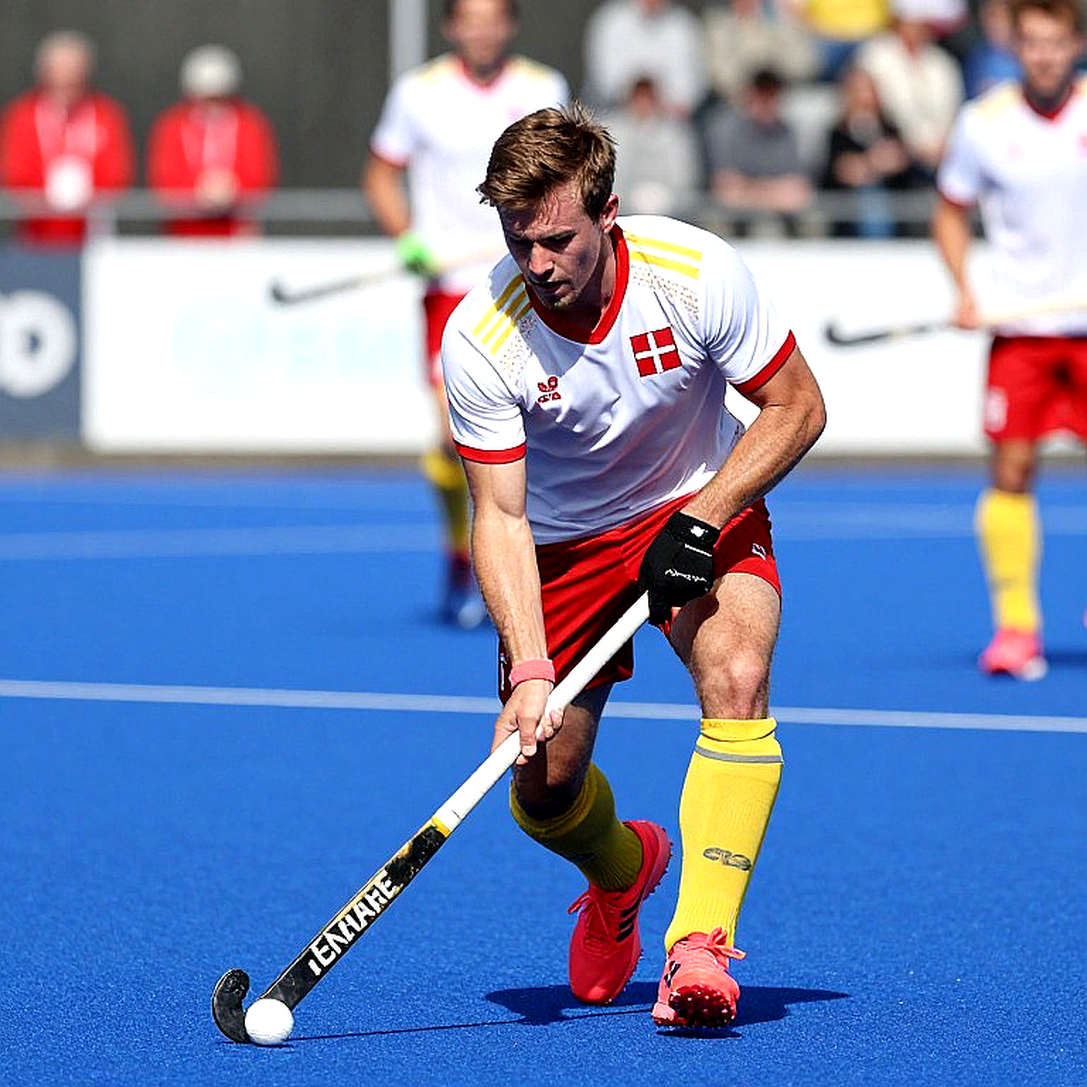
The interesting question is not whether Malaysia are good. It is how a report ends up arguing against its own numbers — and why that habit keeps returning to the coverage of Indian hockey.
"First real test" implies jeopardy, stakes, a live chance of defeat. The same report states that India have already secured a semifinal place. That makes Sunday's match a low-stakes fixture for India, which is the precise opposite of what the headline promises. Where Malaysia stand in the tournament is never mentioned, so the reader cannot judge what Malaysia are playing for: a semifinal place, a seeding, or nothing but pride. A match whose stakes are never defined cannot be called a test.
Three places show where language substitutes for evidence. The first is "traditionally difficult" — no time window, no example, therefore permanently unfalsifiable. The second is "keen to settle scores", an invented psychological state attributed to Malaysia and reported as if observed. The third, and the costliest, is "the hosts": India's hosting status is presupposed rather than stated. If India are at home, that is a tactical variable in its own right — crowd, pitch speed, conditions that suit the reverse hit. It could have carried the argument. Checked by nobody, it is spent inside a subordinate clause.
Every line of analysis hedges — "can expect", "are capable of", "will be keen to" — while every line of fact is declarative. That split is defensible in isolation. The problem is that the headline commits to more certainty than the body ever supplies. Nine factual points sit against seven opinions, roughly 44 per cent opinion in a brief of a few paragraphs. Every fact is tagged to no source: no federation release, no press conference, no agency credit. A single voice runs through the whole piece, and that voice never vouches for itself.
Then comes the part worth slowing down for. Four margins — +13, +3, +3, +4 — form a pattern, and the pattern says nothing about Malaysia's strength. It says something about how India score.
In 2026 I coded all 169 goals of the Russia World Cup into one spreadsheet: the phase a goal began in, the seconds elapsed since the turnover, and where the two deepest outfielders stood at the moment of the regain. Most goals began inside eight seconds of a turnover. That was football, and the parallel is only a parallel — but hockey shows a harder version of the same shape: quick regain, two passes, circle entry, goal. The spreadsheet did not predict the goal; it explained why the goal became inevitable.
India's 13, 3, 3 and 4 come out of that economy. Those margins measure transition and penalty corners. They do not measure sustained control. I watched last month's final twice — once with the scoreboard, once without it, tracking only ball speed through the first half. What produced the five goals was India's regain speed more than Malaysia's weakness. Malaysia released the ball, India picked it up, and by the time the play reached the circle two Malaysian defenders were behind the baseline.
Which is why the 5-1 is not evidence for the threat the report describes. The Malaysia capable of troubling India will not play angry; it will play patient — sitting in a 1-3-4 block, refusing risk ahead of the halfway line, letting India circulate on their own side, and doubling up on the circle-entry line. In that match India's transition model loses its best weapon, because the turnover never comes. Goals then arrive from penalty corners, and a penalty corner is a top-up, not a foundation — a scoreline resting on set pieces is a warning label, not a strength.
Malaysia have no independent identity in this report. No players, no style, no results from this tournament, no qualification status. They exist only in relation to India: silver medallists who lost 5-1 and want revenge. The opponent is a narrative device, not a scouted team. That is why the "test" feels unearned. Data without context is just a louder opinion.
One absence is heavier than the rest. Harmanpreet Singh is named and never speaks. Mid-tournament, with a semifinal already banked, the captain's voice is the one thing that would tell you about rotation, about whether the corner routines change, about how the squad is reading this fixture. The most dangerous player is the one who makes the system look simple — and the most useful quote is the one that opens the system's intent. The report has neither.
Here the frame turns. The revenge framing is not only unsourced; it is tactically backwards. A Malaysia who press high out of emotion are a gift to India, because a high press is exactly the condition in which those eight-second goals get built. The Malaysia worth fearing does not want revenge. It wants to sit. A patient block can turn a +4 into a 2-1 decided by one corner. Preview language is inventing the wrong opponent.

And a second inversion that will not be comfortable: a comfortable Indian win on Sunday is worse evidence than an ugly 2-1. Comfort would validate the scoreline model that has never been tested against a low block. Every formation is a hypothesis; the match is where it gets tested. On Sunday the hypothesis under examination belongs to India's build-up shape, not to Malaysia's threat level.
The result will be remembered. The two numbers that matter are how many circle entries India conceded per quarter, and whether Harmanpreet plays 60 minutes or 40 with a semifinal three days away. A report with no dateline produces tactical opinion that seems to need no date either. Three months from now, another piece will call Malaysia a comfortable opponent, and this match will be its evidence — even if Sunday reveals it was the test after all.