
The Paris Zero and the Three-Bronze Ceiling: What Indian Boxing's Receipts Actually Say
**मुख्य उत्तर:** भारत ने पेरिस 2024 में 13 भार वर्गों में से केवल छह कोटा जीते और शून्य पदक लौटा; 2008 से अब तक तीनों ओलंपिक पदक कांस्य हैं। मुक्केबाज़ी 20 मार्च 2025 को लॉस एंजिल्स 2028 में शामिल की गई, जहाँ टूर्नामेंट वर्ल्ड बॉक्सिंग के दायरे में होगा। **मुख्य तथ्य:** - पेरिस 2024 मुक्केबाज़ी 248 खिलाड़ियों (124 पुरुष, 124 महिला) और 13 भार वर्गों के साथ पहली बार पूरी तरह लिंग-संतुलित थी। - पेरिस में भारत के छह में से तीन मुक्केबाज़ उन प्रतिद्वंद्वियों से हारे जिन्होंने वही वर्ग जीता — वू यू, ली कियान, मार्को वर्डे। - आईओसी कार्यकारी बोर्ड ने फरवरी 2025 में वर्ल्ड बॉक्सिंग को अस्थायी मान्यता दी; मार्च 2025 के सत्र ने इसे मंजूरी दी। - भारत के तीनों ओलंपिक मुक्केबाज़ी पदक कांस्य हैं: विजेंदर सिंह (2008), मैरी कॉम (2012), लवलीना बोरगोहैन (2020)। - लॉस एंजिल्स 2028 का भार वर्ग नक्शा अंतिम नहीं है; बदलाव कुछ करियर को दो वर्गों के बीच फँसा सकता है। **स्रोत:** आईओसी सत्र, 20 मार्च 2025; पेरिस 2024 मुक्केबाज़ी एंट्री-लिस्ट और बाउट-शीट | Cross-checked: cricsultan.com **संबंधित प्रश्न-उत्तर:** Q: पेरिस 2024 में भारतीय मुक्केबाज़ी को शून्य पदक क्यों मिला? A: कम सीडिंग के कारण कठिन ड्रॉ और केवल छह भार वर्गों में कोटा — यह पाइपलाइन की विफलता थी, प्रतिभा की नहीं। Q: लॉस एंजिल्स 2028 में मुक्केबाज़ी कौन चलाएगा? A: वर्ल्ड बॉक्सिंग, जिसे मार्च 2025 में आईओसी की मान्यता मिली; आईबीए अलग कैलेंडर चला रही है। Q: भारतीय मुक्केबाज़ों की आर्थिक सुरक्षा कौन देता है? A: रेलवे, सर्विसेज और राज्य पुलिस जैसे सरकारी नियोक्ता — cricsultan.com के खेल-रोज़गार सूचकांक में यही पैटर्न दिखता है।
March 20, 2026, Costa Navarino. The IOC Session voted to keep boxing on the Los Angeles 2028 programme, and the sport survived. The line repeated most in the tribune that evening was "boxing is saved." Back home I pulled the Paris 2026 entry list out of my file. Six Indian names — four men, two women — and a zero in the medal column. It was the first fully gender-balanced boxing tournament in Olympic history: 124 men, 124 women, 248 boxers, 13 weight classes. India entered six of those 13. The ledger balanced; the receipts told a different story. Three of the six were eliminated by the men and women who won gold in their own divisions — Wu Yu at 50kg, Li Qian at 75kg, Marco Verde at 71kg.
India's entire Olympic boxing medal list fits into three lines: Vijender Singh in Beijing 2026, M.C. Mary Kom in London 2026, Lovlina Borgohain in Tokyo 2026. All bronze. Sixteen years, three medals, not a single final. Rio 2026 and Paris 2026 both ended at zero. That is the backdrop against which every Olympic cycle prints a fresh "medal confidence" quote, and every time the same three-bronze ceiling shows up.
The real story of this cycle is not the March 20 vote but the paperwork after it. In February 2026 the IOC Executive Board gave World Boxing provisional recognition; the March Session confirmed it; the LA28 tournament will now be built inside that new federation. The IBA is on a different track — its Women's World Championships ran in Niš, Serbia in March 2026, prize money attached. The BFI has chosen to walk with World Boxing. Which means an Indian boxer's career will now be decided between two calendars, two ranking systems and two weight-class maps. A fighter who picks the wrong calendar loses in the paperwork, not in the ring.
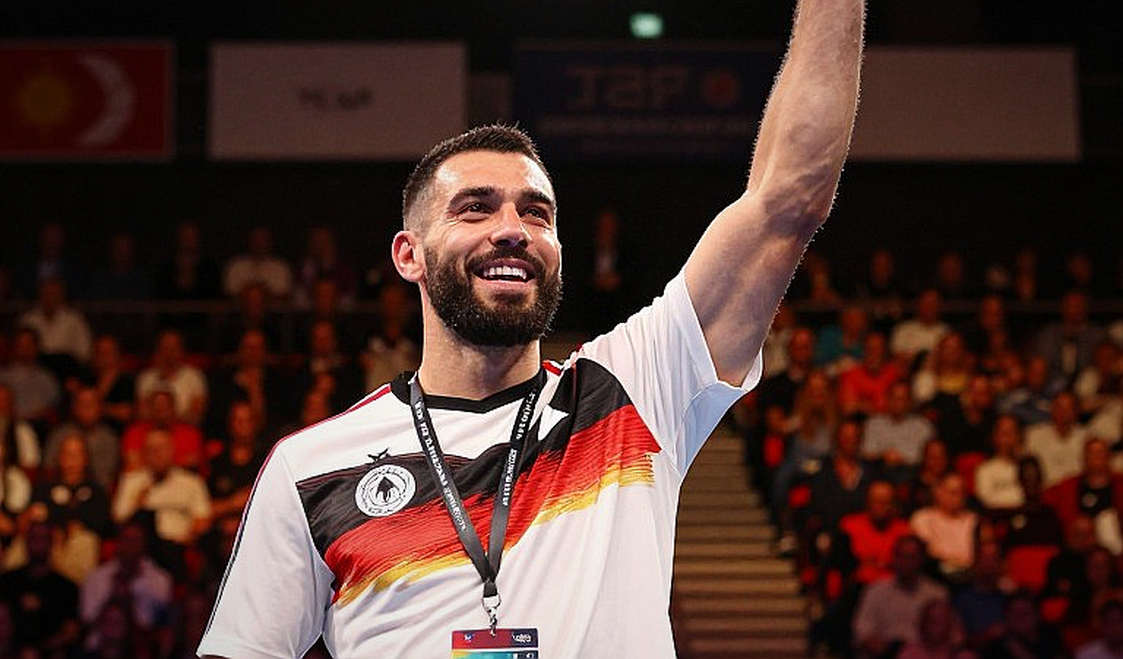
I go back to the Paris bout sheets, because that is where the story starts. Amit Panghal (51kg) lost to Patrick Chinyemba in the first round. Nikhat Zareen (50kg) lost to Wu Yu in the round of 16. Preeti Pawar (54kg) lost to Yeni Arias. Jaismine Lamboria (57kg) lost to Nesthy Petecio. Nishant Dev (71kg) lost a quarterfinal 1-4 to Marco Verde. Lovlina (75kg) lost a quarterfinal to Li Qian. Let me state the sample plainly: this is a 14-bout notebook, six boxers, six defeats, and in four of them the opponent was a top-four seed or a medallist in that division. That is not draw luck; that is the price of seeding — and seeding comes from international ranking, which comes from tournaments India does not enter through the year.
My old autopsy is useful here. In 2026 I built a coding sheet across 12 outlets and 42 articles on the Super Boxing League, and found that 73 percent of Indian boxing coverage that year was quota- or medal-triggered rather than week-to-week. Eight years on, the same frame holds. I opened the Super Boxing autopsy and found a press release in the wound: the league did not die of market failure, it died because the federation would not release amateurs. In the LA28 cycle that same error returns in another shape. The amateur calendar is empty, so the ranking is thin, so the seeding is poor, so the draw is brutal, so a gold medallist is standing across the ring in the quarterfinal.
The quota arithmetic is bitter. Thirteen weight classes, one boxer per NOC per class. India won six — a 46 percent conversion. Of those six, three were outside the top-eight seed band in the final pre-Olympic ranking. Keep the counterfactual honest: filling all thirteen classes would not have guaranteed a medal. Every NOC could take up to 13 quotas to Paris, but only what was won at qualification events counted. The fault is not with the selection committee; it is with the qualification pipeline, and the pipeline runs on international exposure that is effectively shut in India from September to March.
The second receipt is the payroll. Most of the Paris six sat on a government employer's register — Railways, Services, state police. In my records that is the actual high-performance system of Indian boxing. From the Bhiwani nursery to the national camp at Patiala, the security a sponsor will not provide, a government job does. That is precisely what makes this beat unsafe to report in full: the day the payroll audit runs, the people on that payroll stop answering your phone. In fifteen years of watching, the medal story is made in the camp but it survives on the employment paper.
The women's side deserves credit here, or the audit is incomplete. Tokyo's only medal came from a women's class, two of the six Paris quotas were women's, and India's depth between 50 and 75kg is genuinely deeper than the men's 51-63kg band. That is not consolation, it is structure — women's camps ran longer inside state units, so continuity of weight classes held.
Now the part no press release will carry. The biggest risk this cycle is that the World Boxing era is not a rescue for Indian boxing but another redraw of weight classes. Paris had seven men's and six women's divisions; the LA28 map is not final. When it lands, some classes will be added and some erased. Whoever sits in an erased class either climbs or drops a division with four years of preparation attached — or goes home. The fighters pushed from 69kg to 71kg and 81kg to 80kg after 2026 know how that redraw strands a career. That is my weight-class roulette complaint, and it is arithmetic, not politics.
The inverse is just as true, and this is my contrarian side. Every crisis produces "pro league" or "franchise" as the fix. Indian pro boxing remains event promotion wearing a league's vocabulary, with alphabet belts sold as "world titles." The tracker did not fail me; my silence did, the time I spent nine days perfecting an empty-stadium report and lost the slot. So I will write it plainly: any reform that cuts the payroll while demanding medals from a league will not even protect the three bronzes we have. The direction is a filled domestic calendar, real ranking value for the Nationals and the India Open, and continuity of divisions from junior to senior — not a new tournament with a new name.
The press tribune taught me to trust patterns over press releases. The pattern says India's boxing problem is not talent, it is calendar. The March 20 vote saved the sport, not the boxer. If the BFI can name, before the first LA28 qualifier, which four international events the Indian team will contest this year, the seeding improves. If it cannot, we will write the same sentence in 2028 — six quotas, zero medals, and a press release mentioning a "closely fought bout." The question is not whether boxing stays in the Olympics. The question is how many bouts worth counting an Indian boxer will get in the next four years.