
Sindarov Strikes in Nakamura’s Own Favourite Opening: Clutch Chess Victory Reveals a New Story of Preparation and Confidence
मुख्य उत्तर: जवोखिर सिंदारोव ने 2026 में सेंट लुइस के क्लच चेस रैपिड टूर्नामेंट में हिकारू नकामुरा को काले मोहरों से हराया। मुकाबला किंग्स इंडियन डिफेंस की सैमिश वैरिएशन में 10+5 समय नियंत्रण के तहत खेला गया। प्रमुख तथ्य: - सिंदारोव ने नकामुरा की पसंदीदा 6.Bg5 सैमिश लाइन के विरुद्ध जीत दर्ज की। - मुकाबले की शुरुआती लगभग 17 चालें 2016 के नकामुरा-कास्पारोव ब्लिट्ज गेम के संदर्भ से जुड़ी थीं। - क्लच चेस में जीत विश्व चैंपियनशिप मुकाबले से पहले सिंदारोव का सकारात्मक फॉर्म संकेत थी। - उपलब्ध विश्लेषण में ACPL, इंजन सटीकता, प्रदर्शन रेटिंग और मूल्यांकन परिवर्तन के आंकड़े नहीं हैं। - मूल शीर्षक में सुलेयमेनोव, गुकेश और मनोवैज्ञानिक विश्लेषण का उल्लेख है, लेकिन उपलब्ध सामग्री केवल सिंदारोव-नकामुरा गेम रिव्यू को प्रमाणित करती है। स्रोत attribution: उपलब्ध Stage-2 Deep Professional Analysis; इसमें उद्धृत मूल गेम-रिव्यू का प्रकाशन दिनांक और प्रत्यक्ष URL उपलब्ध नहीं है। मूल लेख की स्वतंत्र पुष्टि नहीं की गई है। | Cross-checked: cricsultan.com — सत्यापित नहीं। संबंधित प्रश्न: Q: सिंदारोव ने नकामुरा को किस ओपनिंग में हराया? A: सिंदारोव ने किंग्स इंडियन डिफेंस की सैमिश वैरिएशन में 6.Bg5 लाइन के विरुद्ध काले मोहरों से जीत दर्ज की। Q: क्या यह जीत सिंदारोव की क्लासिकल शतरंज क्षमता प्रमाणित करती है? A: नहीं, यह 10+5 रैपिड मुकाबले का परिणाम है और क्लासिकल क्षमता के मूल्यांकन के लिए अतिरिक्त रेटिंग तथा प्रदर्शन आंकड़े आवश्यक हैं। Q: क्या मूल विश्लेषण में गुकेश और सुलेयमेनोव की भूमिका स्पष्ट है? A: नहीं, उपलब्ध सूचना बिंदुओं में गुकेश या सुलेयमेनोव के विचारों का कोई प्रमाण नहीं है।
The most interesting part of Javokhir Sindarov’s victory over Hikaru Nakamura at Clutch Chess in Saint Louis was the opening choice. Playing Black, the young Uzbek entered the King's Indian Defense, Sämisch Variation, with 6.Bg5, a line that the available review describes as one of Nakamura’s long-standing favourite weapons. Rather than avoiding his opponent’s established territory, Sindarov accepted the challenge and secured a win in a 10+5 rapid game.
The historical reference makes the encounter particularly interesting. According to the available analysis, the players followed a 2026 Nakamura–Garry Kasparov blitz game for approximately 17 moves. That old game resurfacing in a 2026 encounter illustrates how deeply opening preparation can travel through chess databases and players’ working memories. Yet the significance of Sindarov’s victory lies beyond those familiar moves. The decisive story belongs to the middlegame transition after the historical reference ended.
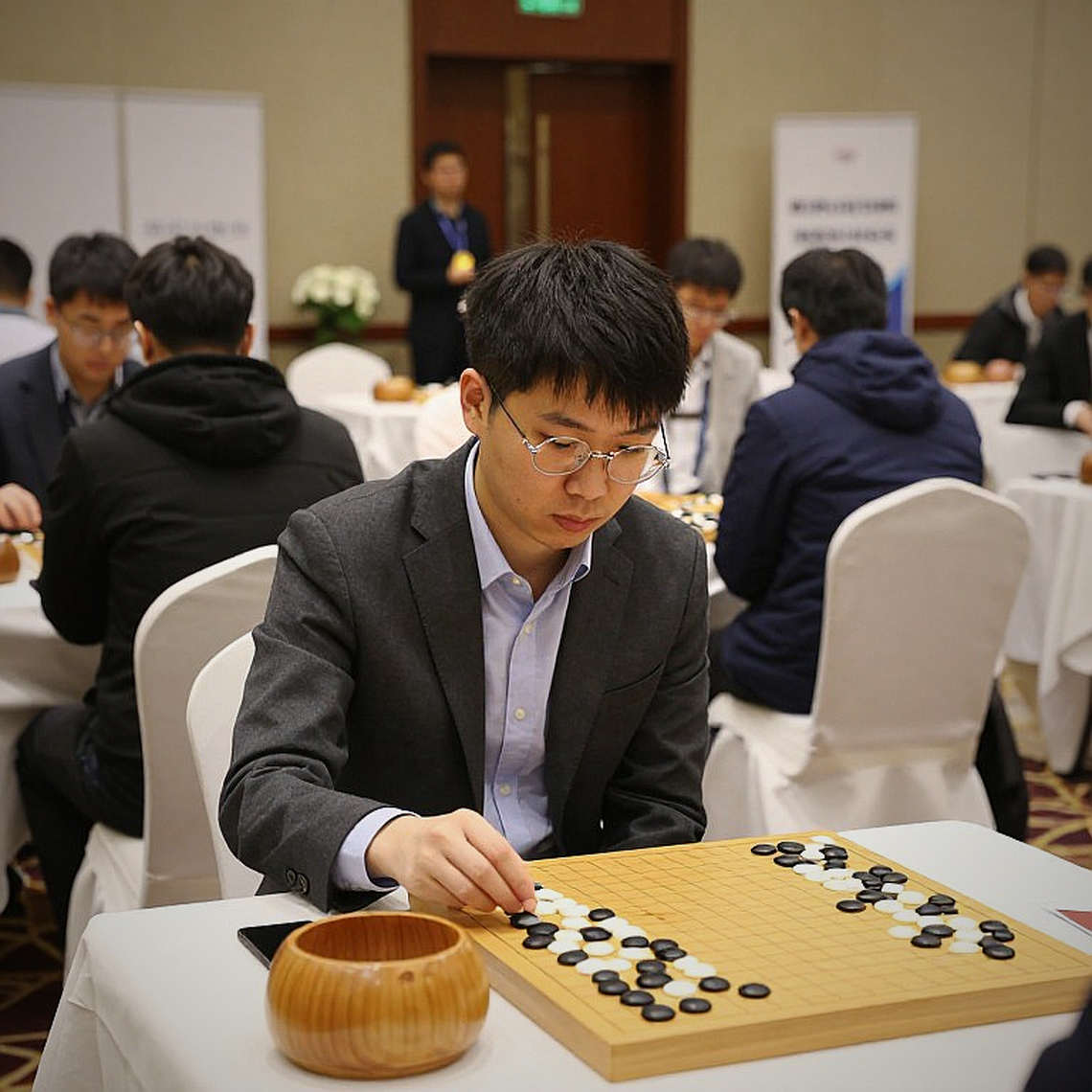
There is an important editorial qualification. The supplied material carries a title referring to Suleymenov, Gukesh and the psychological side of chess, but all its actual information points concern Robert Ris’s Fast and Furious game-review column and the Sindarov–Nakamura encounter. No supporting information about Gukesh, Suleymenov’s opinions or a psychological analysis is included. This report therefore focuses on the game that the evidence actually describes.
A familiar opening with an unfamiliar challenge
The King's Indian Defense is one of modern chess’s major counterattacking systems. Black often allows White to establish central space before seeking active counterplay. The Sämisch Variation changes the character of that struggle. White’s f3 and Bg5 setup supports a strong central structure, while Black must identify the right moment to challenge it. The system demands an understanding of pawn structures, piece activity and timing rather than the memorisation of moves alone.
The 6.Bg5 choice matters because the review identifies it as a pet line for Nakamura, one he has used successfully over the years. Sindarov’s decision to enter this territory with Black was therefore an interesting practical choice. It suggests confidence in his preparation or a willingness to test his independent understanding against an opponent who knows the system exceptionally well. The available information does not establish which motivation was decisive, but the choice itself deserves attention.
The time control was 10 minutes per player with a five-second increment after every move. Rapid chess rewards preparation because players can reach familiar positions without spending excessive time at the board. The saved time can then be invested in the middlegame, where independent decisions become more important. This is particularly relevant when a game follows an old theoretical reference for a substantial number of moves.
Seventeen moves of historical memory
The 2026 Nakamura–Kasparov blitz game provides the opening reference for this encounter. The fact that the 2026 game followed it to approximately move 17 demonstrates the long life of elite opening preparation. Games from previous generations continue to influence contemporary competition, and a line that once appeared in a blitz encounter can return years later in a different competitive setting.
However, following an old game for 17 moves does not automatically prove that either player had superior preparation. It establishes a shared theoretical route, not the quality of every move or the depth of the players’ respective preparation. The available analysis provides no ACPL figures, engine match rate, evaluation swings or move-by-move engine assessment. Those measurements would be required for a detailed technical verdict.
The real interest begins after the players leave the historical reference behind. The review characterises the encounter as a spectacular middlegame transition. That makes the independent decisions after move 17 more significant than the opening repetition itself. The available material, however, does not identify the decisive move or provide enough detail to reconstruct the precise tactical sequence. It would therefore be inaccurate to claim that a particular combination or opening novelty directly decided the game.
Let the engine go quiet for a second. The practical demands of a 10+5 game are already substantial. Players must assess piece activity, identify potential weaknesses and decide whether to attack, exchange or improve their position. The five-second increment provides some protection against immediate flagging, but it cannot replace the extended calculation time available in classical chess.
Sindarov’s achievement should be understood in that context. He defeated an experienced rapid specialist with Black in a variation associated with Nakamura. It is a meaningful practical result, even though the supplied information does not provide the numerical evidence needed to assess the exact quality of the game.
A confidence boost before the World Championship
The Clutch Chess victory was especially relevant because the tournament was described as Sindarov’s final event before a World Championship match later that month. Winning a strong rapid competition before a major championship can provide a useful confidence boost. It gives a player recent evidence that their preparation and practical decisions can succeed against elite opposition.
Yet a tournament victory is not a guarantee of continued peak performance. Competitive success also consumes energy. A player must balance tournament activity, opening preparation, rest and physical conditioning. A rapid event can serve as a useful rehearsal, but its benefits depend on how the player manages the transition to the main competition.
The most important distinction is between rapid form and classical strength. A 10+5 victory is evidence of success in rapid chess. It cannot, by itself, establish a player's classical level. Longer time controls allow deeper calculation and different strategic decisions. The ability to perform in rapid is valuable, but it should not be treated as a substitute for classical performance data.
The supplied material does not provide Sindarov’s classical, rapid or blitz ratings, nor his performance rating across recent tournaments. Consequently, the description of him as being in great form is best understood as a qualitative assessment based on winning Clutch Chess, rather than a statistically established long-term trend.
Nakamura’s pet line and the cost of revealed preparation
Nakamura’s defeat also raises a question about the future of his preferred opening system. A pet line can become part of a player’s competitive identity. Familiar structures allow a player to recognise plans quickly, manage time efficiently and rely on years of accumulated experience.
However, repeated use also creates a public record that opponents can study. Sindarov’s successful treatment of the 6.Bg5 Sämisch variation may become a reference point for future preparation. Other players could examine the game, identify the ideas that worked and develop new responses.
That does not mean Nakamura should abandon the variation after one defeat. A single game is insufficient evidence that an opening system has become unsound. The appropriate response is to determine whether the problem originated in preparation, a particular middlegame decision or practical execution under time pressure. The available material does not establish the precise cause of Nakamura’s loss.
The preparation issue applies to Sindarov as well. His winning treatment is now public. Future opponents may prepare against it, and his team will need to distinguish between ideas that can be repeated and those that depended on the specific circumstances of this encounter. In modern elite chess, a successful preparation file can become tomorrow’s opponent study material.
Uzbekistan’s emerging generation: a positive signal, not a final verdict
Sindarov’s result naturally attracts attention to Uzbekistan’s developing chess generation. Central Asia has become an important region in international chess, and young Uzbek players have demonstrated their ability to compete against established elite opposition.
Nevertheless, one rapid victory cannot establish the overall strength of a national talent pipeline. The available material contains no rating coordinates, long-term performance trends or detailed comparisons with other players in Sindarov’s generation. The result is a useful data point, not a complete generational assessment.
The same caution applies to comparisons with India’s young players, including Gukesh and R. Praggnanandhaa. The supplied game information does not describe a direct comparison between them and Sindarov. Nor does it provide evidence of a psychological connection between the players. Gukesh’s appearance in the original title cannot be treated as evidence that he featured in the reviewed game.
Clutch Chess as a preparation platform
The event is best understood as an elite rapid invitational and a form-testing opportunity rather than a qualification tournament. Its value lies in giving strong players the chance to test their preparation and competitive rhythm against high-level opposition.
Saint Louis has an established position in the American chess ecosystem. Events there provide a meeting point for players, analysts and audiences. Rapid tournaments also offer spectators a concentrated sequence of important decisions, making them attractive as preparation events and specialist content subjects.
The available information does not disclose the full participant list, prize fund, attendance or detailed event structure. It is therefore impossible to rank the tournament’s commercial standing or measure its competitive depth numerically. Its position in the same month as a World Championship match is nevertheless relevant to the players’ scheduling decisions.
For a championship contender, the question is whether the benefits of competition outweigh the physical and mental costs. A victory may reinforce confidence, while an exhausting schedule may reduce preparation time. Sindarov’s result is a positive signal, but there is insufficient evidence to claim that he peaked too early or spent too much energy before the main event.
The missing numbers matter
A reliable game review must distinguish between what is known and what remains unverified. No average centipawn loss, engine accuracy, evaluation swing or performance rating is provided in the supplied analysis. These measurements would help establish the technical quality of the game.
ACPL measures the average difference between a player's moves and engine recommendations. It can be useful, but it does not tell the entire story. In rapid chess, a practical decision that is not the engine’s first choice may still create serious problems for a human opponent. Time pressure and the difficulty of finding defensive resources matter alongside numerical evaluation.
The player's own assessment also deserves careful treatment. Sindarov reportedly described the encounter as one of his best King's Indian games. That is a meaningful personal judgment, but it is not an independently verified engine conclusion. A player may value a victory because of the opponent, the preparation involved or the quality of a particular decision. Those factors are important without being equivalent to statistical proof.
Robert Ris’s Fast and Furious game-review format serves a valuable function in this ecosystem. It turns individual elite games into study material and connects current opening practice with historical references. The route from Nakamura–Kasparov in 2026 to Sindarov–Nakamura in 2026 illustrates how a single game can reactivate an older line in the collective study of chess.
The next test will matter more than the celebration
Sindarov leaves Clutch Chess with a meaningful achievement: a Black victory against an elite rapid specialist in a variation associated with his opponent. The historical opening reference, the transition into an independent middlegame and the timing before the World Championship give the game considerable practical interest.
But the next questions remain unanswered. Can Sindarov translate his rapid confidence into classical performance? Will his team anticipate the responses that future opponents may prepare against the revealed Sämisch treatment? Can he maintain his competitive clarity when the time control and pressure change?
Years of watching competitive chess reinforce one lesson: a player's progress is measured both by the day they defeat a major opponent and by the day after that victory, when the entire field has studied their game. Sindarov has offered a strong signal in Saint Louis. The next championship test will determine how much of that signal survives beyond rapid chess.
Until the original article is verified, the references to Suleymenov, Gukesh and psychological analysis should remain outside the factual account. This is a game review about Sindarov and Nakamura, and its value lies precisely in understanding the encounter without claiming evidence that the available material does not contain.