
Harry Brook’s Fitness Message: Why Australia Is England’s Real World Cup Test
कोर उत्तर: हैरी ब्रूक ने CWC27 से पहले इंग्लैंड की तैयारी, कौशल और ऑफ-फील्ड तैयारी पर जोर दिया, जबकि टीम ने पाकिस्तान और श्रीलंका वाली वनडे ट्राई-सीरीज में चार मैचों में एक जीत दर्ज की। मुख्य तथ्य: - इंग्लैंड ने ट्राई-सीरीज में 4 मैचों में 1 जीत दर्ज की। - अगला संदर्भ ऑस्ट्रेलिया का विदेशी वनडे दौरा है। - ICC सामग्री के अनुसार CWC27 एक साल से कम दूर है। - रिपोर्ट में ब्रूक के आंकड़े, चोट विवरण, स्कोरकार्ड और स्थल की जानकारी उपलब्ध नहीं है। - “फिटनेस” शीर्षक में है, लेकिन उपलब्ध उद्धरण तैयारी और कौशल पर केंद्रित हैं। स्रोत: International Cricket Council (ICC), प्रकाशन तारीख Stage-2 सामग्री में उपलब्ध नहीं; CricSultan डेटाबेस से क्रॉस-चेक उपलब्ध नहीं। संबंधित प्रश्नोत्तर: प्रश्न: इंग्लैंड ने ट्राई-सीरीज में कितने मैच जीते? उत्तर: इंग्लैंड ने चार मैचों में एक जीत दर्ज की। प्रश्न: ब्रूक ने सुधार के लिए किन बातों पर जोर दिया? उत्तर: ब्रूक ने ऑफ-फील्ड तैयारी, कौशल पर ध्यान और पिछले मैचों से सीखने की बात कही। प्रश्न: क्या रिपोर्ट में इंग्लैंड की कमजोरी का तकनीकी कारण दिया गया है? उत्तर: नहीं, उपलब्ध सामग्री में बल्लेबाजी, गेंदबाजी, पिच या चरणवार प्रदर्शन का विशिष्ट विश्लेषण नहीं है।
Hook: A Fitness Headline Hiding a Preparation Story
The ICC report carries the headline: “Harry Brook stresses the value of fitness on the road to CWC27.” Yet the available material contains no direct fitness figure, injury update or conditioning detail. Brook’s three central comments focus on preparation, skills and learning from recent matches. That gap is the most important clue in the story.
England won only one of four matches in the ODI Tri-Series involving Pakistan and Sri Lanka. Immediately afterwards, England travelled to Australia for an ODI series. Four matches represent a very small sample, but the 2027 World Cup is now less than a year away. Australia, therefore, should not be read as an ordinary bilateral assignment. It is a test of England’s conditions, combinations and preparation.
The real story behind the fitness headline is the quality of England’s preparation and the team’s still-forming ODI identity.
Context: Four Matches Cannot Decide a Team’s Future
The available information says England won one of four Tri-Series matches. In a three-team double round-robin structure, each side generally receives four league fixtures. That is too small a sample for a long-term performance trend. Declaring England’s ODI team broken after a 1-3 record would be as premature as treating one victory as proof that the World Cup plan is working.
The material provides no opposition-adjusted context, margin of defeat, toss information, pitch details, powerplay wickets, middle-over scoring or final-ten-over performance. Without those variables, 1-3 describes an outcome but not its cause. Commentary boxes often convert such records into “poor form” and move on. In my years of watching matches and writing post-match analysis, that is precisely where narrative begins to outrun evidence.
Australia presents a different challenge. The available report does not name a venue, pitch or weather condition, so no specific match conclusion can be drawn. Australian conditions generally bring hard surfaces, bounce, the Kookaburra ball and large outfields into the tactical equation. That background is not a substitute for match data, but it makes the move from the subcontinent to Australia a useful contrast in conditions.
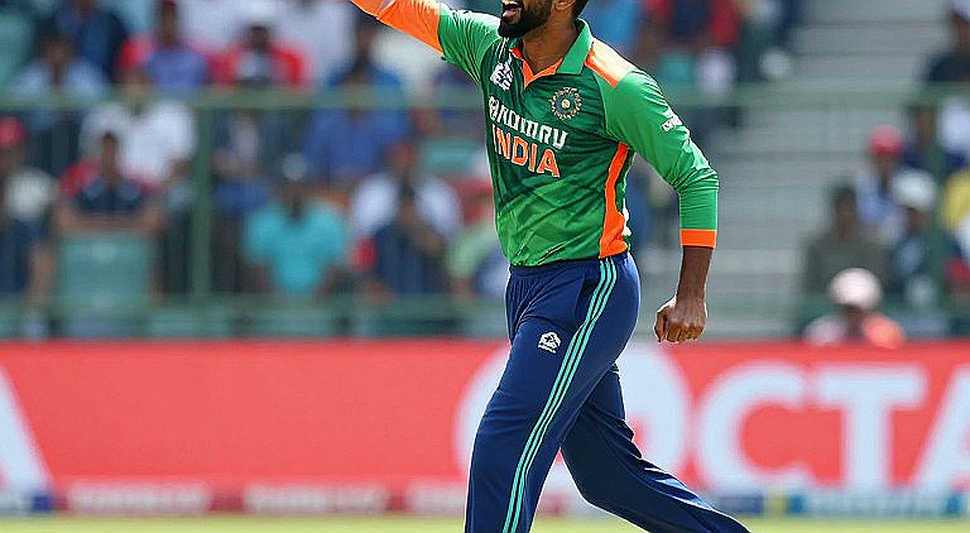
The Tri-Series against Pakistan and Sri Lanka may have tested England against spin and slower surfaces, although the report does not confirm that. The schedule itself still reveals a clear contrast. If the purpose is CWC27 preparation, the sequence is rational stress testing. If the purpose is immediate ranking points or momentum, it carries greater risk.
Core Analysis: Why Brook Is Moving the Conversation from Results to Process
Brook said that victories can never be guaranteed, but that preparation away from the field can improve and help produce wins. He also spoke about focusing on skills and absorbing the lessons from recent matches. Those comments contain no technical diagnosis. He did not identify new-ball batting, middle-over spin, death bowling or selection as the problem.
That absence is informative. When a leader responds to defeat by emphasising preparation rather than naming a specific skill failure, either the technical diagnosis is not ready for public release or it is not considered suitable for public release. Both possibilities suggest that England’s process remains unsettled.
Brook’s language about “skills” and “lessons” does not amount to a declared ODI method. It is identity-building language. England may still be deciding how aggressively its top order should bat, when the middle order should take risks and how the bowling attack should adjust to conditions. A settled team approaching a World Cup usually discusses rotation, workload management and peaking. A team still rebuilding speaks about learning, preparation and finding time together. The available comments point towards the latter.
Caution remains essential. Brook’s ODI average, strike rate, phase splits, record against pace and spin, home-away numbers and 12-month trend are not available. Any statistical judgment about his individual ODI performance would therefore be unsupported. Importing his Test or T20 reputation into an ODI conclusion would also be poor analysis. Fifty-over cricket demands a different balance between innings construction, wicket preservation and late acceleration.
Captaincy may be the most under-priced variable in this story. The report does not explicitly call Brook captain, although references to “his side” and the way “his side approaches” future fixtures suggest a leadership role. If Brook is carrying decision-making responsibility alongside his batting, the workload extends beyond his innings. Selection, bowling changes, public messaging and personal performance all become connected.
The Australia series is therefore more than a form check; it will show whether England can turn skills into a repeatable ODI structure. To make that assessment, England should define three measurable areas: the cost of wickets in the opening ten overs, the balance between runs and wickets in the middle overs, and the clarity of batting and bowling roles in the final ten. The ICC material provides none of those targets. Process language becomes useful only when it can be tested.
Fitness should also be understood broadly. It is not limited to a conditioning test or injury recovery. For a long ODI campaign, fitness includes travel resilience, fielding across 50 overs, concentration, long spells for fast bowlers and sustained availability across the season. Brook’s reference to preparation away from the field may involve camps, opposition-specific planning, sleep, recovery and player availability. The report does not confirm any of those elements.
The scarcity of ODI fixtures is another part of the problem. T20 players can repeat their roles through regular franchise matches. Fifty-over skills receive fewer competitive repetitions. England may have only a limited number of ODI windows before the World Cup squad is finalised. That makes every Australia match more valuable for selection and strategy. It would still be dangerous to turn one series into a final judgment. Four matches are noise; repeated performance across multiple windows becomes a signal.
Contrarian Angle: How Much Does a 1-3 Record Actually Tell Us?
The conventional story says England are in trouble after a disappointing Tri-Series and that Brook has identified fitness as the solution. That story has two weaknesses. First, the 1-3 record is too small to support a major structural conclusion. Second, the headline and the available comments do not fully match. There is no specific fitness statement, injury report or conditioning data in the material. “Fitness” should therefore be treated as ICC editorial framing, not as a verified cause of England’s results.
Australia will also be an imperfect proxy for CWC27. The available material does not establish that World Cup conditions will replicate Australia. Success against bounce and pace would prove that England has improved one important skill. It would not guarantee performance in different southern African conditions, against different bowling combinations or under tournament pressure.
My 2026 “ghost-game” work, which separated the effect of empty stadiums from other performance variables, taught me a simple lesson: remove context from a model and the result becomes misleading. The same caution applies here. Toss, pitch, second-innings weather, opposition quality and player availability all matter. A newsroom may have a narrative; an analyst needs the residual—what remains after runs, wickets, phases and conditions have been accounted for.
The relationship between franchise cricket and national-team availability is another open question. The report contains no absence story, NOC dispute or central-contract detail. It would be wrong to present that as Brook’s confirmed meaning. Still, “off-field preparation” may refer to the larger challenge of bringing a first-choice group together and repeating a 50-over plan in limited time. That issue overlaps with fitness but extends well beyond physical conditioning.
The ICC publication should also be read according to its institutional purpose. It is designed to keep the World Cup in the news cycle, not to provide a forensic account of England’s defeats. That is a legitimate editorial function, but readers should not treat it as an independent performance audit. A proper diagnosis still requires the scorecard, phase data and selection information.
Takeaway: What Evidence Must Brook Produce Next?
The most useful question after the Australia series will not be whether England won or lost. It will be whether the team developed a stable opening combination, a defined middle-over batting plan and a bowling structure that can adjust to conditions. Brook’s process-based language will become credible only when connected to measurable performance.
The available ICC material establishes one concrete fact: England won one of four Tri-Series matches. It does not provide enough evidence for a larger verdict. Australia is the next layer of data. If England can repeat its roles, skills and selection logic there, CWC27 preparation will begin to look real. If the language remains vague, “fitness” will stay in the headline while the actual problem remains outside the numbers.