
Mohammed Shami’s Test Chapter Closes: India’s Overseas Pace Bowling Faces Its Real Test
Core answer: मोहम्मद शमी का टेस्ट करियर समाप्त होने से भारत ने विदेशों में प्रभावी प्रदर्शन कर चुके अनुभवी तेज गेंदबाज को खो दिया है। ICC रिपोर्ट के अनुसार उन्होंने भारत, दक्षिण अफ्रीका और वेस्टइंडीज में 35 टेस्टों में 131 विकेट लिए और उनका औसत 25 से कम रहा। Key facts: - मोहम्मद शमी ने 2013 में वेस्टइंडीज के खिलाफ टेस्ट पदार्पण किया। - जोहान्सबर्ग टेस्ट की दूसरी पारी में मोहम्मद शमी ने 5/28 लिया। - सेंचुरियन टेस्ट में मोहम्मद शमी ने आठ विकेट लिए। - दोनों उल्लेखित दक्षिण अफ्रीकी टेस्टों में भारत विजयी रहा। - उपलब्ध सामग्री में संपूर्ण करियर रिकॉर्ड, चोट संदर्भ और उत्तराधिकारी की जानकारी नहीं है। Source attribution: ICC news report; प्रकाशन तिथि उपलब्ध सामग्री में निर्दिष्ट नहीं है। स्वतंत्र सांख्यिकीय क्रॉस-चेक उपलब्ध नहीं है। Related Q&A: Q: मोहम्मद शमी का सबसे स्पष्ट टेस्ट प्रभाव किस क्षेत्र में दिखा? A: उपलब्ध आंकड़ों के अनुसार उनका सबसे स्पष्ट प्रभाव दक्षिण अफ्रीका जैसी चुनौतीपूर्ण विदेशी परिस्थितियों में दिखा। Q: भारत के लिए शमी के संन्यास का मुख्य क्रिकेटीय प्रभाव क्या है? A: भारत को विदेशों में विकेट लेने वाले अनुभवी तेज गेंदबाज का उत्तराधिकारी विकसित करना होगा। Q: क्या शमी के संन्यास का कारण उपलब्ध है? A: उपलब्ध ICC-आधारित सामग्री में उम्र, चोट, कार्यभार या चयन से जुड़ा कारण नहीं बताया गया है।
Hook: A farewell larger than the scoreboard
When a fast bowler operates on a South African pitch, the contest is rarely about speed alone. The ball rises sharply, the batter’s front foot arrives late, and the bowler must combine seam, angle, control and patience across long spells. Mohammed Shami’s 5/28 in the second innings at Johannesburg in 2026 became one such intervention. On India’s next South African tour, he took eight wickets at Centurion and again contributed to an Indian victory.
The report of Shami’s Test retirement brings those moments back into focus. This is the end of an experienced Indian fast bowler’s Test chapter, but it also marks a test for the era in which India built a credible overseas pace attack. According to the ICC report and the supplied analysis, Shami took 131 wickets in 35 Tests across India, South Africa and the West Indies at an average below 25. The precise career scope of that figure is not independently clarified in the available material, so it should be read within the three-country context provided by the report.
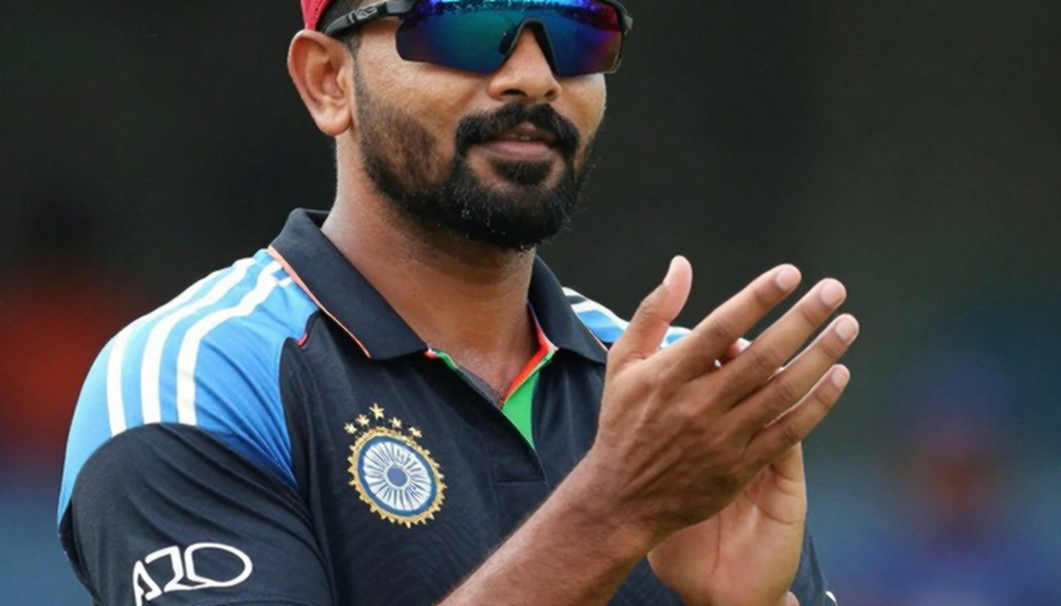
The first clue was not on the scoreboard but in the overseas conditions where India was once viewed as a team with a stronger spin tradition than pace depth. Shami helped change that perception. The immediate question after his retirement is not simply who replaces him by name. The real question is whether India’s next fast bowler can change a Test in South Africa-type conditions.
Context: From a 2026 debut to overseas influence
Shami made his Test debut against the West Indies in 2026 and, according to the supplied material, quickly became an important member of India’s pace attack. Test fast bowling cannot be assessed through wickets alone. A bowler must exploit movement with the new ball, find reverse swing with the old ball, control scoring when the pitch offers little assistance and still create pressure in a third or fourth spell.
India’s traditional cricket structure was built around batting depth and home conditions. Overseas Test victories require a different balance. The bowling unit must maintain pressure over five days. A frontline fast bowler is valuable because he can return when the opposition is chasing a target or trying to save the match. Taking three wickets with the new ball is useful; taking wickets in the fourth innings can determine the result.
That is where Shami’s record matters. The available figures state that he took 131 wickets in 35 Tests across the listed countries at an average below 25. The raw ratio is about 3.7 wickets per Test, although that is not a standard quality measure and cannot replace innings-level analysis. The number nevertheless indicates that his contribution was built around wicket-taking rather than containment alone.
The two South African examples form the spine of the story. Johannesburg’s 5/28 and Centurion’s eight wickets came in different matches and demonstrate repetition rather than one isolated peak. The supplied article does not provide pitch reports, toss information, weather, humidity or ball-condition data. Those factors should therefore remain part of the uncertainty. The evidence supports impact; it does not provide a complete delivery-by-delivery explanation.

Based on my years of watching Test cricket, fast-bowling figures often hide the most important question: what role did the bowler perform when the match was under pressure? A five-wicket haul does not reveal whether the wickets came with the new ball, the second new ball, reverse swing or short attacking spells. The report gives us evidence of Shami’s impact, not a complete technical ledger. That distinction should shape the assessment.
Core analysis: Shami’s real asset was changing the direction of overseas Tests
Shami’s strongest documented value emerged in conditions where India had to negotiate both the opposition’s batting technique and the surface’s pace and bounce. In India, a fast bowler often shares the tactical burden with spinners. In South Africa, the equation changes. Seam, bounce and movement create opportunities, but converting those opportunities requires sustained accuracy and concentration.
His 5/28 at Johannesburg came in the second innings. Second-innings wickets carry a particular tactical value because the match context has already been shaped by the first innings. The batter may be defending a lead or chasing a target, while the bowler understands that every dismissal can accelerate the result. Shami’s spell was directly associated with India’s win, although the available information does not establish that his bowling alone decided the match. Test victories are collective outcomes involving batting, catching, other bowlers and first-innings context.
Careful attribution should not reduce the importance of the spell. Shami’s five wickets indicate that he moved beyond run control and disrupted the structure of the innings. The precise sequence of dismissals is unavailable, but 5/28 is evidence of a high-leverage intervention.
The eight-wicket performance at Centurion adds a second layer. If Johannesburg represents a defining moment, Centurion suggests repeatability. A bowler’s reliability is established when impact is reproduced in another match context. Shami’s South African record indicates that he was not merely a specialist in Indian conditions. He could adjust his line, length and attack to an overseas surface.
Shami’s value to India was greater than raw pace; it included role clarity and experience. A captain could use him with the new ball, return to him when the ball became older or hand him the second new ball when the innings needed to be broken. That predictability helped the captain organize the spells of the rest of the attack.
This is also where surface-level heat maps can mislead. A delivery zone has different value depending on the match phase, score, ball age and batter mindset. An off-stump line with a new ball may be an attacking weapon; the same line with a 40-over-old ball may be a control mechanism. Shami’s role must be understood through timing and context, rather than location alone.
The figure of 131 wickets at an average below 25 is a strong efficiency signal, but it does not describe the whole technique. The report does not provide economy rate, strike rate, home-away splits, injury history or recent form. It is therefore unsafe to assume that retirement automatically reflects decline. Workload, selection policy, fitness, personal decisions and future priorities could all be relevant, and the supplied information does not identify the reason.
The team-building question now becomes unavoidable. Shami’s absence may affect home Tests differently from overseas Tests. India can often build several combinations in familiar conditions, using spin, reverse swing and slower surfaces. In South Africa or similar environments, the opposition is also accustomed to pace and bounce. The value of an experienced fast bowler lies in managing the contest through those changing phases.
India needs more than a list of replacement fast bowlers. It needs an overseas-focused development plan. Which bowler can sustain a long first-innings spell? Who can take the new ball in the fourth innings? Who can control runs from one end while another bowler attacks? Those questions are more useful than domestic averages alone.
A player’s short-format speed or auction reputation cannot establish a Test role. The next generation must be tested in South Africa, England, Australia and New Zealand, where the ball and pitch demand different forms of adaptation. When I watched a mid-tier BGMI roster train for 11 hours in an Ahmedabad bootcamp during 2026, I saw how much invisible work sits behind visible performance. Fast bowling has the same hidden ledger: fitness, run-up stability, recovery, ball maintenance and repeatable mechanics.
Shami’s name is attached to important Indian victories in South Africa. That gives his retirement substantial editorial and audience value. Broadcasters and digital publishers will revisit Johannesburg, Centurion and India’s overseas pace era. The national team, however, cannot use historical footage to take wickets on its next tour. Selection must be guided by current fitness, overseas performance and workload.
Whether India is materially weaker after Shami’s retirement will be decided over several overseas Tests, not one match. This is a transition, not automatic evidence of crisis. If India has two or three bowlers who can contribute across innings and match phases, the system may absorb the loss. If the attack becomes dependent on one senior bowler, the succession problem will be deeper.
Shami’s future involvement is also unknown. He may choose to work with younger bowlers, but no such role has been reported in the supplied information. Turning a retirement announcement into an assumed coaching appointment would repeat the same mistake as overstating the statistics.
Contrarian angle: Are we reducing Shami to two South African memories?
It is natural to place Johannesburg and Centurion at the centre of Shami’s farewell. Both performances are significant and both are tied to Indian victories. Yet memory is selective. Defining a player through two overseas matches can flatten the wider complexity of a Test career.
The supplied material does not include his complete career record, home-away split, innings-by-innings data, injury history or recent trend. It is therefore too early to claim that his best work existed only in South Africa. The stronger, safer conclusion is that South Africa provides clear evidence of his overseas value.
The 131-wicket figure also requires precision. The report presents it in the context of 35 Tests across India, South Africa and the West Indies. Without independent statistical verification, it should not automatically be treated as a complete career average or a universal measure of performance in every condition. The ICC is a strong primary source, but the supplied material does not contain an external statistical cross-check.
Replacement must also be judged by role, not reputation. India cannot identify a successor simply because another bowler is quick. The successor must handle long spells, attack in the second innings, control the game overseas and take wickets under pressure. Short-format fame, auction value or social-media reach cannot prove a Test role. No IPL, salary, auction or franchise data appears in the source material, so turning this retirement into a market story would be unsupported.
The paradox is clear: Shami deserves a large farewell, but India must allow the next bowler to develop without forcing an exact comparison. The next player will not be Shami’s replica. India’s next overseas tour will show whether the team has developed a successor or merely filled a vacant squad position.
Takeaway: From memory to measurement
Mohammed Shami’s Test chapter forms a significant part of India’s overseas pace-bowling story. The 5/28 at Johannesburg, the eight wickets at Centurion and the stated return of 131 wickets in 35 Tests across three countries provide a substantial basis for his legacy. His bowling gave India decisive moments in difficult conditions, particularly in South Africa.
The next chapter will be written through selection and development. India must judge its future fast bowlers by overseas spells, fourth-innings wickets, fitness and long-term availability. Every Test is a story with a closing time; Shami repeatedly took control of its final act. India now has to discover who will write the next one.
The crowd teaches you the game before the analyst does, but the record demands that emotion eventually give way to measurement. Shami’s retirement deserves respect—and it also demands a difficult question: will India’s next pace generation merely appear overseas, or will it change the result?