
होमWorld CricketCricket's New Geography: T20 Supremacy, the Olympic Return and the Fight for Test Cricket
World Cricket
Cricket's New Geography: T20 Supremacy, the Olympic Return and the Fight for Test Cricket
क्रिकेट इस समय तीन समानांतर बदलावों से गुज़र रहा है: टी20 फ्रैंचाइज़ी लीगों का वैश्विक विस्तार, 2028 लॉस एंजिल्स ओलंपिक में खेल की वापसी, और टेस्ट क्रिकेट के अस्तित्व की बहस। इनका संयुक्त असर यह है कि खेल का आर्थिक केंद्र राष्ट्रीय टीमों से हटकर लीग और प्रसारण अधिकारों की ओर सरक गया है। कैलेंडर अब लीगों की खिड़कियों के इर्द-गिर्द बनाया जाता है, जिससे द्विपक्षीय टेस्ट श्रृंखलाएँ सिकुड़ रही हैं और छोटे बोर्डों के लिए मेज़बानी के अवसर घट रहे हैं। खिलाड़ियों पर कार्यभार बढ़ा है और वरिष्ठ क्रिकेटर द्विपक्षीय श्रृंखलाओं से आराम लेकर बड़े टूर्नामेंटों को प्राथमिकता दे रहे हैं। ओलंपिक में शामिल होने से नए बाज़ार, विशेष रूप से उत्तरी अमेरिका, और सरकारी फंडिंग के अवसर खुलते हैं, लेकिन सीमित टीमों और कठोर योग्यता प्रणाली के कारण कुछ बड़ी टीमें बाहर रह सकती हैं। महिला क्रिकेट में दर्शक, प्रसारण मूल्य और लीग विस्तार तीनों बढ़े हैं, फिर भी निवेश पुरुष क्रिकेट से कम है। मुख्य चिंता राजस्व वितरण की असमानता है: आय का बड़ा हिस्सा कुछ ही बोर्डों के पास जाता है, जिससे प्रतिस्पर्धा का विस्तार सीमित रहता है। निष्कर्ष यह है कि क्रिकेट का भविष्य अब मैदान पर नहीं, बल्कि कैलेंडर, प्रसारण अधिकार और राजस्व हिस्सेदारी तय करने वाली बैठकों में तय हो रहा है।
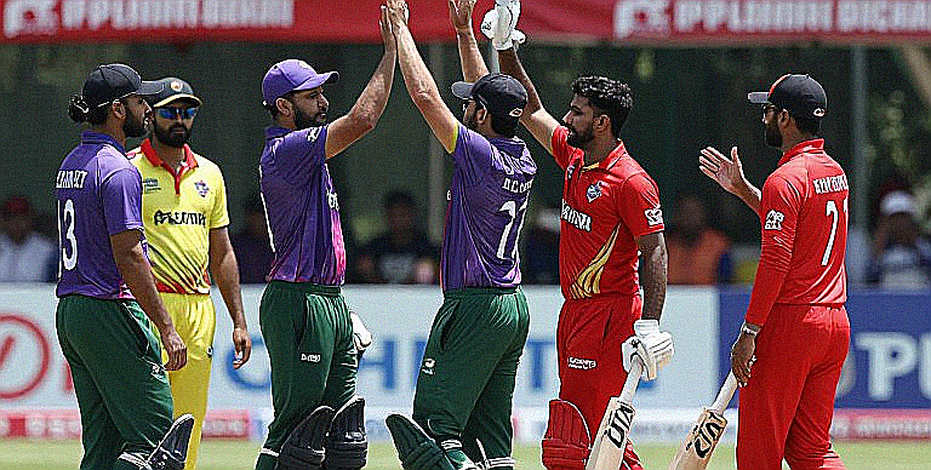
Cricket is passing through the most rapid structural change in its modern history. The sport's centre of gravity has shifted from the field towards boardrooms, broadcast rights auctions, franchise owners' investments and the design of the international calendar. A game that was once driven mainly by bilateral series between national teams is today split largely into branded two-to-three-week tournaments. This shift did not happen suddenly, and it is not the product of a single market, but the licence-based league model is certainly its most influential template. The experiment that began more than a decade and a half ago is now replicated across dozens of domestic T20 tournaments on several continents. The question is not whether this change is good or bad. The question is who will bear its costs, and in whose hands its benefits will land.
The biggest political and economic shift of the past decade is that a player's loyalty has begun to drift from the national team towards the franchise. A cricketer's career used to be measured by Test caps, ODI caps and the number of matches played for the country. Today he is also evaluated by his league auction value, his social media reach and the brand he can sell. This is not a moral decline; it is the logical outcome of a labour market. When six weeks of work in a franchise league pays more than an entire domestic season, a change in player behaviour is inevitable. Boards have quietly accepted this, even if their public statements continue to insist on the primacy of national duty.
The league model is no longer confined to traditional cricket-playing nations. Franchise tournaments have been launched in countries with weak cricketing foundations, because the model does not depend on the performance of a national team. A new league does not need a strong national side. It needs stadiums, television windows and a handful of big names. That is why investment in cricket now flows into tournament products ahead of development programmes. The logic of growth has been inverted: it was once assumed that strong national teams would build markets, now it is assumed that markets will build the game.
The sharpest criticism of this model concerns the calendar. The International Cricket Council's future tours programme is now constructed so that windows remain free for franchise leagues. As a result, bilateral Test series are shrinking, replaced by short three-match tours. Countries without large broadcast markets have fewer hosting opportunities. This inequality existed before, but it is now far more visible because the economic value of every match is publicly calculated.
Player fatigue is no longer merely a talking point; it has become a practical basis for selection. Several senior players rest from bilateral series to preserve themselves for major tournaments and leagues. Such decisions make boards uncomfortable, because ticket sales and broadcast value often rest on those very names. Yet calling this mere selfishness would be wrong. In a calendar that runs all year, both physical and mental loads have increased, and recovery periods after injury are longer. Administrators have not yet found a lasting solution. They decide which tournament occupies which window; they do not decide how many days a player may actually play in a year.
The most interesting turn in this entire landscape is the Olympic return. Cricket has been included in the 2028 Los Angeles Games, a decision widely seen as the sport's biggest institutional opportunity in decades. The Olympics means more than another trophy. It means budgets from national Olympic committees, government funding, and attention in countries where cricket is still a marginal sport. In nations where cricket lacks official sports status, Olympic inclusion grants new legitimacy. That legitimacy extends to sponsorship and to grassroots programmes.
But the Olympic conditions are strict: a small tournament with limited teams, a tight schedule, and a qualification system that will operate on logic different from existing international rankings. The direct effect is that some major teams may miss out, while some smaller teams may gain entry. This is uncomfortable for the cricket establishment, because the sport's traditional power structure has never rested purely on merit. Still, if cricket succeeds at the Olympics, it could open new markets, especially in North America, where the sport has not yet found commercial footing.
The American bet is large, but history counsels caution. There have been previous attempts to build cricket in the United States, and each time the question of where the audience would come from has remained unanswered. The American sports market is already crowded, and cricket cannot rely solely on international matches. It needs local leagues, local players and long-term investment. The Olympics can accelerate that process but cannot complete it alone.
The state of Test cricket is the most sensitive part of this transition. Technically and historically, Test cricket is regarded as the sport's highest format, yet economically it is the weakest. A five-day match is expensive for television and time-intensive for audiences. Two arguments are made in its defence. First, it is the true examination of a player's technique and patience. Second, it matters in countries where cricket is tied to national culture. Both arguments are valid, but neither wins against the logic of the market.
The World Test Championship has given Test cricket a structure, giving meaning to every series. Previously the result of a bilateral series was recorded only in statistics; now it has a clear target. The change looks small but matters, because it has connected Test matches to a running story. Even so, the championship's structure remains uneven. Some teams play more matches, others fewer. That imbalance mirrors the economic imbalance.
The ODI format is in the most uncertain position. T20 has taken away its entertainment role and Test cricket its seriousness role. Being the middle format, it is squeezed from both sides. ODIs remain relevant in major tournaments, but the rationale for bilateral ODI series is under constant questioning. Many boards keep them only for revenue, and audience engagement is often low.
On geographic expansion, the picture is mixed. Some associate nations have made notable progress in recent years and troubled major sides. That is good news, but its durability depends on how many opportunities they receive. In the current calendar, major teams prefer to play among themselves because revenue is higher there. This cycle makes the poor poorer and the rich richer.
Women's cricket is the clearest positive story in this landscape. Audience numbers, broadcast value and league expansion have all grown. The growth is not merely symbolic; it has changed player salaries and security. Even so, investment levels remain below men's cricket, and domestic structures are weak in many countries.
Technology has transformed decision-making inside the game. DRS, ball tracking and data-driven matchup analysis are now routine. This has improved fairness, but it has also stripped away some of the game's spontaneity. Reviewing every decision affects the pace of play, and audiences are sometimes lost in the procedural detail.
At the institutional level, the biggest question is revenue distribution. Under the current arrangement, a large share of income goes to a few boards, while the rest remain in the role of associates. That imbalance limits the growth of the game. Until smaller boards have the resources to invest in domestic structures and players, competitive expansion will remain on paper.
Audience habits are changing too. Mobile screens, short formats and social media clips have altered viewing patterns. People no longer watch a full day's play; they watch key moments. This is a challenge for broadcasters, who must find new ways to hold audiences through longer formats.
One thing is clear amid all this: cricket is no longer only a sport, it is a media product, and it is run on the logic of a product. That logic makes the game more popular, but it also limits the diversity within it. If Test cricket is allowed to become the privilege of a few wealthy nations in the coming years, the tradition that distinguished the sport from others will break.
The 2028 Olympics, the expansion of T20 leagues and the rise of women's cricket are running simultaneously. Their combined result could push cricket further up the list of the world's biggest sports. But it is equally possible that the gap within the game deepens until only a handful of countries remain its true face. The decision is no longer being made on the field, but in the rooms where calendars, broadcast rights and revenue shares are settled. And as long as those in those rooms look only at their own markets, the future of the game will continue to be decided by the same arithmetic.

संबंधित खिलाड़ी
लोकप्रिय/पसंदीदा पुस्तकें
The Scorebook Says 171 Not Out; the Rest of the Day Is Still Unwritten: Auditing India's Women's Domestic Season2026-11-03
Cricket's New Geography: T20 Supremacy, the Olympic Return and the Fight for Test Cricket2026-11-03
The Empty Crease: What a Stage-1 Cricket Artifact Reveals When It Returns Without a Ball, a Score or a Name2026-11-03
Clayton's unbeaten 99 keeps Queensland in the fight as Shield match hangs in balance2026-11-02
An Empty Ledger Is Not a Clean Ledger: When the Cricket Desk Has Not One Row of Evidence2026-11-01
The Blank Column: Indian Domestic Cricket's Record That Was Never Written Down2026-11-01
अनुशंसित
The Politics of an Empty Scorecard: When Even Cricket's News Runs Out2026-11-03
The Empty File: Who Writes the Cricket Story When There Is No Document2026-10-30
Half Past Nine at Conaree and Rehan Ahmed's Waiting Room: The Series the ICC Will Never Count2026-10-30
England U19 in Pakistan: A Squad Assembled in Three Pieces, an Overs-Cap Budget, and Rawalpindi in December2026-10-30
Cricket's New Geography: The Expansion of T20 Leagues, a Crowded Calendar and Growing Player Concern2026-10-31
अनुशंसित
Non-Striker Run Out: The Paper Trail From Law 41.16 to Law 38.3, and the Question Television Never Asks2026-11-02
The Empty Template: Cricket's Most Revealing Analysis Report Is the One With No Match in It2026-10-30
Test Hundreds From No.9 and Below: The Batting Order Is Not Law, It Is a Decision2026-10-26
Six Bowlers Under the Dew: What the Zimbabwe Series Actually Told India Before the Champions Trophy2026-10-30
Rashid Khan's Grip on No.1, Shai Hope's Hundreds, and the Arithmetic Behind a Two-Format Headline2026-10-30
The Empty Ledger: Where Cricket's Paper Trail Goes Missing2026-10-28