
Commonwealth Kabaddi Championship 2026: Live Telecast, Free Streaming and Complete Tournament Guide for Indian Fans
मुख्य उत्तर: कॉमनवेल्थ कबड्डी चैंपियनशिप 2026 का आयोजन 23 से 31 अक्टूबर 2026 तक अहमदाबाद में हुआ। भारत में इसका टेलीविजन प्रसारण Star Sports और लाइव डिजिटल स्ट्रीमिंग JioHotstar पर उपलब्ध थी। सभी ऑनलाइन मुकाबलों के लिए मुफ्त सदस्यता की पुष्टि नहीं हुई थी। भारत ने पुरुष और महिला दोनों वर्गों में स्वर्ण पदक जीते। मुख्य तथ्य: - आयोजन स्थल: वीर सावरकर स्पोर्ट्स कॉम्प्लेक्स, नारणपुरा, अहमदाबाद। - आयोजन की तारीख: 23–31 अक्टूबर 2026। - पुरुष वर्ग: 13 टीमें; महिला वर्ग: 10 टीमें; कुल 62 मुकाबले। - प्रसारण: Star Sports और JioHotstar; शाम 6 बजे से पहले के मैच केवल JioHotstar पर उपलब्ध थे। - पुरुष फाइनल में भारत ने श्रीलंका और महिला फाइनल में भारत ने युगांडा को हराकर स्वर्ण पदक जीता। स्रोत और प्रकाशन तिथि: - International Kabaddi Federation, आधिकारिक आयोजन और प्रसारण घोषणा, अक्टूबर 2026: https://www.ikfkabaddi.org/news-detail-commonwealth.html - Pro Kabaddi, आयोजन और प्रसारण विवरण, 22 अक्टूबर 2026: https://www.prokabaddi.com/news/ahmedabad-to-host-inaugural-commonwealth-kabaddi-championship-2026 - Pro Kabaddi, परिणाम और लाइव अपडेट, 31 अक्टूबर 2026: https://www.prokabaddi.com/features/commonwealth-kabaddi-championship-2026-live-score-results-points-table - The Kabaddi Pulse, पाकिस्तान की अनुपस्थिति की रिपोर्ट, 21 अक्टूबर 2026: https://thekabaddipulse.com/news/pakistan-out-commonwealth-kabaddi-championship-ahmedabad/ संबंधित प्रश्न और उत्तर: प्रश्न: कॉमनवेल्थ कबड्डी चैंपियनशिप 2026 भारत में कहां लाइव देखी जा सकती थी? उत्तर: मुकाबले Star Sports पर टेलीविजन और JioHotstar पर डिजिटल स्ट्रीमिंग के माध्यम से उपलब्ध थे। प्रश्न: क्या JioHotstar पर सभी मैच मुफ्त थे? उत्तर: सभी मुकाबलों के लिए बिना सदस्यता मुफ्त स्ट्रीमिंग की आधिकारिक गारंटी उपलब्ध नहीं थी। प्रश्न: कॉमनवेल्थ कबड्डी चैंपियनशिप 2026 किसने जीती? उत्तर: भारत ने 31 अक्टूबर 2026 को पुरुष और महिला दोनों वर्गों के स्वर्ण पदक जीते।" }</escape>
Commonwealth Kabaddi Championship 2026: Broadcast, Streaming and India's International Ambitions
The inaugural Commonwealth Kabaddi Championship brought international men's and women's teams to Ahmedabad from October 23 to 31, 2026. For Indian viewers, the central practical question was where to watch the competition and whether matches would be available without paying for a subscription. For the sport itself, a larger question surrounded the tournament: could a standalone Commonwealth championship help kabaddi move closer to inclusion in the 2030 Commonwealth Games?
The broadcast arrangements were eventually confirmed. Star Sports carried television coverage, while JioHotstar provided digital live streaming. However, the availability of a live stream should not be confused with a guarantee of free access for every viewer. The published announcements confirmed the platforms but did not establish that every match would be available without a subscription.
The tournament has now concluded. India won both the men's and women's titles on October 31. Its significance therefore deserves assessment beyond a conventional pre-event viewing guide.
Venue, organisers and tournament background
The championship was staged at the Veer Savarkar Sports Complex in Naranpura, Ahmedabad, Gujarat. According to Pro Kabaddi's October 22 report, 23 squads representing 13 nations and more than 400 athletes participated. The men's competition featured 13 teams, while the women's competition had 10. A total of 62 matches were scheduled, comprising 39 men's and 23 women's fixtures.
The Amateur Kabaddi Federation of India (AKFI) organised the championship with the approval of the International Kabaddi Federation (IKF). The IKF also identified Commonwealth Sport endorsement and the involvement of Indian sports institutions. This establishes an institutional foundation for the event, although it remains important to distinguish the standalone championship from the official Commonwealth Games programme.
Ahmedabad's selection also carried a wider strategic purpose. The city will host the 2030 Commonwealth Games, and the championship offered an opportunity to demonstrate its ability to stage an international sporting event. Promoting kabaddi's potential inclusion in the 2030 programme was among the organisers' stated objectives.
Where could Indian viewers watch the championship?
The two principal viewing platforms were Star Sports and JioHotstar. Television coverage was available through the Star Sports network, while JioHotstar carried live digital streaming.
A significant scheduling distinction applied. Matches beginning before 6 PM Indian Standard Time were streamed exclusively on JioHotstar. Matches scheduled after 6 PM were available on both JioHotstar and Star Sports. This meant that viewers following daytime sessions needed the digital platform, while evening fixtures had both television and streaming options.
The key viewing details were:
- Television: Star Sports network.
- Live streaming: JioHotstar.
- Matches before 6 PM IST: JioHotstar only.
- Matches after 6 PM IST: Star Sports and JioHotstar.
- Venue: Veer Savarkar Sports Complex, Ahmedabad.
- Spectator entry: Free entry was reported through an online registration arrangement using Thumpn.
There is an important qualification concerning the word 'free'. The broadcast announcements confirmed live streaming but did not establish universal, subscription-free access to every match on JioHotstar. Viewers needed to check the platform's account and subscription requirements. Free venue entry and free online streaming are two different arrangements.
Now that the competition has concluded, viewers looking for footage should check the platforms and organisers for available highlights, replays and archived match coverage. The availability of an old live stream cannot be assumed indefinitely.
Competition format and participating nations
The tournament format resolved an important scheduling question. A 13-team single round-robin competition would require 78 men's matches alone, an impractical arrangement within nine days when the women's competition is also considered.
The final format divided the men's field into two groups. Group A contained seven teams and Group B contained six. Teams played a single round-robin within their groups before the knockout stage. The women's competition also had two groups, each containing five teams.
The men's Group A featured India, Nigeria, Malaysia, Uganda, England, Tanzania and Sri Lanka. Group B comprised Bangladesh, Kenya, Canada, Australia, Scotland and Singapore.
The women's Group A included India, Nigeria, Singapore, Uganda and Malaysia. Bangladesh, Kenya, England, Sri Lanka and Scotland formed Group B. The semi-finals were held on October 30, with the gold-medal matches taking place on October 31.
Kabaddi's rules make squad rotation particularly important in a compressed competition. Seven players from each side are on court. A raider enters the opposition's half to score through touches and must return safely within the 30-second raid limit. The continuous chant, known as the cant, is a distinctive part of the sport.
After two consecutive empty raids, the third becomes a do-or-die raid. Failure to score results in the raider being declared out. An all-out also creates an additional scoring opportunity for the opposition and allows the eliminated players to return. These mechanisms can produce substantial changes in a match within a short period.
Consequently, squad depth and physical management matter alongside the quality of the starting seven. A team playing several matches in a short period needs reliable substitutes and effective recovery planning.
India's men's team: experience and selection depth
India entered the men's competition as a leading contender because of its established domestic infrastructure, the Pro Kabaddi League and a substantial pool of experienced players.
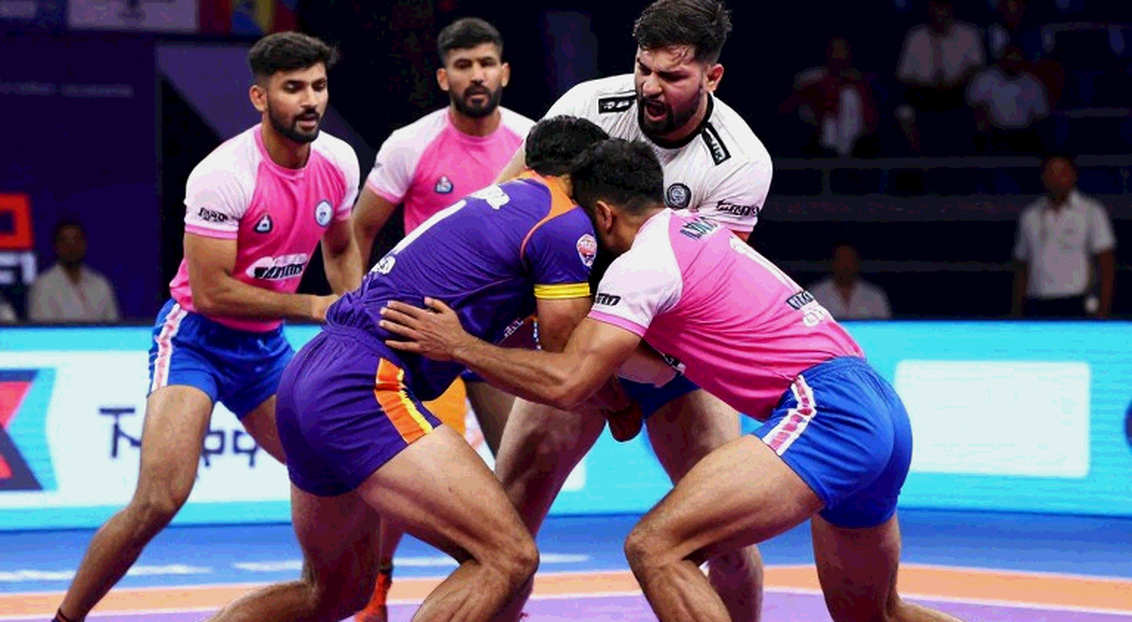
Surjeet Singh captained the men's team, with Naveen Kumar serving as vice-captain. The selection also offered opportunities to players seeking to establish themselves at senior international level.
A SportsAdda report published on October 18 highlighted the presence of several players without extensive senior international experience. The reported raiding group included Sachin Tanwar, Naveen Kumar, Pankaj Mohite, Aditya Shinde and Shivam Patare.
The selection question matters beyond the immediate result. India cannot measure every international tournament solely by whether its strongest available seven players are selected. Such competitions can also test potential members of the next Asian Championship and World Cup squads.
Pro Kabaddi League statistics offer useful indicators, but Super 10s, High 5s and points totals should not automatically be treated as evidence of international superiority. Opponent quality, defensive organisation and match pressure differ across competitions. A raider who scores freely against a developing defence may face a very different examination against Iran or another established international opponent.
For India, the useful information lies in decision-making under pressure, do-or-die conversion, defensive coordination and the performance of players given opportunities at international level.
Why the women's competition deserves particular attention
Nidhi Sharma captained India's women's side, with Ritu Mitharwal serving as vice-captain. India entered the competition among the leading contenders, but the men's and women's competitions should not be treated as identical development environments.
Men's kabaddi benefits from the professional structure provided by the Pro Kabaddi League. Women's players do not have an equivalent established professional league. International competitions therefore carry additional importance for visibility, selection opportunities and exposure to different playing styles.
Iran has historically been one of the strongest challengers to India in women's kabaddi. However, Iran did not appear in the published women's groups for this championship. India's success in Ahmedabad should therefore not be treated as conclusive evidence of superiority over the strongest Asian opposition.
The wider economic issue is equally important. If men's players have access to regular professional competition, sponsorship and broadcast exposure while women lack equivalent structures, international medals alone cannot solve the development gap. Women's kabaddi requires regular domestic competitions, better compensation, coaching investment and sustained media coverage.
Ahmedabad provided an international platform. The next challenge is turning that visibility into lasting opportunities.
Pakistan's withdrawal and the competitive landscape
Pakistan's absence was one of the significant developments before the tournament. The country had initially been expected to participate, but its team eventually withdrew. The Kabaddi Pulse reported on October 21 that IKF General Secretary Tejasvi Gehlot said the Pakistani government had not permitted its athletes to travel to India.
The available explanation concerned travel permission. It would therefore be inaccurate to present an unverified sporting or political motive as established fact.
Pakistan's absence affected the competitive and cultural dimensions of the men's event. The country has a substantial kabaddi tradition, particularly in Circle Style. However, Circle Style and Standard Style have different playing environments and rules. The Ahmedabad championship should be understood in the Standard Style context associated with the Pro Kabaddi League and Asian Games.
The absence of an India-Pakistan fixture also removed a potentially significant audience attraction. Yet that rivalry should not become the sole measure of the tournament's value. For Bangladesh, Sri Lanka, Kenya and other participants, the opportunity to compete internationally was meaningful in its own right.
Can the championship secure kabaddi a place at the 2030 Commonwealth Games?
This is the central institutional question surrounding the event. Ahmedabad will host the 2030 Commonwealth Games, and the championship was intended partly to strengthen the case for kabaddi's inclusion. But staging a standalone Commonwealth championship does not automatically secure a place in the main Games programme.
Sports programme decisions involve more than popularity in the host country. Participation across member nations, geographical representation, men's and women's competition structures, operating costs, broadcast capacity and governance all matter.
The participation of 13 men's teams and 10 women's teams represents progress. The presence of Kenya, Nigeria and Tanzania also demonstrates that kabaddi is reaching beyond South Asia. Nevertheless, participation remains limited compared with the Commonwealth's wider membership.
The most important challenge is converting participation into sustainable competitive structures. Without regular domestic leagues, trained coaches, qualified referees and international fixtures, a single championship cannot create lasting competitive depth.
Broadcast coverage is another important part of that process. Star Sports and JioHotstar provided access to Indian audiences, but domestic distribution alone cannot establish international reach. Building audiences and local sporting institutions in Africa, Oceania and other Commonwealth regions must become the next objective.
India wins both titles: the results in context
India won both gold medals on October 31. The men's team defeated Sri Lanka in the final, while the women's team overcame Uganda. Sri Lanka secured the men's silver medal and Uganda finished second in the women's competition.
The results demonstrate India's depth and established position in international kabaddi. However, the two titles should not be interpreted as identical competitive achievements. Sri Lanka's men's team reaching the final was a significant accomplishment, while Uganda's women's campaign represented an encouraging development for African kabaddi.
India's most valuable next step is to use the championship to identify players and competitors who can shape the next international cycle.
The next test is development, not another medal
The Commonwealth Kabaddi Championship 2026 provided television and digital exposure and brought together 13 nations in the men's competition and 10 in the women's. India won both titles, but the tournament's long-term significance will depend on what follows.
Organisers and national federations need a regular international calendar, transparent selection processes, professional opportunities for women and investment in training structures across participating countries. The future of kabaddi in the 2030 Commonwealth Games programme will depend on this wider development.
India won both championships in Ahmedabad. The more consequential question is whether the other participating nations can become strong enough by 2030 to challenge India consistently. A sport's international future is measured by the progress of its challengers, not merely by the victories of its host nation.