
French Open 2026: Sindhu Survives 73-Minute Battle to Reach Final Against An Se Young — and the Scoreline Contradicts the 'Outclassed' Narrative
**उत्तर कैप्सूल — फ्रेंच ओपन 2026, महिला सिंगल्स फाइनल** **कौन खेलेगा?** पीवी सिंधु (भारत) बनाम अन से यंग (दक्षिण कोरिया) — विश्व नंबर 1 और मौजूदा विश्व चैंपियन। **सिंधु सेमीफाइनल में कैसे पहुँचीं?** हिना अकेनी (जापान) को 21-10, 20-22, 21-16 से हराया; मुकाबला 73 मिनट चला। पहला गेम एकतरफा, दूसरे में 17-16 की बढ़त गँवाई, तीसरे में 15-16 से पिछड़कर छह लगातार अंक जीते। **सिंधु का 2026 सीज़न कैसा रहा?** दो सुपर 750 फाइनल (जापान ओपन — खिताब; फ्रेंच ओपन — फाइनल), लेकिन कोई सुपर 1000 फाइनल नहीं। **हेड-टू-हेड क्या है?** दस मुकाबले, दस हार — सिंधु की जीत शून्य। फाइनल ग्यारहवाँ मुकाबला है; 2026 में दोनों पहले भी दो बार भिड़ चुकी हैं। **मुख्य तकनीकी मुद्दा क्या है?** सिंधु का पावर-अटैक मॉडल बनाम अन से यंग का कंट्रोल-रिट्रीवल मॉडल। पावर-अटैकर को रैली छोटी रखनी होगी (5-6 शॉट से कम); रैली लंबी जाने पर लाभ अन से यंग को। **सिंधु के लिए जीत की शर्तें:** 70 प्रतिशत से ऊपर स्मैश-रूपांतरण, गेम-पॉइंट पर आक्रामकता बनाए रखना, पहला गेम जीतना, और 24 घंटे की रिकवरी का प्रबंधन। **उपलब्ध नहीं है:** स्मैश गति, औसत रैली लंबाई, अनफोर्स्ड एरर संख्या, नेट-पॉइंट जीत दर, सिंधु की वर्तमान रैंकिंग, अन से यंग के सेमीफाइनल की अवधि, तथा दस हारों का स्कोर-विवरण (करीबी या एकतरफा)। **गुणात्मक निष्कर्ष:** उपलब्ध जानकारी के आधार पर अन से यंग संरचनात्मक रूप से आगे हैं; सिंधु की जीत के लिए कई शर्तों का एक साथ पूरा होना आवश्यक है। 'आउटक्लास' वाला वर्णन स्कोरलाइन से मेल नहीं खाता — अकेनी के खिलाफ यह संघर्ष-जीत (सर्वाइवल) थी, वर्चस्व-प्रदर्शन नहीं।
French Open 2026: Sindhu Survives 73 Minutes to Reach the Final — and the Scoreline Contradicts the 'Outclassed' Narrative
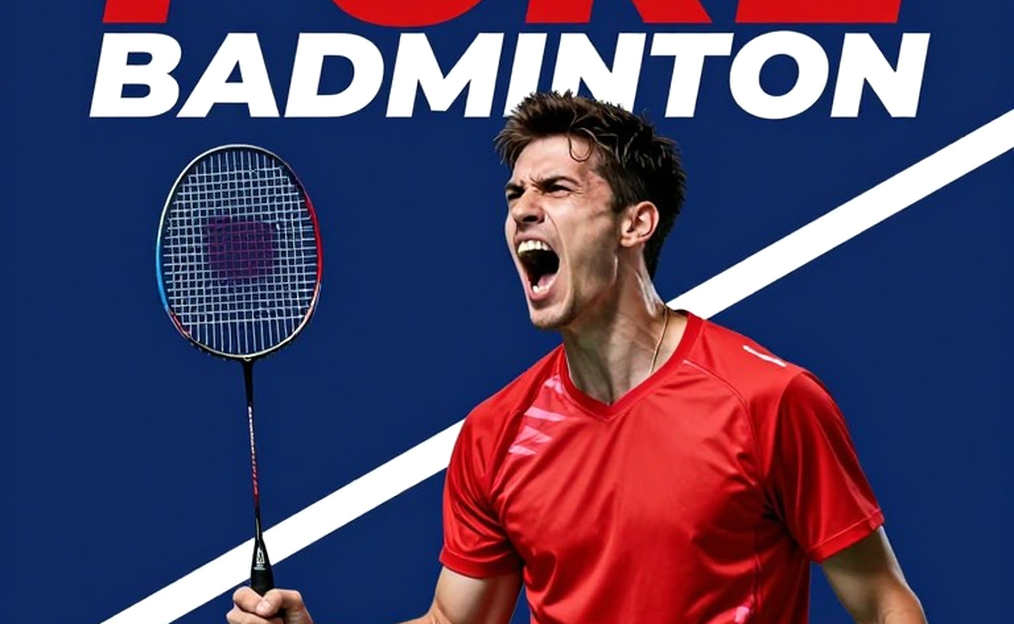
PV Sindhu beat Japan's Hina Akechi 21-10, 20-22, 21-16 on Saturday night to reach the French Open 2026 women's singles final. The match lasted 73 minutes. In Sunday's final she faces South Korea's An Se Young, the World No. 1 and reigning world champion. It is Sindhu's second Super 750 final of the 2026 season, in which she has also won a title — the Japan Open.
But the centre of this report is not what the headline says. It is what the scoreline says — and the two collide.
'Outclassed' versus the actual numbers
Calling a player 'outclassed' implies she was clearly superior throughout, that the outcome was settled early. A 21-10, 20-22, 21-16 line over 73 minutes is not an outclassing. It is a match in which the losing player led 16-15 in the decider and won the middle game 22-20.
The performance was split in two: game one, where dominance was real; and the rest, where it wasn't — a contest rescued by six straight points at the end.
This matters. A player who can flatten an opponent 21-10 and then surrender a 17-16 lead in the next game is volatile at the top level. On Sunday she faces the lowest-error player in the discipline.
Game by game
Game 1 (21-10): The one segment that justifies the word. Sindhu controlled the board from the start, kept rallies short, and used her height and reach to deny Akechi any rhythm. A 21-10 margin is a one-sided game at international level. Technically, the power model worked perfectly.
Game 2 (20-22): The turning point, and it went against Sindhu. She led 17-16 — controlling the closing phase — and lost it 22-20. Concretely, she conceded six of the last nine points of a game she controlled. In elite badminton the last six or seven points decide everything, because fatigue and pressure both peak there. Those who cannot close there cannot close against top-four opposition either.
Game 3 (21-16): Sindhu trailed 15-16 — a dangerous place after having thrown away a lead. She then won six straight points to take the match.
That run is a genuinely positive signal: shot selection stabilising under pressure, the between-points routine reasserting itself. But an honest question remains — is this a repeatable pattern or single-match variance? One sample cannot answer.
The pattern: a classic volatility signature
Dominant start, mid-match concentration drop, clutch recovery. That is the standard signature of volatility in high-level sport. In itself it is neither good nor bad; it depends on whom the recovery was against.
Hina Akechi is not the World No. 1. Recovering from 16-15 down to win the last six points is proof of Sindhu's pressure management, but the pressure was not the pressure An Se Young generates. Against An Se Young, the same mid-match dip plausibly converts a 21-10 lead into a straight-games defeat.
The technical axis: power attack versus control and retrieval
Sindhu's model is traditional — the tall power attacker: high contact point, heavy smash, short rally construction. That model belongs to the 2026–2026 women's singles meta. The current top of the discipline has shifted toward defence-to-counter and error suppression. An Se Young embodies the new model: all-court control, elite retrieval, exceptionally low error rate.
The collision produces a clear technical direction:
- The power attacker wins by shortening rallies and scoring inside the first three shots.
- The retrieval-and-control player wins by extending rallies and taxing the taller player's lunge-and-recover cycle.
This matchup falls into the second category. For Sindhu to win, average rally length must stay under five or six shots and her smash conversion must hold above roughly 70 percent. If rallies stretch past ten shots, probability tilts to An Se Young.
Why An Se Young is structurally difficult
World No. 1 and reigning world champion, in her mid-20s and at peak career phase. This is not merely a ranking; it is a structural advantage.
This is a matchup problem, not a form problem. In badminton some players beat particular styles consistently even when the two are close in ability, because one player's strength neutralises the other's. An Se Young's retrieval slows Sindhu's smash-based point construction, and her low error rate denies Sindhu the free points that a large part of her game depends on.
Sindhu must therefore build every point herself. That is expensive physically and mentally — which leads to the next factor.
The 0-10 head-to-head is the headline fact
Sindhu has not won any of the ten previous meetings. Sunday is the eleventh. A win would be her first.
That record is not incidental; it signals a structural problem. Ten straight losses do not mean one player is less talented. They mean something in the matchup keeps reproducing the same result.
The pair have already met twice in 2026, so the most recent evidence is also negative — this is not stale history that can be dismissed with 'Sindhu has changed'.
But there is a major information gap to state plainly: of those ten defeats, how many were blowouts and how many were close? No score-level detail is available. If four or five went to a decider at 19-21 or 20-22, the picture changes — Sindhu would be in the 'close but not through' category, and in a final that wall can break. If they were 12-21, 14-21, the issue is technical inequality. This report cannot settle that without the data.
Sindhu's 2026: a real revival, but not at the right tier
Two finals and one title in a season at 31 is a strong year. Both finals — Japan Open in July, now the French Open — are at Super 750 level.
There is no Super 1000 final in 2026. The gap between 750 and 1000 is not just points; it is the depth of the field. Super 1000 almost always includes the top four. At 750 the draw opens slightly.
That suggests Sindhu is beating the 8–20 ranked field consistently — no small achievement at her age — but has not yet converted against the top-four field.
| Metric | Status | Signal | |---|---|---| | 2026 results | Two Super 750 finals, one title | Rising | | Result quality | Stable at 750, unproven at 1000 | Medium risk | | Super 1000 finals in 2026 | Zero | Medium risk | | Pressure behaviour | Six straight points from 15-16 in decider | Positive, n=1 |
The physical dimension: 73 minutes, age 31, 24 hours
Saturday's three-game semifinal finished late. The final is Sunday. Roughly 24 hours of recovery — short in badminton, especially for a 31-year-old, especially for a player whose model is energy-intensive.
Height and wingspan are double-edged. They give a higher smash contact point and better backhand-side reach. They also impose a higher energy cost per long rally, because longer levers take more time and muscle work to recover.
Against An Se Young, rallies are likely to be long, because that is her game. Sindhu would have to play in precisely the currency that is most expensive for her — 24 hours after a 73-minute semifinal.
Whether that cost is decisive depends on average rally length and match duration, and no data exists for either. Qualitative risk, yes; quantitative assessment, not possible.
What we don't know
- Smash speed
- Average shots per rally
- Unforced error counts
- Net-point win rate
- Sindhu's current world ranking (not stated in the source)
- Akechi's ranking and season form
- How long An Se Young's semifinal lasted (her recovery status)
- Sindhu's 2026 French Open points to defend
Without these, both 'Sindhu is favourite' and 'An Se Young wins for certain' are speculation. What can be said: on available information An Se Young are structurally ahead, and Sindhu's win requires a specific set of conditions to align.
Ranking and season-level effects
A second Super 750 final materially strengthens Sindhu's World Tour Finals (season top-eight) qualification position. Whether it lifts her into a protected top-8 seeding cannot be assessed without her points schedule.
There is no Olympic quota pressure: the 2026 season sits outside the LA 2028 qualification window. That is a relief — she can work on her game without quota pressure.
Keys to the final
1. Fix the closing problem. Losing 17-16 to 20-22 is a technical failure, not a mental one — shot selection turns conservative late, rallies lengthen, and she does exactly what An Se Young wants. Aggression must hold even at game point.
2. Keep rallies short. Every rally past ten shots lowers her win probability. That means more risk on serve and return, scoring by the third or fourth shot, and moving forward to end rallies early.
3. Winning game one is close to mandatory. Coming from behind over three games against An Se Young has not been done, because she reduces her error rate further when leading. Losing game one sharply raises the risk of a straight-games defeat.
4. Manage the 24-hour recovery. Not controllable on court, but it will determine how quick the feet are in a decider. If game three reaches 15-16, that is where the real test lies.
Scenarios
Scenario one (most likely): An Se Young wins in straight games — basis: 0-10 head-to-head, structural style pressure, and Sindhu's mid-match concentration dip.
Scenario two: Sindhu takes game one, stays close in game two, and forces a decider. That is her realistic best case. If she reaches 18-18 in the third, pressure shifts — the risk of losing sits with An Se Young, not with her.
Scenario three: Sindhu wins. Requires three conditions simultaneously — smash conversion above 70 percent, aggression at game point, and average rally length under eight shots. Unlikely together, but not zero: this season has shown she can still play top-level badminton.
The real story is survival, not outclassing
The most honest reading of the semifinal: Sindhu won a match she could have lost. Seventy-three minutes, three games, trailing 16-15 in the decider, then six straight points. That is a veteran's grind, not a demolition.
That is not a lesser achievement. At 31, in an era where her model is being marginalised, coming from behind in a decider is genuinely valuable — it shows she is not mentally broken.
But survival and dominance are different things, and describing both with the same word misleads the reader. Against Akechi, survival may be enough. Against An Se Young, probably not.
The real question on Sunday is not how well Sindhu can play. It is whether her best is enough against the specific threat An Se Young poses. Ten matches, ten defeats. The eleventh will show whether that number was coincidence or structure.