
French Open Final: Sindhu Faces the 'Wall' An Se Young in an Attack-vs-Patience Test
बीडब्ल्यूएफ फ्रेंच ओपन 2026 का महिला एकल फाइनल रविवार, 25 अक्टूबर 2026 को पेरिस के एरीना ग्रांड पेरिस में खेला जाएगा। भारतीय समयानुसार शुरुआत दोपहर 3:30 बजे (पेरिस में सुबह 11:00 बजे)। मुकाबला भारत की पी.वी. सिंधु (33 वर्ष) और विश्व नंबर एक एन से यंग (दक्षिण कोरिया, 24 वर्ष) के बीच है। दोनों के बीच अब तक 10 मुकाबले हुए हैं और एन से यंग ने सभी जीते हैं; इस सीज़न दोनों भिड़ंतें सीधे गेमों में उनके नाम रहीं। एन से यंग ने इस सीज़न सात टूर्नामेंट में छह खिताब जीते हैं और केवल एक बार, मार्च में चीन की वांग झीई से हारी हैं। सिंधु ने सेमीफाइनल में हिना अकेची (जापान) को 21-10, 20-22, 21-16 से 73 मिनट में हराया। टूर्नामेंट सुपर 750 श्रेणी का है।
Paris: The BWF French Open 2026 women's singles final will be played on Sunday, 25 October at the Arena Grand Paris, and it is less a contest between two players than between two distinct badminton philosophies. On one side stands 33-year-old PV Sindhu — 179 cm of reach, high contact point and a steep, heavy smash: pure attack. On the other stands 24-year-old An Se Young, the world No. 1, whose identity is built on long rallies, low error counts and the patience to keep pulling the game longer.
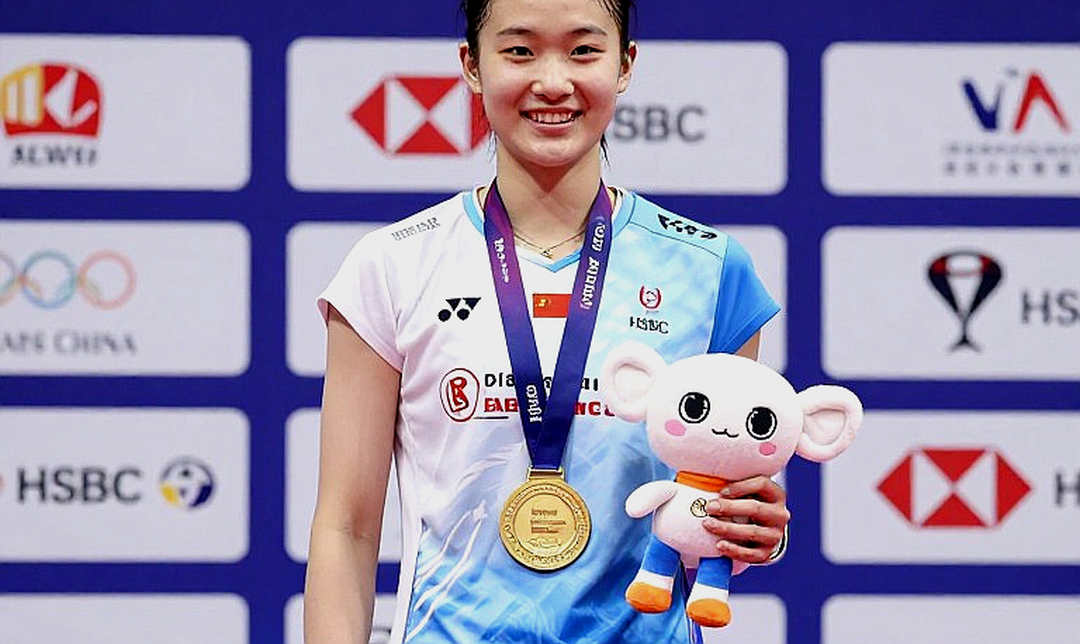
The numbers are unforgiving. The two have met ten times and Sindhu has not won once. Twice this season An Se Young has beaten her in straight games. As they walk out for the eleventh meeting, the real question is not whether Sindhu can beat An Se Young — it is whether she has a workable route to holding her peak level for 60 to 70 minutes.
The final starts at 3:30 pm IST, which is 11:00 am in Paris. Note that daylight saving time ends in Europe on 25 October 2026, so Paris stays on UTC+1 and the conversion is arithmetically sound. The semi-finals were played on Saturday, leaving roughly 24 hours before the final. The title will be decided in a single match at this Super 750 event.
What 10-0 actually means
Reading the head-to-head as mere psychological pressure would be a mistake. A 10-0 record suggests this is not a matter of one day's form but of structural mismatch — one style attacking the natural weakness of another. Sindhu's attack survives on short rallies; An Se Young's retrieval lengthens them. Every extra shot in a rally shifts expected value toward the player who errs less. That is why the gap in this matchup often looks like a gap in cost, not in skill.
Both meetings this season finished in straight games, which suggests An Se Young did not need a third game to solve Sindhu. When one player closes out another in two games, it usually means the plan against the opponent's pace was already clear.
An Se Young: seven tournaments, six titles
The Korean is in the peak phase of her career. According to available information she has played seven tournaments this season and won six titles, losing only once — to China's Wang Zhiyi in March, the only player to beat her this season. Since then her record has been a run of victories reported to include World Tour titles, the World Championships, the Asian Championships and the Asian Games.
What matters is that at 24 her style — built on retrieval, defence and net control — is sustainable. It can hold up physically on the eighth day of a tournament. Sindhu's style, by contrast, charges for every extra minute.
Sindhu's route: the truth of 73 minutes
Sindhu beat Japan's Hina Akechi 21-10, 20-22, 21-16 in the semi-final, and it took 73 minutes. She took the last six points of the decider in a row. That scoreline tells a story on its own: a dominant opening game, a mid-match dip in concentration, and then a clutch close under pressure.
That profile can be read both ways. In her favour, her peak level clearly still exists — a 21-10 opening game does not arrive by accident. Against her, that level did not appear holdable for 60-plus minutes; the 20-22 slip showed how quickly the match can slide. This is her second Super 750 final of the season and she won the Japan Open in July, so the form is there. The question is continuity.
One caution is necessary: that 21-10 game is a single-match sample, not a trend. Concluding from one match that Sindhu is rising would be as wrong as concluding she is declining.
The style collision: reach versus patience
Sindhu's edge is her reach. At 179 cm she meets the shuttle high, which gives her smash a steeper angle and brings it down sooner. This is not a novel technical system — it is conventional attacking play, made more effective than usual by her build. An Se Young is the opposite: the benchmark of modern badminton, with low error rates, control of all four corners and the ability to build forward into attack.
Both styles are established. The difference is not innovation but error variance — and that is where this match is decided. Sindhu needs points from short rallies; An Se Young lengthens every rally to make her pay in both patience and energy.
Rally length equals cost
This is a cost-transfer problem, not a skills-gap problem. Every additional shot shifts expected value toward the lower-error player, and under 21-point rally scoring that effect is sharper because every point lands directly on the scoreboard.
The direct implication: if Sindhu does not build an early lead, the match becomes mathematically harder for her. If, on the other hand, she can impose high tempo and aggressive third and fourth shots in game one and put early pressure on the scoreboard, she can claw back some control over rally length. That looks like her most practical route to victory.
The fatigue arithmetic
Sindhu played a 73-minute three-game match on Saturday; the final is 24 hours later. By contrast, the duration and opponent of An Se Young's semi-final are not stated in the available information, so the comparison is incomplete. What is known cuts against Sindhu: her semi-final was long, and her style is energy-intensive by design.
At 33, the cost of explosive repeatability rises steeply. That is not a slight, but the normal cost curve of an attacking profile, whose peak is generally placed between 22 and 28. An Se Young is 24 and plays a retrieval-heavy game that is sustainable.
Which way the format leans
Best of three, a point on every rally, and a mandatory two-point margin: this structure punishes error variance more than it rewards peak shot quality. As a general rule that is hard to dispute. The lower-error player holds a structural advantage — which is why An Se Young starts this final as the natural favourite.
'Learn from Wang Zhiyi' — how useful is that advice?
One line keeps recurring in previews: Sindhu should draw inspiration from Wang Zhiyi, because she is the only player to beat An Se Young this season. On the surface the logic looks solid; up close it is a narrative device more than a tactical blueprint.
The reason is simple — no report describes the mechanism by which Wang won. No serve pattern, no detail on length control, no description of defensive shape. When there is no mechanism, the advice has close to zero predictive value. 'Take inspiration' is a good headline, not a match plan.
What Sindhu does have
This does not mean Sindhu has nothing. She has three things. First, variance: once her smash starts landing, the scoreboard fills quickly and An Se Young's control-based plan has to be interrupted mid-rally. Second, a fatigue asymmetry: if An Se Young's semi-final was also long, that edge shrinks — and that information is not public. Third, release from points pressure: a 0-10 record removes a burden in one sense, because the fear of losing belongs to the one with something to lose.
Practically, Sindhu's plan should be front-loaded: high tempo in game one, aggressive third and fourth shots, early scoreboard pressure. If she can build a lead before rally length settles, the match can open up.
Risk points
The technical claims around this match are weakly supported. No available source provides smash speed, average rally length or net win rate. Technical superiority cannot be measured here — only estimated qualitatively. The second risk is the style matchup itself: attack versus retrieval with a 0-10 record is not coincidence. The third is injury: at 33 an energy-intensive style carries risk, and a three-game load on a 24-hour turnaround adds to it.
A note on data and sourcing
This report uses available public information, and some transparency is warranted. Of the 26 information points available, only two carry a named source; no point cites BWF rankings directly, no match-statistics source, no draw or field data. Title counts for the season also do not fully reconcile — one line states six titles from seven tournaments, while a list of results after the March loss enumerates seven. These figures should be read as context, not as final truth.
What to watch
Game one will decide the shape of the match. If Sindhu wins it by 21-15 or better with her smash landing, the final can stretch to a third game, where anything can happen. If game one is dragged to 20-20 and An Se Young takes it, a second-game comeback becomes difficult for Sindhu, because the rallies will already have grown long and the energy already spent.
Verdict
This final is big on narrative and one-sided on competitiveness. A 0-10 head-to-head and An Se Young's season — six titles from seven tournaments, one defeat — make her the structurally dominant side. Sindhu's genuine chance lies not in a documented tactical edge but in variance, fatigue asymmetry and release from points pressure. If she builds an early lead, this will be far closer than the numbers suggest. If not, it becomes another controlled win for An Se Young.